

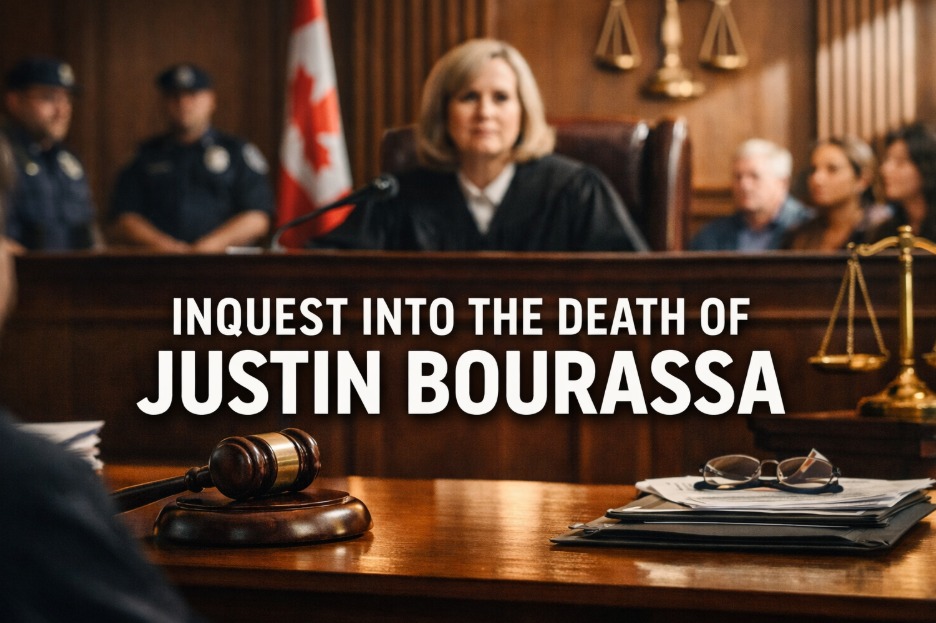
The Ontario Ministry of the Solicitor General has announced that a formal inquest will be held into the 2021 death of Justin Bourassa, a 29-year-old man who died following an interaction with officers from the London Police Service.
In a news release issued March 2, 2026, the ministry said the inquest is mandatory under the province’s Coroners Act.
“Dr. Elizabeth Urbantke, Regional Supervising Coroner, West Region, London Office, has announced that an inquest will be held into the death of Justin Bourassa.”
Mr. Bourassa died on October 28, 2021, the same day he interacted with officers from the London Police Service. The circumstances surrounding that interaction and the events leading to his death will be examined as part of the inquest proceedings.
“Mr. Bourassa, 29 years old, died on October 28, 2021, following an interaction with officers from the London Police Service on the same day. An inquest into his death is mandatory under the Coroners Act.”
Under Ontario law, inquests are required in specific circumstances, including certain deaths involving police interactions or while in custody. The proceedings are presided over by a coroner and heard by a five-person jury. Unlike criminal trials, inquests do not determine civil or criminal liability. Instead, their purpose is to establish the facts surrounding a death and, where appropriate, make recommendations aimed at preventing similar deaths in the future.
“The inquest will examine the circumstances surrounding Mr. Bourassa’s death. The jury may make recommendations aimed at preventing further deaths.”
Such recommendations, while not legally binding, are often directed at government agencies, police services, health-care institutions, or other organizations. They can influence policy changes, operational reviews, and training standards across the province.
The ministry did not provide details about the specific issues that will be explored during the proceedings, nor did it outline the scope of evidence expected to be presented. Inquests typically hear testimony from witnesses including law enforcement officers, medical experts, and other individuals involved in the events leading up to the death.
Further logistical information about the hearing has yet to be released.
“Further details regarding the inquest, including the date and venue, will be provided at a later date.”
Inquests in Ontario are public proceedings, reinforcing transparency in cases involving state agencies or other public institutions. Families of the deceased, legal representatives, and parties with standing may participate in the process, including through questioning witnesses and making submissions related to potential recommendations.
The announcement comes more than four years after Mr. Bourassa’s death. While the ministry did not comment on the timeline leading to the inquest, such proceedings can be scheduled months or years after a death as investigations are completed and logistical arrangements finalized.
The Office of the Chief Coroner oversees death investigations across Ontario and determines when an inquest is required under the Coroners Act. In cases involving police contact, inquests are commonly mandated to ensure an independent public review of the circumstances.
The ministry directed those seeking additional information about the inquest process to provincial resources.
“For more information about inquests, see: https://www.ontario.ca/page/coroners-inquests.”
No further details were provided regarding the nature of the police interaction, medical findings, or whether any parallel investigations were conducted following Mr. Bourassa’s death.
As with all coroner’s inquests in Ontario, the jury’s findings and any resulting recommendations will be made public at the conclusion of the proceedings.