

Agency warns prolonged disruptions to Strait of Hormuz could shift oil market from surplus to deficit
The International Energy Agency (IEA) is closely monitoring global energy markets and coordinating with governments worldwide as tensions escalate in the Middle East, raising concerns about potential disruptions to critical oil and gas supply routes.
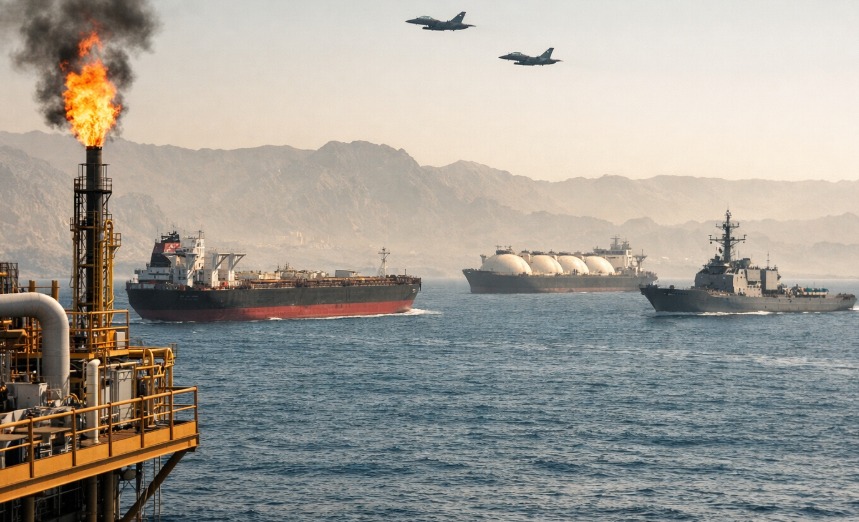
At the centre of the agency’s focus is the Strait of Hormuz, a key maritime corridor through which a significant portion of the world’s energy supplies pass. Around a quarter of global seaborne oil trade typically moves through the strait, along with nearly one-fifth of global liquefied natural gas (LNG) exports.
Energy markets had been entering 2026 with a comfortable supply outlook. However, analysts warn that prolonged interruptions to shipments through the strategic waterway could quickly tighten global balances.
“The IEA is closely monitoring the situation in the Middle East, including the potential implications of any prolonged disruptions to energy flows through the Strait of Hormuz. Around 25% of the world’s seaborne oil trade usually travels through the Strait, as well as almost 20% of global exports of liquified natural gas (LNG).”
Oil market surplus faces potential reversal
The global oil market has been operating in surplus conditions since the beginning of 2025. Prior to the outbreak of military actions on Feb. 28, supply was already projected to significantly exceed demand through 2026.
That outlook is now less certain.
“The global oil market has been in significant surplus since the start of 2025. Ahead of the military actions that began on 28 February, global oil supply was also expected to far exceed demand in 2026. However, prolonged supply disruptions could flip the market into a deficit.”
Energy flows in the region have already been affected. The disruption to shipments through the Strait of Hormuz has forced some producers to begin shutting in oil production, while output of refined products in the region has also been impacted.
The situation underscores the vulnerability of global energy markets to geopolitical developments in the Middle East, which remains one of the most critical supply regions for oil and gas.
LNG market faces tightening conditions
Natural gas markets, which have been gradually stabilizing since the shock triggered by Russia’s invasion of Ukraine in 2022, are also showing signs of renewed pressure.
A major expansion in global LNG capacity is expected later in the decade, which should improve market flexibility. However, current conditions remain tight, particularly as the Northern Hemisphere emerges from winter with depleted storage levels.
“Natural gas markets, meanwhile, have gradually rebalanced in recent years following the major shock that followed Russia’s invasion of Ukraine in February 2022. A wave of new LNG capacity between now and the end of this decade is expected to transform market dynamics.”
Despite that longer-term outlook, supply risks remain in the near term.
“But markets remained tight in the first two months of 2026, and depleted storage coming out of the heating season in the Northern Hemisphere is set to increase the call on LNG in the months ahead.”
Further pressure could come from disruptions at key export infrastructure in the Gulf region.
“An extended loss of output from the Ras Laffan facility in Qatar could significantly exacerbate this market tightness. Production was shut down following an Iranian attack on the facility on 2 March.”
Governments discuss possible responses
In response to the evolving market situation, IEA Executive Director Fatih Birol convened an extraordinary meeting of the agency’s member governments on March 3.
“In light of the events in the Middle East, our Executive Director Fatih Birol convened an extraordinary meeting of IEA Member governments on 3 March to discuss the energy market situation and the potential options to respond to disruptions.”
Representatives from 32 governments participated in the discussions, exchanging views on developments across global, regional and national energy markets while reviewing potential policy responses.
“The constructive exchange of views by representatives from 32 governments around the world provided an opportunity to share perspectives on developments in global, regional and national energy markets, as well as to consider the range of available measures.”
Birol has also held consultations with ministers from a wide range of producing and consuming economies, including Azerbaijan, Brazil, Canada, the European Union, India, Korea, Japan, Norway, Singapore, Türkiye, the United Kingdom and the United States.
Despite the heightened uncertainty, the IEA said there are currently no plans for coordinated releases of emergency oil stocks.
Emergency reserves offer buffer
Global oil inventories could help cushion markets against short-term disruptions. Observed oil stocks climbed above 8.2 billion barrels in 2025, the highest level since early 2021.
IEA member countries also maintain significant strategic reserves that could be deployed if supply shortages worsen.
Member governments collectively hold more than 1.2 billion barrels of public emergency oil stocks, alongside roughly 600 million barrels of industry stocks held under government obligations.
Together, these reserves represent a key safeguard that could help stabilize markets if geopolitical tensions begin to materially disrupt global energy supplies.
For now, the IEA says it will continue coordinating with governments and tracking developments closely as the conflict evolves and its implications for energy markets become clearer.