

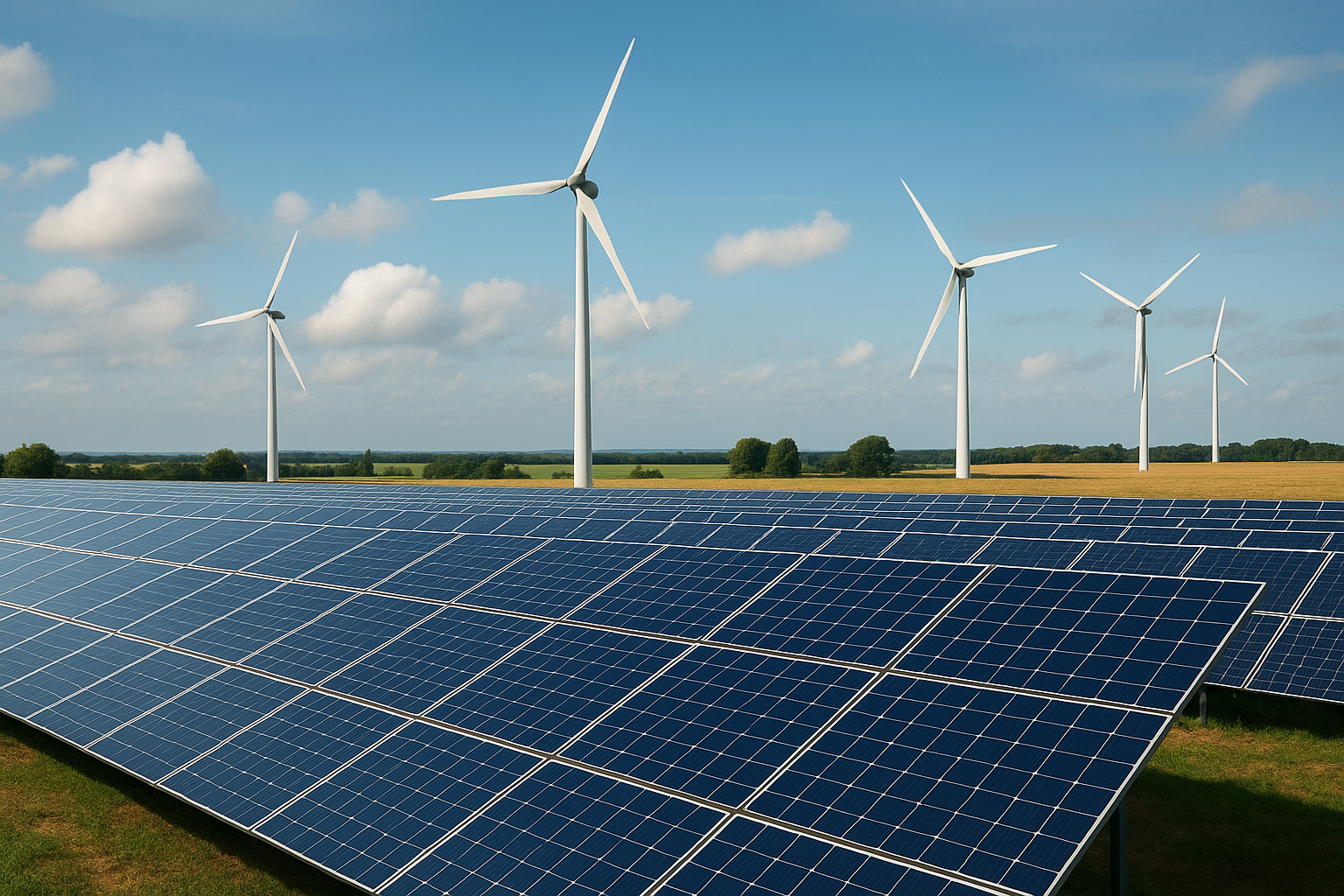
PARIS — The world’s renewable energy capacity is on track to more than double by the end of the decade, despite lingering challenges across supply chains and electricity systems, according to a new forecast released by the International Energy Agency (IEA).
The agency’s Renewables 2025 report projects an increase of 4,600 gigawatts (GW) in global renewable power capacity by 2030—equivalent to the combined electricity generation capacity of China, the European Union, and Japan. Solar photovoltaic (PV) technology is expected to drive roughly 80 per cent of that growth, followed by wind, hydro, bioenergy, and geothermal.
The report highlights strong momentum for renewable expansion worldwide, fuelled by falling costs, faster permitting timelines, and policy incentives. However, it also notes that the global outlook has been revised slightly downward from last year, reflecting policy shifts in major markets such as the United States and China.
These downward revisions are “partly offset by buoyancy in other regions – particularly India, Europe and most emerging and developing economies,” the report notes. Many of these regions have strengthened renewable energy targets and launched new policy frameworks aimed at accelerating deployment, especially for rooftop solar.
Supply Chains and System Pressures
The IEA cautioned that rapid growth comes amid significant headwinds, including concentrated supply chains and mounting grid pressures. “Global supply chains for solar PV and rare earth elements used in wind turbines remain heavily concentrated in China,” the agency said, underscoring the risks to supply security.
At the same time, the rapid increase in variable renewables is straining electricity systems in many countries, signalling an urgent need for new investment in grid modernization, energy storage, and flexible generation to stabilize power supply.
Governments Tackle Energy Resilience
In parallel with the report’s release, energy ministers and senior officials gathered in Paris for a high-level roundtable on strengthening energy infrastructure resilience. The event focused on how governments can better protect power systems against extreme weather, cyberattacks, and other disruptions.
The roundtable featured opening remarks from the IEA’s Executive Director and a special address by Laurent Fabius, former Prime Minister of France and Chair of the Circle of COP Presidents. Norway’s Minister of Energy Terje Aasland, Lithuania’s Minister of Energy Žygimantas Vaičiūnas, and the Netherlands’ Vice Minister of Economic Affairs and Climate Policy Michel Heijdra delivered keynote speeches.
“Energy security is the founding principle of the IEA’s mission,” the agency said. “On top of longstanding risks such as potential disruptions to oil and gas supplies, other energy security concerns have emerged and risen in prominence, including critical mineral supply chains, electricity system reliability and energy infrastructure resilience.”
Supporting Global Energy Transitions
The IEA has also been working closely with South Africa’s G20 Presidency to support discussions on energy priorities such as security, affordability, and interconnectivity across Africa. Deputy Executive Director Mary Burce Warlick addressed ministers at the G20 Energy Transitions Ministerial Meeting in Durban, where she highlighted efforts to expand electricity and clean cooking access and to help African economies move up the energy value chain.
She co-chaired a meeting of the Global Commission on People-Centred Clean Energy Transitions alongside South Africa’s Minister of Electricity and Energy Kgosientsho Ramokgopa. The session explored how governments can ensure fair and inclusive energy policies and track progress on social outcomes.
“Our Deputy Executive Director also addressed leaders at the G20 Nuclear Energy Ministerial convened by the International Atomic Energy Agency,” the IEA reported, noting that she underscored the agency’s analysis showing that “nuclear energy is making a comeback and can contribute to secure and sustainable power in the countries that opt to use it.”
Recognition for Global Energy Leadership
In related developments, IEA Executive Director Dr. Fatih Birol was honoured with two of Europe’s highest national distinctions for his leadership in international energy cooperation. In Brussels, King Philippe of Belgium named Dr. Birol a Grand Officer in the Order of Leopold, while in Lisbon, President Marcelo Rebelo de Sousa of Portugal awarded him the Grand Collar of the Order of Prince Henry.
Dr. Birol dedicated both honours to his IEA colleagues, saying the recognition reflects their “outstanding work.”
