

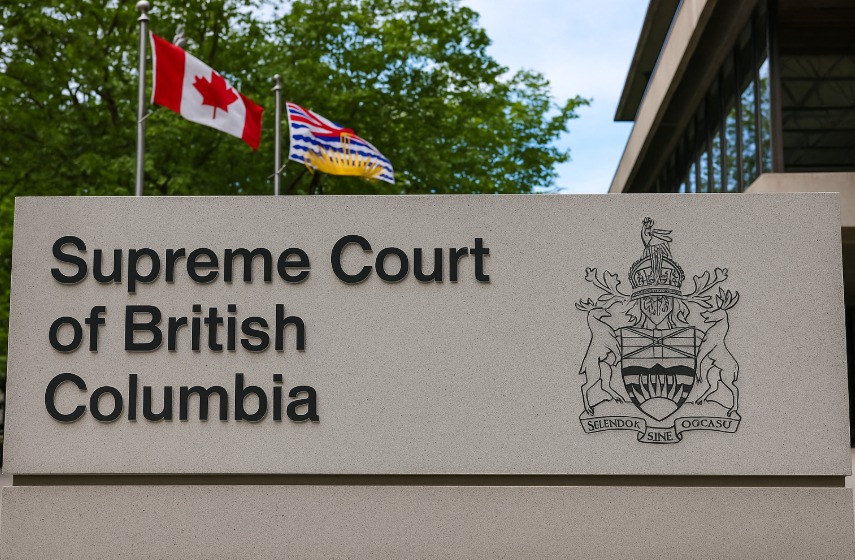
VANCOUVER — A major ruling from the British Columbia Court of Appeal (BCCA) is being hailed as a watershed moment for Indigenous rights in the province, with First Nations leadership and civil liberties advocates calling it a decisive affirmation of the legal authority of the Declaration on the Rights of Indigenous Peoples Act (Declaration Act).
The BC Civil Liberties Association (BCCLA) and the First Nations Leadership Council (FNLC) are celebrating the outcome, which they say clarifies the provincial government’s obligations under the United Nations Declaration on the Rights of Indigenous Peoples (UN Declaration). The organizations jointly intervened in the case, launched by the Gitxaala and Ehattesaht Nations, who challenged the province’s approach to developing and passing several key laws without meaningful alignment to—or consultation on—the principles embedded in the Declaration Act.
The BCCA decision reverses what it called a lower court’s “unduly narrow approach to the legal effect of the Declaration Act,” marking a significant shift in how B.C. law and policy must be interpreted and implemented. The ruling concludes that the Declaration Act incorporates the UN Declaration into British Columbia’s positive law, meaning courts can assess whether provincial laws comply with the standards set out in the UN Declaration.
In its analysis, the Court of Appeal rejected the province’s discretionary, case-by-case method of determining when Indigenous consultation should occur. It affirmed that the government must “consult and cooperate with First Nations to address inconsistencies between the UN Declaration and the laws of B.C.” Going forward, the justices stated, whether B.C. laws are consistent with the UN Declaration is a justiciable question—placing legal pressure on the province to follow its own commitments.
The decision directly challenges the government’s handling of recent legislation, including the Renewable Energy Projects (Streamlined Permitting) Act and the Infrastructure Projects Act, enacted without adherence to the province’s Interim Approach for implementing the Declaration Act.
For Indigenous leaders, the judgment represents long-awaited recognition of the binding nature of the legislation and the collaborative vision behind it.
Grand Chief Stewart Phillip, President of the Union of BC Indian Chiefs (UBCIC), said the ruling vindicates years of advocacy. “From the beginning, we have emphasized that the provincial government’s position on the legal effect of the Declaration Act was inconsistent with the substantial collaborative and cooperative effort that went into developing it. The BCCA’s decision, and its observation that the provincial government’s ‘intransigence…does not contribute to the cooperative consultative dynamic to which all concerned should aspire’, confirms what we have long understood: that reconciliation requires honourable conduct, good faith, and respect for commitments made. It’s time for us to get on with the important work of reconciliation, together.”
BC Assembly of First Nations Regional Chief Terry Teegee described the ruling as a definitive message to government. “This legal victory sends a ground-shaking message to the provincial government: the Declaration Act is legally binding and cannot be implemented or interpreted in a unilateral Crown approach. The Declaration Act is justiciable and First Nations in B.C. may enforce the legal requirement of consistency with the UN Declaration. The provincial government must honour in good faith the legal commitment it made to the First Nations of this Province.”
Robert Phillips of the First Nations Summit Political Executive highlighted the dedication of the Gitxaala and Ehattesaht Nations in advancing the case. “Today we celebrate and hold up the Gitxaala and Ehattesaht Nations for the significant time and resources they invested into advancing this litigation and holding the provincial government accountable,” he said. “The clear outcome of their persistence and dedication to the protection of their rights is a win for all First Nations in British Columbia.”
The BCCLA emphasized that the ruling strengthens the legal tools available to uphold Indigenous rights within the judicial system. “BCCLA joins in the celebration of today’s decision affirming the legal effect of the UN Declaration in B.C. Indigenous rights must be honored and respected. The work of truth and reconciliation is now and belongs to us all, including the judiciary. There is no reason why the Declaration Act should not be legally enforceable when the government is shirking its duty to align the laws of B.C. with the rights and standards set out in the UN Declaration,” said Veronica Martisius, BCCLA Litigation Staff Counsel.
The decision is expected to have wide-ranging implications for provincial lawmaking and regulatory processes, compelling a more structured and legally enforceable alignment with the UN Declaration. Both FNLC and BCCLA say the ruling marks a critical step forward in ensuring that reconciliation commitments carry meaningful legal weight rather than aspirational language alone.
The BCCLA, which works nationally to defend civil liberties and human rights, noted that the ruling reinforces its mission to ensure the state upholds dignity, equality, and Charter-protected freedoms. The FNLC—made up of the political executives of the BC Assembly of First Nations, First Nations Summit, and UBCIC—says it will continue to advocate for full implementation of the Declaration Act alongside First Nations across the province.
