

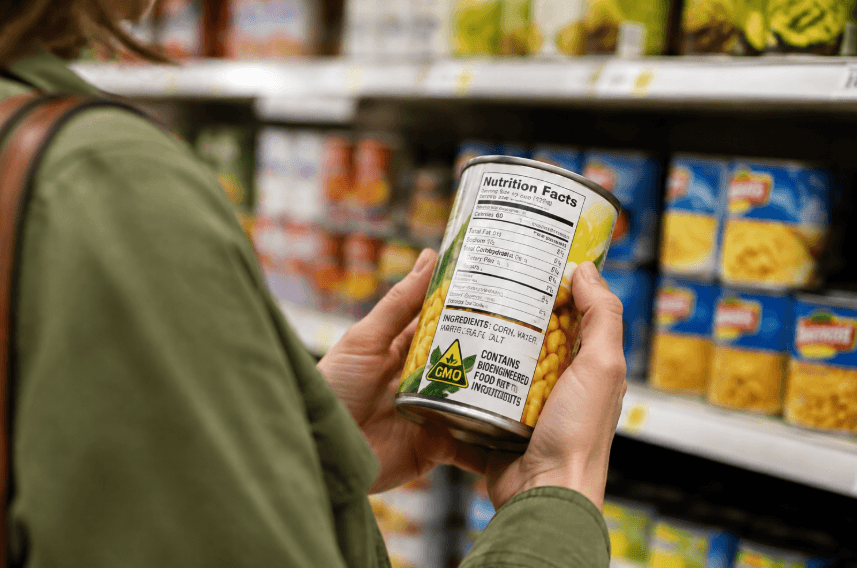
Court Order Requires USDA to Revisit Bioengineered Food Disclosure Regulations After Legal Challenge
A U.S. federal court has sided with consumer transparency advocates in a long-running legal battle over genetically engineered food labeling rules, ordering the U.S. Department of Agriculture (USDA) to revise key parts of its bioengineered food disclosure regulations by January 1, 2028.
The decision marks a major development in the dispute over how genetically modified organisms (GMOs), now officially referred to as “bioengineered” foods under U.S. regulations, must be identified for consumers. The ruling follows years of litigation led by the Center for Food Safety (CFS), which challenged USDA rules that allowed exemptions for certain processed GMO ingredients and permitted companies to rely on digital QR code disclosures instead of clear package labeling.
The federal court’s final remedy decision follows an earlier appeals court ruling that found several parts of USDA’s regulations unlawful and returned the matter to the lower court for further action.
Center for Food Safety Celebrates Court Decision on GMO Disclosure Rules
The Center for Food Safety said the ruling represents a significant victory for consumers seeking greater information about how food is produced.
“This week’s decision was the final nail in the coffin of the 2021 unlawful GMO labeling regulations,” said George Kimbrell, Legal Director at CFS and counsel in the case. “We are gratified that the district court, like the court of appeals before it, has agreed with our legal arguments and struck them down.”
The lawsuit focused on USDA’s implementation of the National Bioengineered Food Disclosure Standard, a 2016 federal law that created the first nationwide requirement for disclosure of genetically engineered foods in the United States.
However, CFS argued that USDA’s original regulations created major gaps in consumer access to information. One of the key concerns involved exemptions for “highly refined” or ultra-processed GMO ingredients, including products such as corn and soy oils.
According to CFS, these ingredients account for a significant share of GMO-derived food components used in the U.S. food supply. The organization argued that excluding them prevented consumers from receiving complete information about bioengineered ingredients.
The legal challenge also targeted USDA’s decision allowing companies to provide disclosures primarily through QR codes rather than visible text or symbols directly on food packaging.
Appeals Court Previously Found USDA Regulations Unlawful
After more than four years of legal proceedings, a U.S. Federal Court of Appeals issued a detailed decision in late 2025 supporting key arguments made by CFS and other challengers.
The appeals court concluded that USDA had acted unlawfully by excluding ultra-processed foods from the bioengineered disclosure requirements. It also determined that QR code-only disclosure provisions could not remain in place.
The case was then sent back to the district court to determine the specific remedies and timeline for implementing changes to the regulations.
USDA Must Complete New Rulemaking by January 2028
The latest court decision establishes a timeline for USDA to update the bioengineered food disclosure standard. While the agency had sought to delay changes until 2029, the district court rejected that request and determined that the disputed provisions will become legally void by January 1, 2028.
USDA is now expected to begin developing revised regulations within the next year to address both the QR code disclosure issue and the exemption for highly refined GMO ingredients.
“The next chapter now shifts back to USDA,” said Dashel Murawski, Communications Manager at Center or Food Safety. “All those that care about their right to know how their food is produced—including whether it is made with pesticide-promoting, corporate-controlled GMO agriculture—need to pressure the administration to follow the law this time. People deserve the right to decide for themselves what they eat and feed their families and must not be kept in the dark about food ingredients. This is about uplifting the rights of the public over corporate loopholes.”
Consumer Groups Push for Stronger Food Transparency Standards
Other organizations involved in the case welcomed the court’s decision and called for stronger consumer protections during USDA’s upcoming rulemaking process.
“Ten years have passed since Congress mandated adequate disclosure of GMO ingredients on food packaging. Now, after a very long detour, we can look forward to working with Secretary Rollins to implement sound and sensible rules as intended by the statute,” said Alan Lewis, Vice President of Advocacy & Governmental Affairs at Natural Grocers, a plaintiff in the case.
Hans Eisenbeis, Director of Mission & Messaging at the Non-GMO Project, also highlighted the importance of transparency in food regulation.
“We’re pleased with the court’s decision. We will continue to engage with USDA throughout the rulemaking process to, hopefully, ensure the agency’s revised rules reflect the needs of consumers. This moment gives the current USDA an opportunity to make meaningful strides to address not just GMO labeling, but also the problem of ultra-processing. The first step to improving our food system is through true transparency, and this can be supported through meaningful regulation that benefits everyone,” said Hans Eisenbeis, Director of Mission & Messaging at the Non-GMO Project, amici in the case.
Global GMO Labeling Debate Continues
The debate over GMO food transparency extends beyond the United States. More than 60 countries, including European nations, Japan and China, require GMO labeling on food products.
CFS said public support for disclosure requirements has remained consistently high, with polling showing more than 90% of Americans support knowing whether their food contains genetically engineered ingredients.
The organization noted that consumer campaigns for GMO labeling began more than two decades ago, eventually leading to state-level initiatives and legislation before Congress passed the 2016 federal disclosure law.
CFS represents a coalition of nonprofit organizations and retailers in the case, including Natural Grocers, PCC Natural Markets, Good Earth Natural Foods, National Organic Coalition, Citizens for GMO Labeling, Label GMOs and Rural Vermont.
The court’s latest decision ensures the USDA will now be required to revisit the regulations and develop a revised framework aimed at providing broader access to bioengineered food information for consumers.