

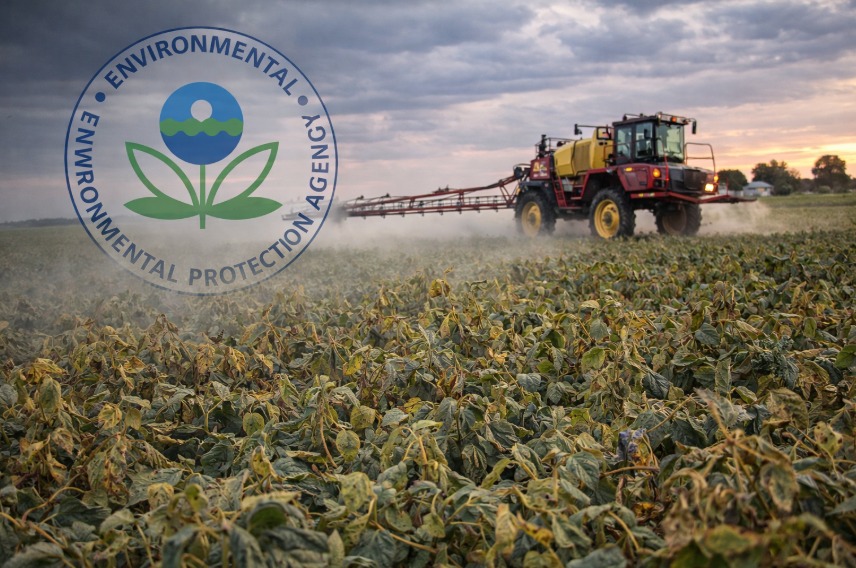
The Environmental Protection Agency has reapproved the use of dicamba-based herbicides on genetically engineered cotton and soybeans, a move that is drawing renewed criticism from environmental groups and farm advocates who point to years of crop damage, court defeats and concerns over regulatory capture.
The decision, announced in Washington on Tuesday, allows continued spraying of dicamba, a herbicide known for drifting far beyond application sites. The reapproval comes despite federal court rulings in 2020 and again in 2024 that struck down previous EPA authorizations for the weedkiller as unlawful.
Since dicamba was first approved for over-the-top spraying in 2016, drift from its application has damaged millions of acres of farmland across the United States. Orchards, vegetable farms, home gardens, native plants, trees and wildlife refuges have all been affected, according to experts who describe dicamba drift as the worst herbicide-related damage in U.S. agricultural history. Critics say the latest approval offers even fewer protections than earlier versions that were rejected by the courts.
“The industry cronies at the EPA just approved a pesticide that drifts away from application sites for miles and poisons everything it touches,” said Nathan Donley, environmental health science director at the Center for Biological Diversity. “With the EPA taking aggressive pro-pesticide industry actions like this, it’s hard to see how Making America Healthy Again was anything but another broken campaign promise. When push comes to shove, this administration is willing to bend over backward to appease the pesticide industry, regardless of the consequences to public health or the environment.”
The approval follows recent staffing changes within the EPA’s Office of Chemical Safety and Pollution Prevention. Kyle Kunkler, a former lobbyist for the American Soybean Association, was appointed deputy assistant administrator for pesticides earlier this year. Kunkler has previously supported dicamba use and has not been recused from working on the chemical despite his lobbying background.
Kunkler reports to Nancy Beck and Lynn Dekleva, both former lobbyists for the American Chemistry Council, who are overseen by Doug Troutman, another former industry lobbyist recently confirmed to lead the EPA’s chemicals office following endorsement by the council.
“The Trump administration’s hostility to farmers and rural America knows no bounds,” said Bill Freese, science director at the Center for Food Safety. “Dicamba drift damage threatens farmers’ livelihoods and tears apart rural communities. And these are farmers and communities already reeling from Trump’s ICE raids on farmworkers, the trade war shutdown of soybean exports to China, and Trump’s bailout of Argentina, whose farmers are selling soybeans to the Chinese — soybeans China used to buy from American growers.”
Concerns over dicamba are not new. A 2021 investigation by the EPA’s Inspector General found that key scientific evidence was excluded during the herbicide’s original approval, which occurred during the first Trump administration.
Dicamba spraying expanded rapidly after 2016, when Monsanto—now owned by Bayer—introduced genetically engineered soybeans and cotton designed to withstand the chemical. The resulting surge in use led to unprecedented levels of off-target damage, affecting both conventional crops and natural ecosystems.
The U.S. Department of Agriculture estimates that as many as 15 million acres of soybeans were damaged by dicamba drift in 2018 alone. Beekeepers in several states have reported sharp declines in honey production as flowering plants were suppressed by herbicide exposure, with Arkansas’ largest beekeeper ultimately relocating operations out of state.
In 2020, a federal court revoked dicamba’s registration, citing the EPA’s failure to assess how the herbicide “would tear the social fabric of farming communities.” Although the agency reapproved dicamba months later, a 2021 EPA report acknowledged that restrictions aimed at limiting drift had failed. In February 2024, a second federal court ban was issued, criticizing the EPA for not consulting affected farmers or other stakeholders.
The latest approval significantly weakens earlier safeguards. It eliminates calendar-based cut-off dates, allows year-round use, drops limits on daily application timing and removes requirements to review tank mixes, despite evidence that mixtures can increase volatility. A volatility buffer designed to protect endangered species has also been removed.
Opponents say the changes closely align with industry requests and leave farmers and rural communities exposed to continued damage, setting the stage for further legal challenges and deepening debate over the EPA’s oversight of agricultural chemicals.
