

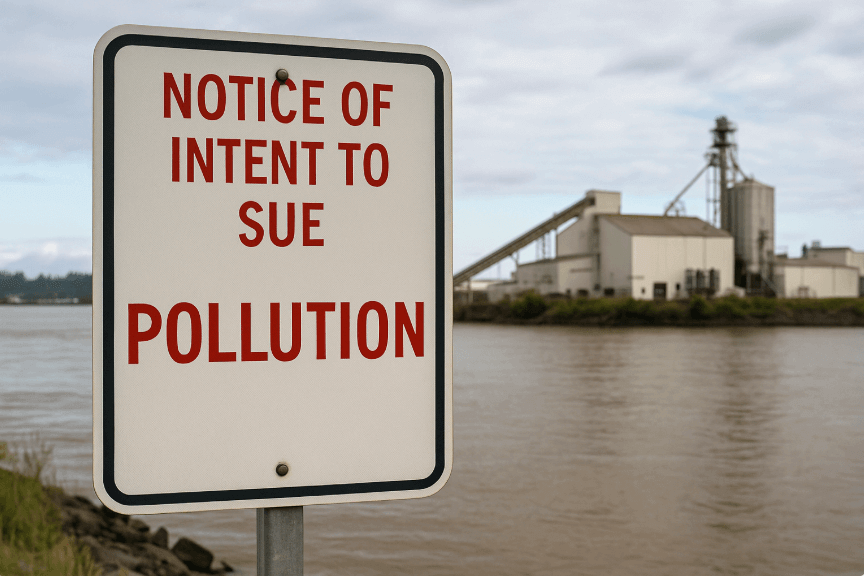
PORTLAND, Ore.Two environmental advocacy organizations have issued a formal notice of intent to sue a subsidiary of Pacific Seafood, one of North America’s largest seafood and aquaculture corporations, over what they describe as years of illegal pollution flowing into the Columbia River.
The Center for Food Safety (CFS) and the Northwest Environmental Defense Center (NEDC) allege that Pacific Bio Products – Warrenton, a Pacific Seafood-owned processing facility in Warrenton, Oregon, has repeatedly violated its wastewater discharge permit issued by the Oregon Department of Environmental Quality (DEQ). The groups say the violations have occurred over a three-year period and involve extreme exceedances of allowable chlorine levels and failures to meet reporting and monitoring standards.
In a notice letter sent earlier this week, CFS and NEDC claimed that “monthly average total residual chlorine discharges” from the Warrenton facility exceeded legal limits by more than 4,000%, and that in August 2025, a single discharge surpassed the daily chlorine limit by over 73,000%.
Under the U.S. Clean Water Act, citizens and organizations must give 60 days’ notice before filing a lawsuit to enforce compliance with environmental laws. Both CFS and NEDC have stated their intent to proceed with litigation if the company fails to remedy the alleged violations. They are represented by FarmSTAND and Kampmeier & Knutsen, PLLC, alongside their in-house legal teams.
Allegations of Systemic Pollution
The Warrenton facility manufactures bulk seafood products such as fishmeal, shrimp, and crab shell derivatives used in pet food, livestock feed, and aquaculture feed, as well as fish oils. Environmental advocates argue that this type of industrial operation contributes heavily to waterway degradation through chemical and organic waste discharge.
Pacific Seafood, headquartered in Clackamas, Oregon, operates dozens of processing and aquaculture facilities along the Pacific Coast. The company promotes its sustainability credentials publicly, but environmental groups have accused it of repeated environmental violations.
In July 2025, CFS and Wild Fish Conservancy, represented by the same law firm, filed a separate lawsuit against another Pacific Seafood-owned company for multiple Clean Water Act violations at three commercial net-pen aquaculture sites on the Columbia River where rainbow trout are raised.
Environmental Advocates Speak Out
Representatives from the advocacy groups behind the latest action say the Warrenton case is emblematic of broader problems in the aquaculture industry — and of insufficient government oversight.
“The Columbia River and Oregon Coast are already burdened by pollution and habitat destruction from multiple sources,” said Kingsly A. McConnell, Staff Attorney at the Center for Food Safety. “Adding this kind of pollution only deepens the crisis for local communities and Tribes who rely on the river for their sustenance, culture, and livelihoods. When the government fails to enforce our environmental laws, the people have both the right and the responsibility to respond.”
Jonah Sandford, Executive Director of the Northwest Environmental Defense Center, said compliance with environmental permits is essential to protecting the fragile Columbia River estuary.
“If Pacific Seafood is going to operate in the threatened Columbia River estuary, it is essential that it comply with each and every condition of its Clean Water Act permit,” said Sandford. “These conditions are written to ensure that discharges from the facility don’t impact water quality, aquatic life, or nearby human populations. The hundreds of violations identified in the notice letter illustrate that the facility is causing real harm to this treasured ecosystem that must be stopped.”
Holly Bainbridge, Senior Staff Attorney at FarmSTAND and counsel for the groups, linked the issue to larger questions about industrial aquaculture’s role in the economy and environment.
“The business model of industrial aquaculture depends upon being able to pollute the environment without consequence,” said Bainbridge. “Megacorporations like Pacific Seafood want to use impunity to grow industrialized aquaculture in America. But citizen suits like the one we intend to bring here will hold them accountable to the people who rely on clean rivers.”
Broader Implications for Industrial Aquaculture
Environmental experts say aquaculture facilities can discharge large volumes of untreated waste into nearby waterways, including excess nutrients, heavy metals, antibiotics, and chlorine compounds. Equipment failures or weather events can lead to fish escapes, which may threaten wild populations such as salmon through competition, interbreeding, and the spread of disease.
For communities along the Columbia River — including Indigenous Nations whose cultural and economic ties to the water run deep — advocates argue that chronic pollution exacerbates long-standing environmental and social pressures.
If the lawsuit proceeds, it would mark the second major Clean Water Act case filed against Pacific Seafood companies in less than a year, potentially heightening regulatory scrutiny across Oregon’s aquaculture industry.
Neither Pacific Seafood nor its subsidiary Pacific Bio Products responded to requests for comment before publication.
