

SURREY, B.C. – As Carbon Monoxide Awareness Week draws attention to household safety, health officials are urging Canadians to install working carbon monoxide detectors, maintain fuel-burning appliances and recognize the warning signs of poisoning from the invisible, potentially deadly gas.
The warning comes alongside the experience of Verna and Doug Platt, a British Columbia couple whose lives were saved by a carbon monoxide detector during a power outage in January 2022.
Their experience highlights how quickly dangerous conditions can develop inside a home and why preventive maintenance and early detection remain essential.
Carbon Monoxide Detector Saves Couple During Power Outage
On January 8, 2022, Verna and Doug Platt began feeling unwell during a power outage. A neighbour brought supplies to their home, including a carbon monoxide detector as an additional precaution.
Later, the detector sounded an alarm, identifying dangerous carbon monoxide levels inside the residence.
The couple had already developed symptoms of carbon monoxide poisoning but managed to evacuate safely and receive hospital treatment.
“I encourage everyone to have working carbon monoxide detectors, and to check the shelf life because they do expire,” says Verna Platt.
Following the incident, the Platts installed two carbon monoxide detectors and began arranging annual inspections of their furnace, fireplace and other fuel-burning appliances.
Furnace Corrosion Identified as Source of Dangerous Gas
An investigation into the incident identified corrosion in the furnace’s secondary heat exchanger, which caused incomplete combustion and allowed carbon monoxide to accumulate inside the home.
Carbon monoxide is a colourless, odourless and tasteless gas produced by fuel-burning equipment. Without a functioning detector, dangerous concentrations can go unnoticed.
Although carbon monoxide itself has no smell, other combustion by-products, including aldehydes, can produce a vinegar-like odour.
In the Platts’ case, neighbours initially suspected a natural gas leak after noticing an unusual smell, which was later attributed to aldehydes.
Health Officials Warn of Carbon Monoxide Poisoning Symptoms
Fraser Health officials emphasize that carbon monoxide exposure can affect anyone and that symptoms may resemble other common illnesses, potentially delaying recognition of a serious emergency.
“Anyone can be affected by carbon monoxide poisoning without realizing it,” says Dr. Emily Newhouse, medical health officer, Fraser Health. “Symptoms may develop gradually or come on quickly, which is why prevention and early detection are so important.”
Common symptoms include headaches, dizziness, fatigue, nausea, vomiting, shortness of breath, chest pain and confusion.
Exposure can become particularly dangerous when individuals remain inside contaminated spaces without recognizing the source of their symptoms.
Annual Appliance Inspections and Alarm Testing Recommended
Dr. Newhouse recommends installing Canadian-certified carbon monoxide alarms on every floor of a residence and near sleeping areas.
Households should test alarms monthly, replace batteries when necessary and follow manufacturers’ instructions regarding detector replacement.
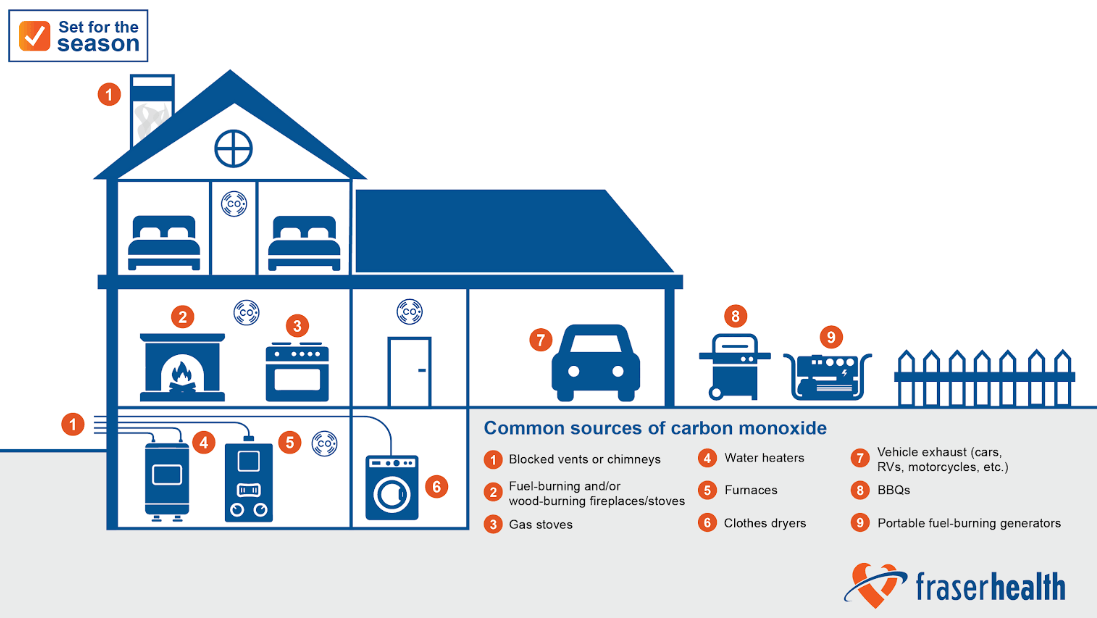
Natural gas and propane appliances, including furnaces, fireplaces, water heaters and stoves, should undergo annual inspections by licensed gas contractors.
Wood-burning equipment should also receive yearly inspections from certified professionals to reduce the risks of carbon monoxide accumulation and chimney fires.
Officials additionally warn against operating barbecues, portable generators or camping stoves indoors, including during power outages. Vehicles should never be left idling inside garages, even when garage doors are open.
Immediate Evacuation Essential When Carbon Monoxide Alarm Sounds
Health authorities stress that residents should never ignore a carbon monoxide alarm or attempt to investigate a suspected exposure before reaching safety.
“If your carbon monoxide detector alerts, or if you experience symptoms you think could be related to carbon monoxide, go outside immediately and call 9-1-1,” says Dr. Newhouse.
The Platts followed that guidance, leaving their home with their pets and contacting emergency responders.
Four years later, the couple continues to credit their neighbour’s precautionary decision with preventing a tragedy.
“We will always be indebted to them for saving our lives,” says Verna. “We were close before, but we’re even closer now. Even though they have moved away, we consider them family.”
Their experience reinforces the central message of Carbon Monoxide Awareness Week: working alarms, routine inspections and prompt emergency action can save lives.
Discover more from Wire Service Canada
Subscribe to get the latest posts sent to your email.