

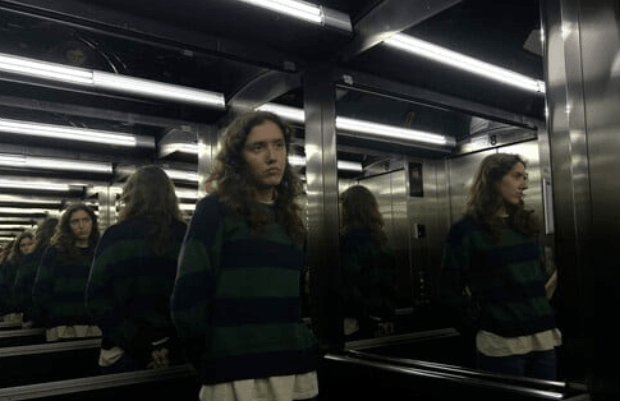
Cape Town singer-songwriter Sarah Pearson, who performs under the name Esspi, has released her new album FAUXstalgia, completing a six-year creative project that traces experiences of nostalgia, isolation, relationships and personal growth through a blend of folk-pop, alt-pop and indie-country influences.
The album is led by the focus track “Retrograde,” a song centred on the emotional strain of trying to remain strong while feeling as though personal progress is moving backward. Both the album and track are now available.
‘FAUXstalgia’ Draws Inspiration From Nostalgia and Earlier Musical Eras
The album takes its name from a term Pearson coined while studying the meaning of nostalgia in college. She uses “FAUXstalgia” to describe mourning a period a person never experienced or understanding an emotion they have not personally lived through.
“I went, wow, that’s an emotion I experience every day, but I didn’t know it existed,” she says. “I knew the word was too iconic not to use.”
That concept extends into the album’s production. Esspi looked to the sounds of the 1970s and 1980s, drawing inspiration from artists including Kate Bush, Depeche Mode, The Eagles, Linda Ronstadt and Queen.
“I tried to picture what those bands and artists were thinking while making their songs in that time period,” she says.
The resulting record combines elements associated with those eras with Esspi’s contemporary songwriting approach.
Six-Year Project Started When Esspi Was 13
Work on FAUXstalgia began when Esspi was 13. Its earliest composition, “What Am I Supposed To Do,” was inspired by watching a close friend’s parents experience a divorce and considering the situation from a child’s perspective.
“I wanted to try to imagine what she was feeling and thinking, and how the children always get overlooked in the situation,” Esspi says.
Many of the songs subsequently developed from voice memos accumulated over several years and transferred whenever she changed phones.
“That was absolutely terrifying,” she says. “Some songs took ten minutes to write; others took six years.”
Esspi recorded the project during school holidays in a home studio with producer David Jones, an arrangement that gave the pair room to experiment with instrumentation, production techniques and unconventional sounds.
“We had the time and freedom to be experimental, try random things, and see if they worked,” she says.
Saxophonist Dave Bettesworth also contributed to the sessions. On “All I Hear Is Rain,” Esspi and Jones experimented extensively with handclaps recorded at different volumes and using different hand positions. Although the resulting sound sits beneath the saxophone solo, the process became one of Esspi’s favourite memories from recording the album.
“Retrograde” Reframes Late-Night Struggles Through Songwriting
The album represents a change in perspective from Esspi’s previous release, “Tainted Heart,” which emerged from a period of isolation.
“That whole song was literally a two a.m. spiral,” she says, “the kind you get when you’re completely alone at night and the whole world feels like it’s pressing down on you.”
With FAUXstalgia, Esspi says she wanted to use similar moments as creative fuel rather than conceal them.
“So many people have those two a.m. moments,” she says. “I took a bunch of those spiral thoughts and used them as a strength instead.”
Focus Track Explores Change and Personal Growth
That approach is particularly evident on “Retrograde,” which Esspi calls “my baby.” The song was influenced by disappointment over becoming involved with people she later felt were the wrong crowd.
“I don’t like the person I’ve become, I don’t know how I’ve changed or what it’s from, yeah I just retrograde instead of run,” she sings, later adding, “I’m tired of living a lie, they say smile, you’ll be fine, I can’t move on with my life if I’m always wrong.”
Reflecting on the period in which she wrote the track, Esspi says her perspective has changed with experience.
“I will always remember the girl writing that song in her two a.m. spiral,” she says. “Looking at it now, I know I have incredible experience, I’ve learned so much, and I have so much more knowledge going out into the world.”
Other tracks include “Darkness at the Disco,” which explores the conflict between loving someone and recognizing the need to let them go.
Esspi is leaving much of the album open to individual interpretation. “I could tell you every scenario I had for the rest of the songs,” she says, “but I want you to interpret it in the way that most resonates with you.”
With FAUXstalgia, Esspi brings together six years of songwriting and studio experimentation in a project designed to connect personal experiences with emotions listeners may recognize in their own lives.