

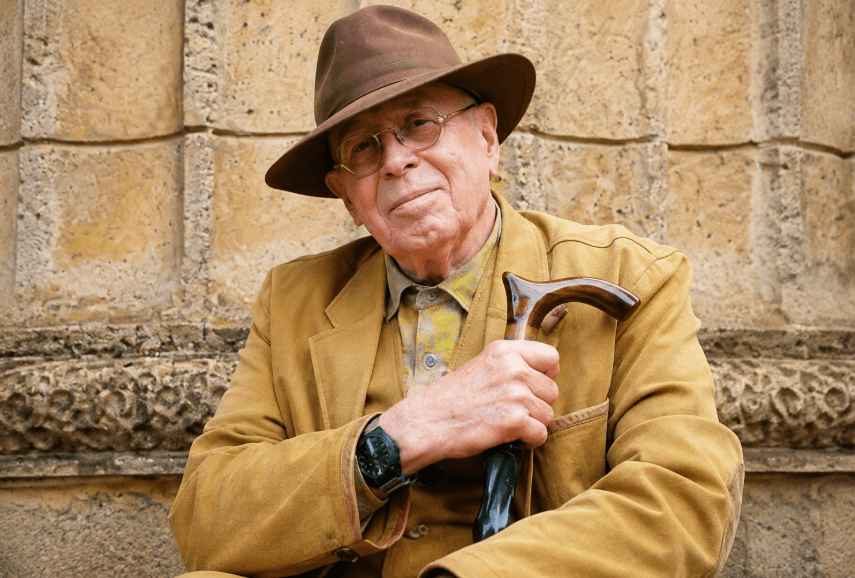
Canadian music icon Bruce Cockburn is looking back at the songs that shaped his artistic journey with his upcoming album ‘The Blood of Others’, set for release on October 16 through Sunset Boulevard Records.
The 39th album of Cockburn’s celebrated career focuses on interpretations of songs written by other artists, reflecting the influences that guided him before he began creating his own acclaimed catalogue. The collection explores the gospel, blues, jazz, folk, and traditional music that helped define one of Canada’s most respected singer-songwriters.
Bruce Cockburn Celebrates the Songs Behind His Musical Identity
For more than five decades, Cockburn has been known for his thoughtful songwriting and distinctive guitar style. With ‘The Blood of Others’, he shifts his attention toward the artists and compositions that influenced his early development as a musician.
“What began back in the eighties as a vague notion grew over time into a strong desire to put together a collection of material, written by others, that I found sticking to the edges of my musical landscape,” Cockburn explains. “The accumulation of these songs started in the sixties, before I’d even begun to try to create my own.”
The album title draws inspiration from Simone de Beauvoir’s novel of the same name, written during the Nazi occupation of France. Cockburn says the themes of responsibility and personal choices connect strongly with the project.
“Among other things it deals with personal responsibility in the face of scary oppression, and the kinds of choices people make,” he says. “I have borrowed the title because it seems perfect for an album of songs I didn’t write.”
Album Features Gospel, Blues, Jazz and Folk Classics
Reimagining Songs From Across Generations
The album begins with “Wish I Was in Heaven Sitting Down,” a gospel song by Robert Wilkins that Cockburn discovered through an early 1970s compilation. He highlights Wilkins’ guitar style and vocal performance as key inspirations behind his new interpretation.
Cockburn also revisits “As Time Goes By,” the Herman Hupfeld standard famously associated with the classic film Casablanca. His version includes an updated approach to the song’s original introduction.
“Who doesn’t love the scene in Casablanca in which Dooley Wilson plays this song, Ingrid Bergman at his side?” Cockburn says. “I thought I should include the original preamble, which gives the familiar part of the song a context, but it seemed to want an update. Hopefully Herman approves.”
The album also explores Cockburn’s early connection to jazz and ragtime through “Buddy Bolden’s Blues,” a song he discovered through literature rather than a recording.
“My friends were singing country blues and old timey music,” he recalls. “I was drawn to the somewhat more sophisticated style of ragtime and early jazz.”
Canadian Roots and Personal Memories Shape the Record
Ottawa Influences Remain Central
Cockburn’s connection to his hometown appears through “Four Strong Winds,” a song he discovered through Le Hibou, the Ottawa coffeehouse that played an important role in his early musical life.
“We were all very excited when their song showed up on the radio,” he says, referring to songwriters Ian and Sylvia, who regularly performed at the venue during the 1960s.
The album also features songs connected to important moments in Cockburn’s personal history, including Billie Holiday and Arthur Herzog’s “God Bless the Child” and Mississippi John Hurt’s “Louis Collins.”
“A couple of years later I got to hear Billie Holiday’s original version,” Cockburn says about “God Bless the Child.” “Theologically a bit off base, but a deeply moving expression of disappointment with the human species.”
Reflecting on Mississippi John Hurt’s music, Cockburn recalls a formative listening experience.
“Barbie Luther invited me to her parents’ house to listen to music,” he recalls. “She opened a bottle of Mateus wine and put on Mississippi John Hurt’s rediscovery album. I was blown away by the sweetness, the idiosyncratic phrasing and the way he put voice and fingerpicked guitar together.”
A Career Spanning Nearly Six Decades
Since beginning his career in 1970, Cockburn has built one of the most influential bodies of work in Canadian music. His achievements include 13 Juno Awards, inductions into the Canadian Music Hall of Fame and the Canadian Songwriters Hall of Fame, the Governor General’s Performing Arts Award for Lifetime Artistic Achievement, and recognition as an Officer of the Order of Canada.
He has also received nine honorary doctorates, including one from Berklee College of Music.
Songs such as “Lovers in a Dangerous Time,” “Wondering Where the Lions Are,” and “If I Had a Rocket Launcher” have become lasting contributions to Canadian songwriting, with interpretations from artists including Barenaked Ladies, Jimmy Buffett, and Jerry Garcia.
Bruce Cockburn Announces North American Tour Dates
Following the release of ‘The Blood of Others’, Cockburn will perform across North America, including several Canadian dates.
The tour includes performances in:
- Kitchener, Ontario — October 15
- Ottawa, Ontario — October 16
- Toronto, Ontario — October 17
- Montréal, Quebec — October 18
Additional U.S. performances will take place through November, with appearances in cities including New York, Boston, Nashville, Atlanta, and Miami.
Conclusion
With ‘The Blood of Others’, Bruce Cockburn revisits the music that helped shape his artistic path while offering new interpretations of songs that have remained meaningful throughout his life. The album continues a legacy built on curiosity, craftsmanship, and a lifelong connection to music’s many traditions.