

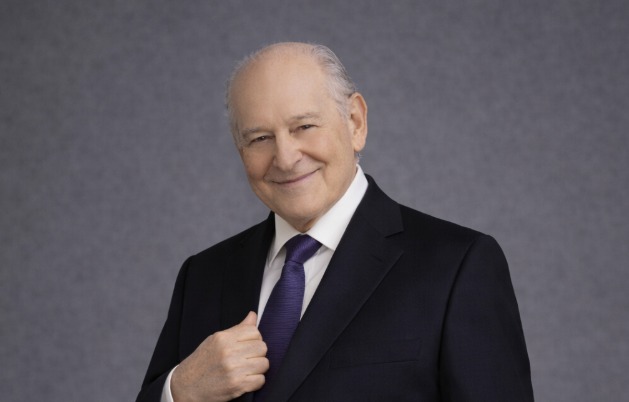
Mountain View, Calif. — Ronald G. Wayne, one of the original co-founders of Apple Computer Company, will appear as a featured guest at the Computer History Museum’s Apple@50 opening event on March 11, marking the technology giant’s 50th anniversary and highlighting the early figures who helped launch the company.
The event, taking place at the Computer History Museum (CHM) in Mountain View, California, will commemorate Apple’s half-century milestone and examine the company’s influence on the global technology industry. Wayne, now nearly 92, is expected to reflect on Apple’s earliest days and his role in its founding alongside other alumni connected to the company’s development.
“I am grateful, at nearly 92, for the opportunity to shed more light on Apple’s formation and its earliest foundations,” said Wayne. “The origins of great institutions matter, and I look forward to providing context that has not always been fully heard.”
As part of the ceremony, a signed copy of Wayne’s book Adventures of an Apple Founder will be formally inducted into the museum’s collection. The event will also bring together other individuals who contributed to Apple’s past and present, along with CBS News correspondent David Pogue, who is scheduled to launch his new historical book, Apple: The First 50 Years, during the program.
Wayne is widely recognized for his early contributions to Apple’s creation in 1976. A veteran engineer and inventor, his professional career spans more than seven decades across multiple technology and engineering fields. His work has included electronics, technical documentation systems, industrial design, applied instrumentation and regulatory-approved gaming devices.
Before Apple’s formation, Wayne had already established a reputation in engineering and product development. His experience in technical documentation and system design would later play a key role in shaping Apple’s early technical and organizational structure.
In the company’s formative days, Wayne drafted the original Apple Computer Company partnership agreement. He also created the company’s first logo, known as the Apple Newton logo, depicting Isaac Newton seated beneath an apple tree — an image meant to evoke discovery and scientific insight.
Wayne’s work extended to product documentation and hardware design as well. He produced the Apple I Operation Manual, which explained how to operate the company’s first computer. The manual included three formal circuit architecture drawings required for fabrication of the Apple I’s initial printed circuit boards.
These schematics were critical in enabling the early device to move beyond a one-off prototype and toward scalable production. By establishing standardized board designs, the documentation made it possible to manufacture the Apple I reliably and commercially.
Wayne also contributed to the physical design of Apple’s later products. He designed the Apple II’s distinctive all-in-one horizontal case, an integrated form factor that helped set the product apart in the emerging personal computer market and contributed to Apple’s early commercial success.
The upcoming museum event aims to highlight those foundational contributions while placing them in the broader context of computing history.
“We are honored to welcome Ronald G. Wayne during the opening of the event to reflect on the pivotal role he played in Apple’s founding,” said Marc Etkind, President and CEO of the Computer History Museum. “CHM’s goal is to tell the full story of computing history, and that no doubt includes Ron’s role as the third and often ‘forgotten founder’ of Apple.”
The Apple@50 celebration will also mark the opening of the museum’s Apple@50 exhibit, which runs from March 11 through Sept. 7, 2026. According to CHM, the exhibition will feature rare artifacts, prototypes and historical materials illustrating key milestones in Apple’s development from a small startup to one of the world’s most influential technology companies.
For the museum, the anniversary represents an opportunity to examine both the technological breakthroughs and the individuals behind them. Wayne’s appearance is expected to provide first-hand perspective on the company’s earliest operations and the technical groundwork that helped shape its trajectory.
The event will bring together technology historians, former Apple employees and industry observers as the company reaches its half-century mark — a milestone that reflects the dramatic evolution of personal computing since Apple’s founding in 1976.