

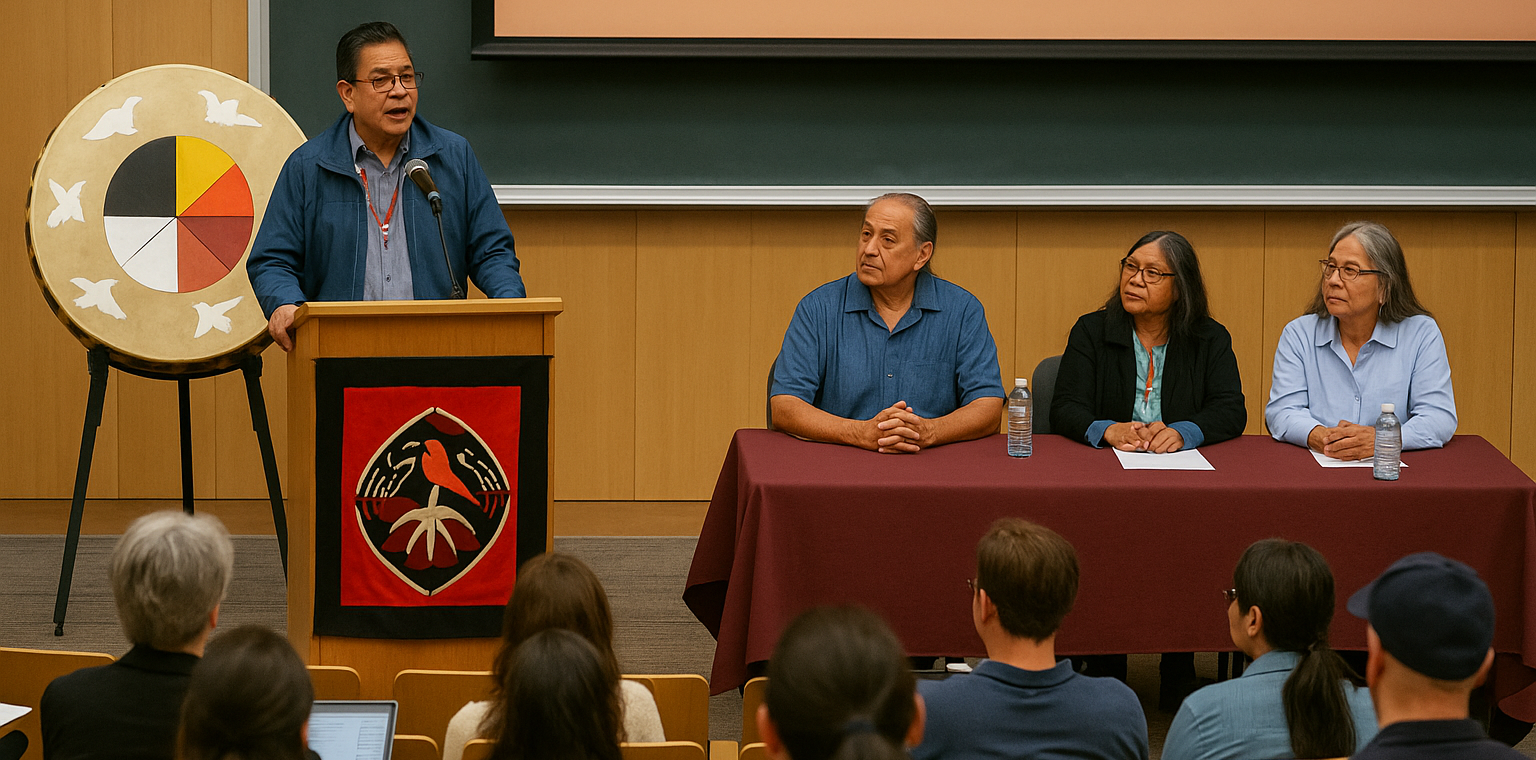
Winnipeg, MB — The University of Winnipeg will host the 57th Algonquian Conference this fall, bringing together scholars, students, cultural workers, and community members from across North America to share research and celebrate the diversity of Algonquian languages and cultures.
Scheduled for October 17–19, the event is expected to draw up to 200 participants from Canada, the United States, and beyond. Organizers say the gathering will feature both in-person and online presentations, along with workshops, roundtables, panels, and a special cabaret-style evening showcasing Indigenous performance and language.
A Gathering of Shared Knowledge
The Algonquian Conference has long served as an international forum for interdisciplinary research related to Algonquian peoples. While Canada and the U.S. alternate hosting duties each year, this marks the first time the University of Winnipeg has welcomed the event.
Heather Souter, a Michif (Métis) faculty member in the Department of Anthropology and Indigenous Languages program and a member of the conference’s organizing committee, emphasized the significance of this year’s meeting.
“The committee has been working hard to ensure all participants can engage with each other in ways that help them see beyond stereotypes, trauma, and superficial differences to our shared humanity and a shared and hopeful future,” Souter said.
She added that the conference aims to strengthen relationships between Indigenous and non-Indigenous scholars while underscoring “recognition of each Indigenous nation’s sovereignty and autonomy, particularly in the context of knowledge and research.”
The Role of Algonquian Languages
The Algonquian language family is among the largest in North America, spanning communities from the Atlantic coast to British Columbia and south into Oklahoma. It includes Cree, Anishinaabemowin, Blackfoot, Cheyenne, Mi’kmaq, Arapaho, Fox-Sauk-Kickapoo, and both Southern and Northern Michif.
“Algonquian peoples represent the largest combined group of First Peoples in Canada,” Souter noted.
This linguistic and cultural diversity will be front and centre throughout the three-day event.
“Bridging Knowledges, Building Trust”
This year’s theme, Bridging Knowledges, Building Trust, reflects a shift toward more applied, community-driven research. Past conferences often leaned toward theoretical linguistics, but organizers say 2025 will highlight projects that bring Reconciliation into practice across disciplines including education, anthropology, political science, art, and literature.
According to Souter, the theme emphasizes relational accountability and the recognition of Indigenous knowledges while fostering “a third space” where communities can co-create new approaches.
Each day of the event will begin with sessions linked to the theme, followed by breakout discussions, workshops, and artistic presentations. Highlights include an Elders’ panel on language revitalization and another session focused on Indigenous language technology. A side workshop tailored for high school students will introduce tools for Indigenous language technology.
A Cultural Celebration
Beyond academic sessions, the conference will feature a Friday evening Algonquian cabaret with food, live music, and performances. The event, co-produced by the Kiyanaan Indigenous Theatre Festival and hosted by Philip Geller and Charlene Van Buekenhout, will also honour graduates of UWinnipeg’s Teaching Indigenous Languages for Vitality Certificate Program and others making contributions to language revitalization.
Applications to perform in the cabaret are now open.
Keynote from a Leading Scholar
Dr. Bernard Perley, a Maliseet scholar from Tobique First Nation in New Brunswick, will deliver the keynote address on October 17. Currently President of the Canadian Anthropology Society, Dr. Perley holds a PhD from Harvard and teaches at the University of British Columbia’s Institute for Critical Indigenous Studies.
A self-described activist and advocate Indigenous linguistic anthropologist, Dr. Perley combines scholarship with community engagement, from collaborative art installations and revitalization workshops to his cartoon series Having Reservations, which uses humour to address the legacies of colonial trauma.
Building on Partnerships
The 57th Algonquian Conference is supported by the Social Sciences and Humanities Research Council, the University of Winnipeg, and several of its departments, including Anthropology and Indigenous Engagement.
Organizers stress that the event’s majority-Indigenous planning committee reflects a conscious effort to ensure the conference advances inclusion and collaboration in research.
More details, including registration and schedules, are available on the conference website. Following the event, presenters will be invited to submit research papers for publication in the proceedings, adding to a growing archive of Algonquian scholarship.
