

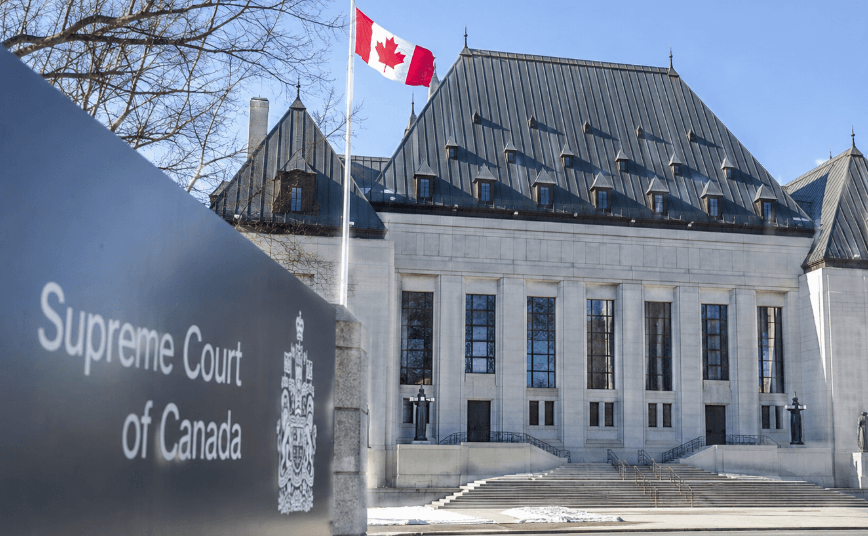
OTTAWA, ON — The BC Civil Liberties Association (BCCLA) is appearing before the Supreme Court of Canada to argue that individuals whose constitutional rights have been violated should not be denied Charter damages simply because they have already received compensation through civil lawsuits.
The organization is intervening in Named Persons v. Attorney General of Canada, a case involving the accidental disclosure of confidential informants’ identities by Crown prosecutors. The proceedings raise important questions about government accountability, constitutional protections and the availability of financial remedies when public authorities violate fundamental rights.
Supreme Court Case Examines Government Liability for Confidential Information Breach
The dispute stems from a criminal proceeding in which the Crown inadvertently disclosed information that could potentially identify confidential informants while providing evidence to an accused person.
The disclosure exposed the informants to serious safety risks, potentially endangering their lives and undermining the confidentiality protections associated with their cooperation in criminal investigations.
Following the incident, the affected informants launched legal action against the federal government, seeking monetary compensation for negligence and violations of their rights under the Canadian Charter of Rights and Freedoms.
The informants initially succeeded in obtaining damages under both legal grounds.
However, the British Columbia Court of Appeal subsequently overturned the Charter damages award, concluding that the compensation already provided through negligence claims adequately addressed the violations.
The appeal court determined that awarding additional constitutional damages would constitute “double compensation,” effectively compensating the plaintiffs twice for the same harm.
That decision has brought the broader question of overlapping civil and constitutional remedies before Canada’s highest court.
BCCLA Challenges Limits on Constitutional Compensation
The BCCLA argues that courts must distinguish between the different purposes served by private-law damages and remedies awarded for Charter violations.
According to the organization, constitutional damages should be considered duplicative only when they genuinely serve the same purpose as compensation awarded through another legal claim.
The association maintains that Charter remedies can advance broader public interests, including holding governments accountable for unconstitutional conduct and discouraging future violations.
By contrast, conventional tort damages generally focus on compensating individuals for harm arising from wrongful or negligent actions.
Different Legal Protections Address Different Forms of Harm
A central element of the BCCLA’s intervention concerns the distinction between negligence claims and protections under Section 7 of the Charter.
Section 7 guarantees the right to life, liberty and security of the person, subject to the principles of fundamental justice.
The organization argues that negligence law primarily addresses actual harm, while constitutional protections may also apply when government conduct creates an increased risk of serious harm.
In the confidential informants’ case, this distinction is particularly significant because the disclosure of identifying information could expose individuals to danger even without a subsequent physical attack.
The BCCLA maintains that courts should examine the specific interests protected by each legal remedy before concluding that additional Charter damages would result in improper duplication.
Constitutional Remedies Central to Government Accountability
The association says the Supreme Court’s consideration of the case has implications extending beyond the individuals directly involved.
A ruling clarifying when Charter damages can be awarded alongside civil compensation could influence future litigation involving government agencies, law enforcement authorities and other public institutions.
It could also affect how courts assess claims involving constitutional violations that create serious risks without necessarily producing immediately measurable physical or financial losses.
BCCLA Litigation Director Vibert Jack emphasized the importance of meaningful remedies in ensuring that constitutional rights remain enforceable.
“In litigation, remedies are often what defines the real-world effectiveness of a given right. As is often said, ‘a right without a remedy is no right at all’. When governments violate our constitutional rights, they should have to pay the price.”
Supreme Court Decision Could Shape Future Charter Litigation
The case presents the Supreme Court of Canada with an opportunity to clarify the relationship between constitutional damages and traditional civil-law compensation.
For individuals seeking remedies against government authorities, the outcome could help determine whether receiving compensation for negligence limits their ability to pursue separate damages for constitutional violations.
The BCCLA’s position is that courts should assess the distinct legal purposes of each remedy rather than automatically treating overlapping awards as double compensation.
The Supreme Court’s eventual ruling could establish important guidance for future Charter litigation, particularly cases involving government negligence, public safety and the protection of fundamental constitutional rights.
Discover more from Wire Service Canada
Subscribe to get the latest posts sent to your email.