

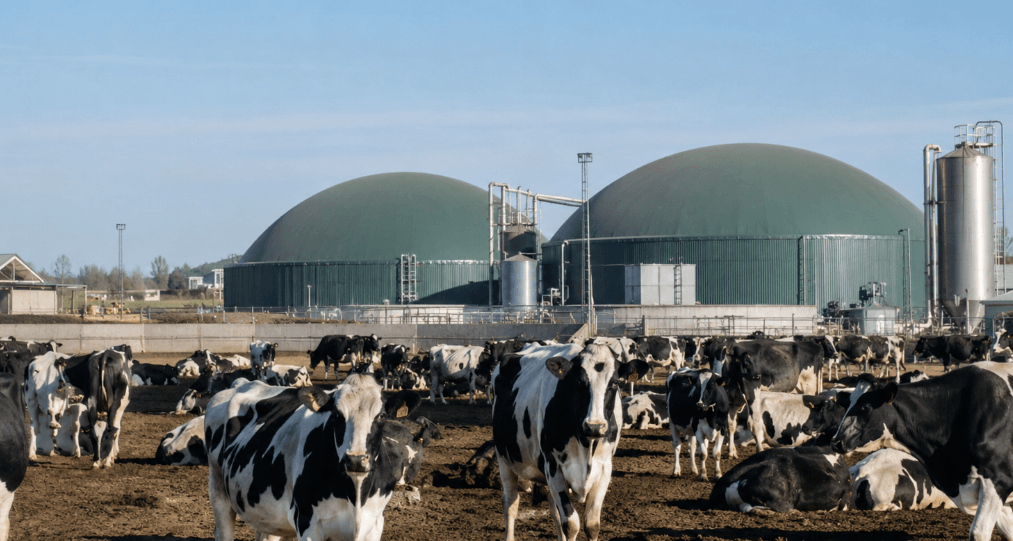
A coalition of environmental, animal welfare and community organizations has filed an opening brief in a California lawsuit challenging changes to the state’s Low Carbon Fuel Standard, arguing that incentives for factory farm biogas production impose environmental and health costs on rural communities.
The brief, filed in Fresno Superior Court, targets amendments adopted by the California Air Resources Board (CARB) in 2024. The petitioners contend that the changes strengthened financial incentives for producing biogas from livestock manure without adequately addressing the resulting environmental impacts.
The groups involved are Defensores del Valle Central para el Aire y Agua Limpio, Food & Water Watch, the Animal Legal Defense Fund and the Center for Food Safety.
Groups Challenge CARB’s 2024 LCFS Amendments
The lawsuit alleges that CARB violated several California laws when it amended the Low Carbon Fuel Standard, including the California Environmental Quality Act, the California Administrative Procedure Act and the Global Warming Solutions Act, the state’s landmark 2006 climate law.
The petitioners advance three primary arguments. They claim CARB’s policies cause disproportionate impacts in low-income communities, improperly allow fossil fuel companies to purchase LCFS credits generated by factory farms to claim reduced climate emissions, and fail to adequately disclose, analyze and mitigate significant environmental impacts associated with the amendments.
“CARB has known for years that its perverse and backward policies that reward factory farms for polluting with LCFS credits are bad for the program and bad for Californians. CARB prioritized industry profits over protecting vulnerable communities and achieving real climate progress, and they now have to defend those decisions in court,” said Food & Water Watch Staff Attorney Tyler Lobdell, “If California wants to be a climate leader, it needs to act like one.”
Central Valley Communities Raise Pollution Concerns
The dispute places particular attention on California’s Central Valley, where large dairy operations are concentrated and where petitioners argue communities already face substantial air and water pollution pressures.
“CARB is encouraging the production of, and has failed to regulate, excessive dairy manure pollution at the expense of air, water, and local communities,” said David Rodriguez, founding member of Defensores. “In the Central Valley, we live near 90% of cows in California and some of the largest dairy operations in the entire world. The impacts are getting worse as dairies are getting more cows and dairy digesters are installed.”
Critics Say Incentives Encourage More Manure Production
The Animal Legal Defense Fund argues that the LCFS structure encourages additional manure production rather than reducing pollution generated by large livestock operations.
“CARB should prioritize Californians and their health by reducing dairy and livestock pollution. Instead, it’s incentivizing the production of even more manure despite the harm it causes to surrounding communities, the environment and animals suffering in factory farms,” said ALDF Litigation Fellow Christian Suarez. “It’s critical that CARB works on behalf of Californians to protect their health and well-being instead of helping the industrial animal agriculture industry line its pockets at the public’s expense.”
The Center for Food Safety also argues that the program puts smaller agricultural operations at a competitive disadvantage by directing incentives toward large industrial dairies.
“By rewarding industrial dairies for producing factory farm gas, CARB’s LCFS program entrenches a harmful model of agriculture while putting smaller, more sustainable farms at a disadvantage,” said Center for Food Safety Staff Attorney Kristina Sinclair. “California should be investing in a food and farming system that protects our climate, our environment, and the health of rural communities—not propping up the largest and most polluting factory farms.”
LCFS Has Driven Biogas Development Beyond California
California’s Low Carbon Fuel Standard is designed to reduce the carbon intensity of transportation fuels sold in the state. Critics of its treatment of manure-derived biogas, however, argue that the credit system has become a significant financial driver for dairy digesters and other factory farm biogas projects.
Food & Water Watch says its analysis identified 196 digesters across 16 states that generate revenue through California’s LCFS program, with projects outside California accounting for 45% of the total.
The petitioners argue that incentives tied to methane production can encourage larger concentrations of livestock and animal waste. They also link industrial livestock operations to concerns involving air and water quality and health conditions in surrounding communities.
Court Challenge Focuses on Environmental Review
The case will ultimately test whether CARB complied with California’s environmental, administrative and climate laws when approving the 2024 LCFS amendments.
Defensores is represented by Leadership Counsel for Justice and Accountability, the Law Office of Brent Newell, and Shute, Mihaly & Weinberger LLP. The lawsuit seeks changes to a program that has become an important component of California’s transportation decarbonization strategy while generating growing debate over the role of livestock-derived biogas in state climate policy.