

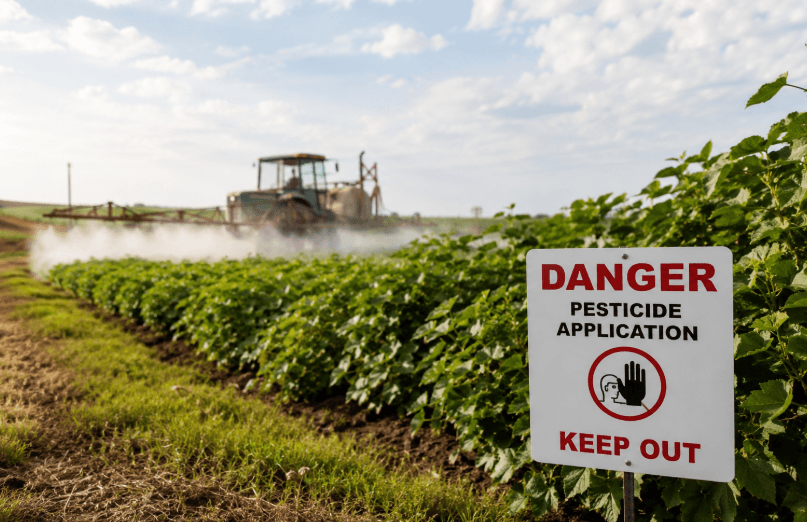
Three environmental and food-safety organizations have launched a legal challenge against the Trump administration over the federal registration of trifludimoxazin, a pesticide described by the groups as a potent PFAS chemical that can break down into long-lasting byproducts.
The lawsuit, filed Friday in the U.S. Court of Appeals for the 9th Circuit, challenges the U.S. Environmental Protection Agency’s approval of the herbicide for use on widely consumed crops, including corn, wheat, oats, soybeans, oranges, apples, peanuts and almonds.
Environmental Groups Challenge EPA Pesticide Approval
The legal action was brought by the Center for Food Safety, Center for Biological Diversity and Pesticide Action & Agroecology Network North America.
At the centre of the dispute is trifludimoxazin and its relationship to PFAS, or perfluoroalkyl and polyfluoroalkyl substances. PFAS chemicals contain exceptionally strong carbon-fluorine bonds that make them resistant to environmental degradation. According to the groups, trifludimoxazin can take years or decades to fully decompose.
The organizations argue that approving additional pesticides with persistent PFAS characteristics could increase long-term contamination risks for agricultural soil and water.
Groups Raise Cancer and Wildlife Concerns
The EPA has acknowledged potential risks associated with trifludimoxazin, including impacts on wildlife and human health. According to the groups, the agency recognizes that the pesticide causes thyroid tumours in rodent studies.
“Trifludimoxazin is a likely human carcinogen that belongs to a family of weed-killers that also causes reproductive harm, birth defects and neurological deficits in animal studies,” said Bill Freese, science director at Center for Food Safety. “As if the health threats weren’t enough, this incredibly potent herbicide can drift to stunt crops and wild plants hundreds of yards from a sprayed field, while runoff threatens wetland plants,” he added. “Potent biocides like this have no business on the American landscape.”
The organizations contend that the EPA did not assess cancer risks for farmworkers applying the pesticide or for people potentially exposed through contaminated food or water.
Spray Drift Could Affect Crops and Native Plants
Another issue raised in the lawsuit involves spray drift. Trifludimoxazin is described by the groups as being 10 times more toxic to plants than dicamba, an herbicide that has faced significant scrutiny over off-target crop damage caused by drift and runoff.
Because of that potency, the petitioners argue trifludimoxazin could damage crops and native vegetation located hundreds of yards away from treated fields.
“While everyone’s distracted by the Trump administration’s erratic actions on the world stage, it keeps approving dangerous forever pesticides right here on our own soil,” said Nathan Donley, environmental health science director at the Center for Biological Diversity. “It is unconscionable, immoral and illegal. Our kids and grandkids deserve better than to be saddled with pollution that never goes away.”
Farm Communities and Herbicide Resistance in Focus
The lawsuit also raises broader concerns about agricultural reliance on chemical herbicides and the development of herbicide-resistant weeds.
“Continuing to register new herbicides like trifludimoxazin keeps farmers on the pesticide treadmill and perpetuates the problem of herbicide resistance in weeds. The potential for PFAS pesticides to contaminate water and soil wherever they are used is highly concerning for the health and livelihoods of people in farming communities,” said Emily Marquez, Ph.D, Staff Scientist with Petitioner Pesticide Action & Agroecology Network North America.
Those concerns could resonate beyond the United States, including in Canada, where PFAS contamination, pesticide regulation and agricultural sustainability have increasingly become issues for regulators, producers and food-sector businesses.
Lawsuit Questions EPA’s Cumulative Risk Assessment
Trifludimoxazin belongs to a group of herbicides known as protoporphyrinogen oxidase, or PPO, inhibitors. These chemicals kill plants by interfering with an enzyme that is also present in humans.
The petitioners say animal research has linked PPO inhibitors to common adverse effects involving the liver and to birth defects following exposure during fetal development.
They allege that the EPA failed to conduct a cumulative risk assessment examining trifludimoxazin alongside other PPO inhibitors, which the organizations argue is required under federal law.
The issue is particularly significant because two products approved by the EPA combine trifludimoxazin with saflufenacil, another PPO inhibitor. The groups argue that agricultural workers using those products could therefore face simultaneous exposure to both substances.
The court challenge now places the EPA’s pesticide approval process under legal scrutiny, with the petitioners seeking to contest a registration they say underestimated potential health, environmental and agricultural risks associated with the herbicide.
Discover more from Wire Service Canada
Subscribe to get the latest posts sent to your email.