

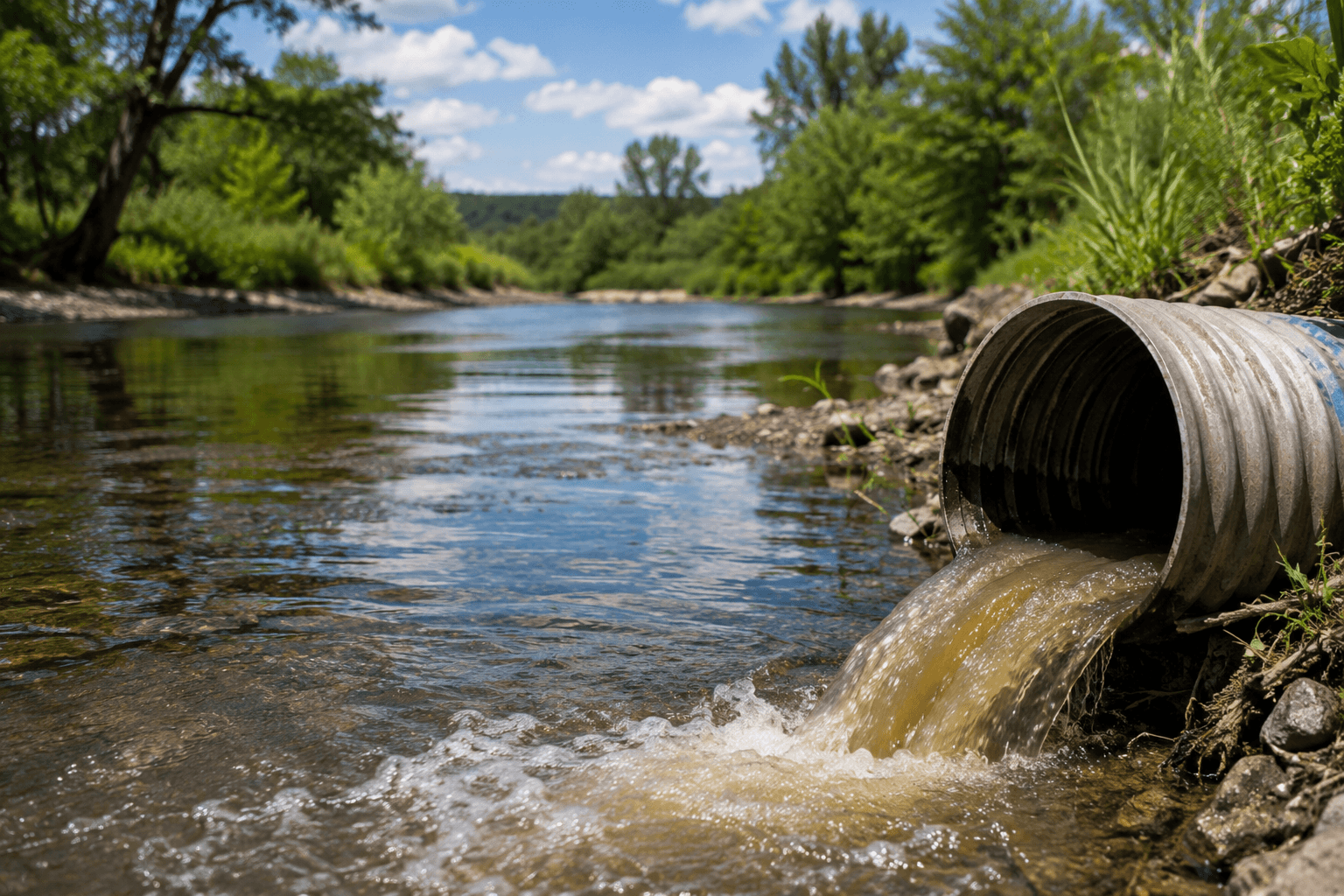
Environmental Organizations Challenge State Permit Governing More Than 300 Factory Farms
PORTLAND, Ore. — A coalition of environmental and public interest organizations has filed a lawsuit against Oregon state regulators, alleging that a newly issued factory farm general permit fails to adequately protect waterways from pollution generated by large-scale livestock operations.
The legal challenge targets a permit jointly administered by the Oregon Department of Agriculture (ODA) and the Oregon Department of Environmental Quality (DEQ). The permit regulates more than 300 factory farms across the state and establishes requirements for managing the substantial volumes of waste produced by industrial livestock facilities.
The petitioners in the case are Willamette Riverkeeper, Food & Water Watch, Center for Food Safety, and Animal Legal Defense Fund. The groups argue that the permit lacks sufficient monitoring and enforcement measures to prevent contamination of rivers, streams, groundwater, and drinking water sources.
According to the organizations, the permit does not require meaningful pollution monitoring and fails to comply with state clean water obligations, despite concerns raised during the public consultation process.
Groups Say Monitoring Requirements Are Insufficient
A central issue in the lawsuit is the permit’s monitoring framework. The petitioners contend that without stronger oversight and reporting requirements, regulators will be unable to effectively identify and address pollution incidents.
“Monitoring is absolutely vital to ensure clean water for our communities,” said Willamette Riverkeeper Staff Attorney Lindsey Hutchison. “By failing to include adequate monitoring requirements in the general permit we are seeing state regulators fail to do their job and allow an industry notorious for polluting given free rein to continue polluting our waterways without oversight that would allow for proper enforcement.”
The organizations noted that they previously submitted comments on the draft permit outlining changes they believed were necessary to bring the final version into compliance with clean water laws. They argue those recommendations were not incorporated into the final permit.
Legal Challenge Focuses on Water Quality and Regulatory Compliance
The lawsuit alleges that Oregon regulators failed to establish enforceable safeguards capable of addressing pollution risks associated with concentrated animal feeding operations and other large-scale livestock facilities.
“ODA violated its core duties by failing to put in place lawful, enforceable safeguards to protect Oregonians and Oregon’s native ecosystems. The general permit greenlights 350 massive factory farms, over 65% of all such operations in Oregon, while ignoring significant pollution sources,” said Suzannah Smith, attorney with Petitioner Center for Food Safety. “We are asking the Court to ensure this permit does not unlawfully and irresponsibly allow factory farms to shift the costs of their pollution onto the shoulders of Oregon communities and into our environment.”
Environmental advocates argue that factory farms are among the leading contributors to water pollution in Oregon. Waste generated by these operations can contain manure, heavy metals, pharmaceuticals, and other contaminants that may enter waterways or groundwater supplies if not properly managed.
Concerns Over Rural Drinking Water Supplies
The issue carries particular significance for rural communities, many of which rely heavily on groundwater for drinking water. According to the groups, approximately 80 per cent of rural Oregonians depend on groundwater sources.
Food & Water Watch pointed to the scale of waste generated by industrial dairy operations in the state. The organization’s analysis found that milk cows on Oregon’s mega-dairies produced more than four billion pounds of manure in 2022 alone, equivalent to filling roughly two-and-a-half Olympic-sized swimming pools every day.
“It has never been clearer that factory farms are polluting waterways and drinking water across Oregon. Nonetheless, state regulators have capitulated to Big Ag and pushed through a permit that allows factory farms to continue to pollute our waters with far too little oversight,” said Food & Water Watch Legal Director Tarah Heinzen. “We need strong permits that prioritize clean water over industry profits.”
Environmental Groups Cite Existing Water Quality Challenges
Many livestock operations store waste in open-air lagoons before applying it to nearby agricultural land. Environmental groups argue that inadequate monitoring and pollution prevention measures increase the risk of contaminants reaching rivers, streams, and groundwater supplies.
Oregon already faces significant water quality challenges, according to information cited in the lawsuit. The state has approximately 122,800 miles of impaired rivers and streams, along with three designated groundwater management areas established due to elevated nitrate contamination levels.
Advocates say the impacts are felt most heavily in rural and lower-income communities, including communities of colour, where access to clean drinking water can be limited.
“For decades Oregon has allowed the factory farming industry to pollute its waterways with manure and other waste,” said Christine Ball-Blakely, Senior Staff Attorney with the Animal Legal Defense Fund. “The Tillamook Bay and other degraded Oregon waters are proof of the state’s profound failure to regulate this harmful industry, with communities, animals, and ecosystems paying the price. Strengthening this permit is not just common sense—it’s the state’s legal obligation.”
Next Steps in the Case
The petitioners are seeking judicial review of the permit and are asking the court to require stronger protections and monitoring requirements aimed at preventing water pollution from factory farm operations.
The organizations are represented by Sugerman Dahab and in-house counsel. The case is expected to focus on whether the permit complies with Oregon’s legal obligations to protect water quality while regulating the state’s industrial livestock sector.
Discover more from Wire Service Canada
Subscribe to get the latest posts sent to your email.