

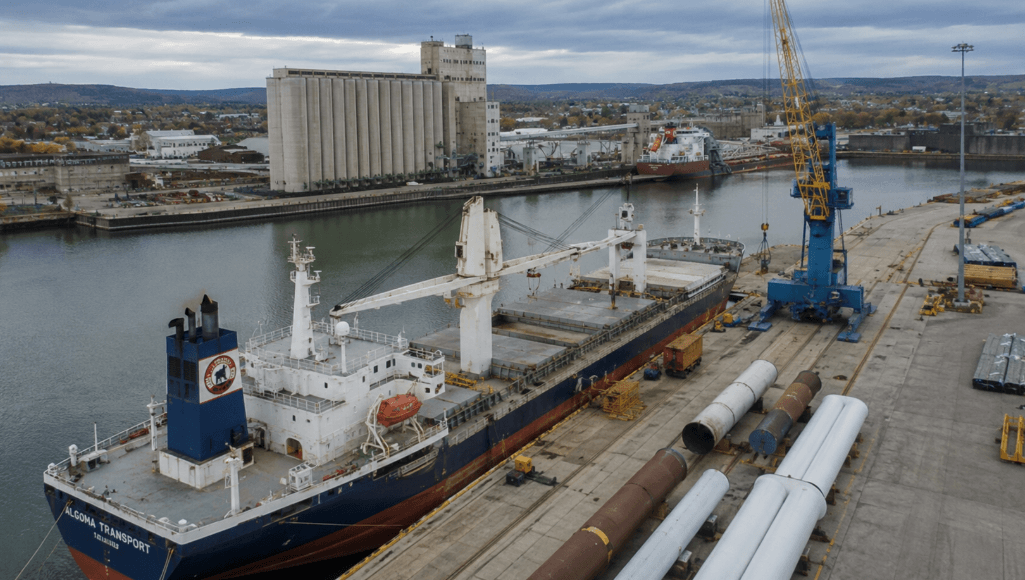
Funding targets Thunder Bay and Marathon marine facilities as province looks to expand east-west trade routes and reduce reliance on U.S. markets
THUNDER BAY — The Ontario government is investing more than $2.8 million in strategic marine infrastructure projects on Lake Superior, aiming to strengthen domestic supply chains, support industrial exports and position northwestern Ontario as a larger player in Canada’s east-west trade network.
The funding, announced Monday through the Northern Ontario Heritage Fund Corporation (NOHFC), will support expansion work at the Port of Thunder Bay and help establish a new marine terminal in Marathon. Provincial officials say the projects are intended to improve cargo movement across Canada while reducing dependence on U.S. trade corridors amid ongoing economic uncertainty and tariff pressures.
Premier Doug Ford said the investments are part of Ontario’s broader strategy to build a more resilient and self-reliant economy.
“By expanding the Port of Thunder Bay and creating a new marine terminal in Marathon, we’re helping Northern Ontario ports increase cargo volumes to ship everything from grain and potash to components for pipelines and critical minerals from the Ring of Fire,” said Premier Doug Ford. “Our government will continue to invest in Northern Ontario’s vital infrastructure to support local industries, businesses and workers, while driving economic growth across the region.”
Thunder Bay expansion to increase cargo handling capacity
The Thunder Bay Port Authority (TBPA) will receive $804,955 to expand the staging and storage area at Keefer Terminal by approximately 10 acres. The expansion is expected to improve the port’s ability to handle oversized and industrial cargo, including wind turbine components and steel products.
The Port of Thunder Bay remains one of Canada’s most important inland shipping hubs, handling more than 10.7 million metric tonnes of cargo in 2025. Much of that volume includes grain, potash and natural resources destined for domestic and overseas markets outside the United States.
Located at the western end of the Great Lakes-St. Lawrence Seaway system, the port connects marine transportation with rail and highway infrastructure, serving sectors such as mining, forestry and manufacturing across western and northern Canada.
Chris Heikkinen, chief executive officer of the Port of Thunder Bay, said the investment will improve the terminal’s competitiveness and operational flexibility.
“The Port of Thunder Bay is grateful for the province of Ontario’s support through the Northern Ontario Heritage Fund Corporation, which supports expansion and efficiency improvements at Keefer Terminal. Strategically located as the furthest inland port in Canada, this premier intermodal facility is a vital supply chain link serving western Canada and Northern Ontario. Expanding laydown capacity will enhance our ability to handle increased and more diversified cargo, supporting inbound opportunities and improving vessel availability for bulk exports.”
Ken Boshcoff, mayor of Thunder Bay, said the project aligns with the city’s long-term economic priorities.
“Thunder Bay’s story has always been tied to the movement of goods and people across this country. This investment strengthens that legacy by enhancing trade and transportation connections at our port. These are key priorities identified in our Smart Growth Action Plan, as we work to grow our economy, attract investment and support business throughout northwestern Ontario.”
Marathon marine terminal project tied to Ring of Fire development
The larger share of the provincial funding — $2 million — will go to the Peninsula Harbour Port Authority (PHPA) in Marathon to redevelop unused commercial docks at the former Marathon Pulp mill site into a new marine shipping terminal.
The terminal is expected to support exports of critical minerals, forestry products, road salts and industrial components to southern Ontario and international markets. Officials say the facility could become a strategic transportation hub due to Marathon’s proximity to the Ring of Fire mineral development region.
The PHPA, established in 2020 as a partnership between the Town of Marathon and Biigtigong Nishnaabeg First Nation, expects the facility to become operational by late 2027.
Chief Duncan Michano of Biigtigong Nishnaabeg said the project represents an important economic development opportunity for the First Nation and surrounding communities.
“Today’s investment by Ontario is significant for Biigtigong Nishnaabeg, in partnership with the Township of Marathon, towards the development of the Port Authority. This project will allow our First Nation to continue to diversify our economic portfolio and create additional opportunities for partnerships within the region, the province and internationally.”
Rick Dumas, mayor of Marathon and president of the Northwestern Ontario Municipal Association, said the port redevelopment could help unlock broader industrial growth across the region.
“The Town of Marathon has been working toward the reactivation of the Port of Marathon with a vision of unlocking the economic potential of northwestern Ontario. As the closest international port to the Ring of Fire, the port is positioned to support mining, forestry, renewable energy and other resource industries throughout the region.”
Province focuses on northern economic resilience
Ontario’s Minister of Northern Economic Development and Growth, George Pirie, said the province is prioritizing transportation investments that improve access to cost-efficient shipping infrastructure and support northern industries facing trade disruptions.
“Our government is supporting access to cost-efficient marine transportation for resource and industrial operations located in northwestern Ontario,” said Pirie. “We are helping these ports be better positioned to attract new cargo and expand existing business, reinforcing northwestern Ontario’s role as a competitive gateway for provincial, interprovincial and international trade.”
The province said the NOHFC has invested more than $1 billion in over 8,600 projects across Northern Ontario since 2018, leveraging more than $3.3 billion in additional investment and supporting or sustaining more than 13,400 jobs.
Ontario recently increased the NOHFC’s annual budget to $110 million, including an additional $30 million over three years, as part of efforts to support northern communities, Indigenous partnerships and industrial development projects across the region.