

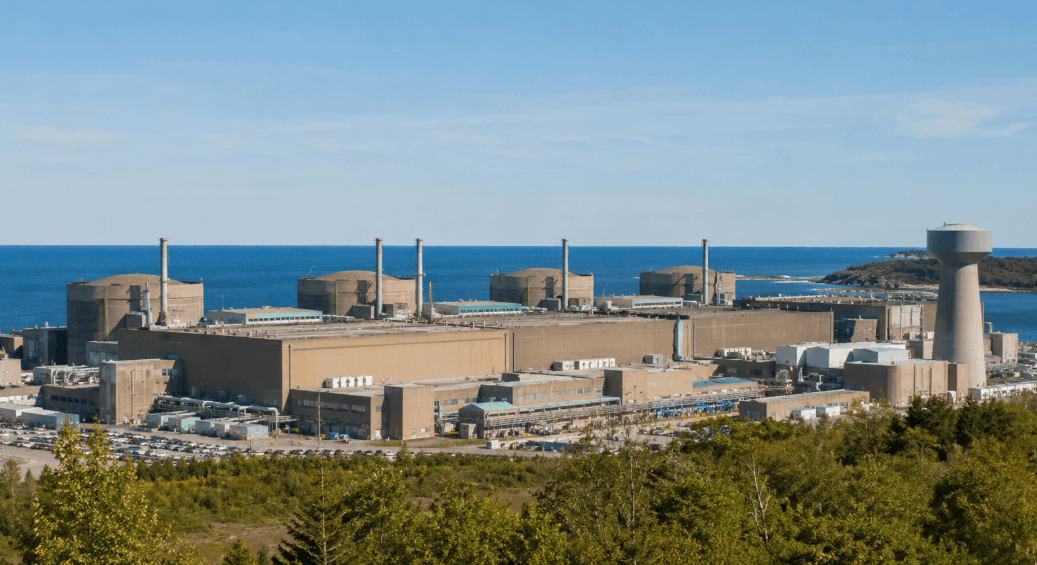
Bruce Power Unit 3 Returns to Grid Seven Months Early With $150 Million in Savings
Ontario has completed what the provincial government is calling the most successful nuclear refurbishment project in its history, with Bruce Power’s Unit 3 reactor returning to service seven months ahead of schedule and under budget.
The announcement, made Sunday by the Ministry of Energy and Mines in Vaughan, marks a major milestone for Ontario’s long-term energy strategy as the province prepares for rising electricity demand over the coming decades. Officials said the accelerated completion saved ratepayers approximately $150 million while reinforcing Ontario’s position as a global leader in nuclear energy infrastructure.
Originally scheduled to return to operation in January 2027, Bruce Power’s Unit 3 reactor is now back online and expected to provide more than 800 megawatts of electricity for over 35 years — enough to power more than 800,000 homes.
The refurbishment is part of Bruce Power’s broader Life-Extension Program, which will modernize six reactors at the Bruce Nuclear Generating Station through 2033 and extend the facility’s operating life to 2064.
Province Positions Nuclear Energy as Economic Driver
Ontario officials say the project demonstrates the province’s ability to deliver large-scale nuclear infrastructure projects efficiently while supporting domestic manufacturing and skilled trades employment.
Bruce Power’s operations and life-extension work currently support approximately 27,000 direct and indirect jobs across Ontario and contribute an estimated $4 billion annually to the provincial economy.
“When Ontario successfully completed the world’s largest nuclear refurbishment at Darlington ahead of schedule and under budget, critics said it couldn’t be done again. Yet again, we are proving them wrong as we delivered a record-setting refurbishment under budget and seven months ahead of schedule,” said Stephen Lecce, Minister of Energy and Mines.
“Ontario is cementing our position as a tier-one nuclear jurisdiction with a plan to put 150,000 Canadians to work, with ‘Made in Canada’ stamped on over 90 per cent of our spend. Backed by the best workers, engineers and tradespeople anywhere in the world, we’re delivering the reliable, affordable and clean power needed to keep our economy strong and more self reliant.”
Advanced Technology and Robotics Used in Refurbishment
The Unit 3 refurbishment involved the replacement of major reactor components including fuel channels, feeder tubes and steam generators. According to the province, the project also introduced significant technological innovations, including the first-ever use of robotic tools on a CANDU reactor face during refurbishment work.
Officials said the project additionally set a new benchmark for calandria tube removal, completing that phase 11 days ahead of schedule.
Bruce Power President and Chief Executive Officer Eric Chassard said the project highlights Ontario’s growing expertise in complex nuclear construction and refurbishment.
“With Unit 3 now back in service and providing safe, clean, and reliable electricity to the province, we continue to demonstrate that large-scale nuclear projects in Ontario can be delivered safely, efficiently, and with real benefits for ratepayers,” said Chassard.
“This achievement reflects the dedication of our workforce, our skilled trades partners, and the strength of our made-in-Canada nuclear industry.”
Ontario Expands Nuclear Ambitions Amid Growing Electricity Demand
The refurbishment comes as Ontario projects electricity demand could increase by as much as 90 per cent by 2050, driven by population growth, industrial expansion, electric vehicle adoption and data centre development.
Nuclear energy currently supplies roughly half of Ontario’s electricity generation and remains central to the province’s long-term clean energy plans.
The Bruce Nuclear Generating Station, located in Bruce County, is already one of the largest operating nuclear facilities in the world. Ontario is simultaneously advancing several additional nuclear projects, including the Darlington refurbishment, construction of small modular reactors at the Darlington site, refurbishment work at Pickering, and proposed expansion projects at Wesleyville and Bruce.
Industry Leaders Applaud Project Completion
The announcement drew support from municipal leaders, labour organizations, energy associations and manufacturing groups, many of whom pointed to the project as evidence of Ontario’s industrial capacity and skilled workforce.
“Bruce Power has proven to be a trusted leader in Ontario’s nuclear sector. The early and under-budget completion of Unit 3 demonstrates that clean, reliable and affordable energy is foundational to building strong, resilient communities across the province,” said Lisa Thompson, MPP for Huron-Bruce and Minister of Rural Affairs.
Industry groups also emphasized the importance of nuclear investment in strengthening Ontario’s supply chain and maintaining competitiveness.
“Ontario’s Manufacturers need a reliable, affordable, and clean electricity system to remain globally competitive,” said Dennis Darby, President and CEO of Canadian Manufacturers & Exporters.
“The successful completion of Bruce Power’s Unit 3 refurbishment ahead of schedule and under budget is a testament to the expertise, innovation, and dedication of the thousands of skilled workers and manufacturers who contribute to Ontario’s world-class nuclear supply chain.”
Long-Term Energy Strategy Tied to Economic Growth
The province said the Bruce refurbishment project forms part of its broader “Energy for Generations” strategy, Ontario’s first integrated long-term electricity plan designed to secure future energy supply while supporting economic growth.
Ontario officials also pointed to recent assessments from the North American Electric Reliability Corporation that identified Ontario as comparatively well-positioned to manage future electricity demand pressures.
With refurbishment work continuing on additional Bruce reactors over the next decade, the province is increasingly positioning nuclear energy as both an economic development tool and a cornerstone of its clean electricity system.