

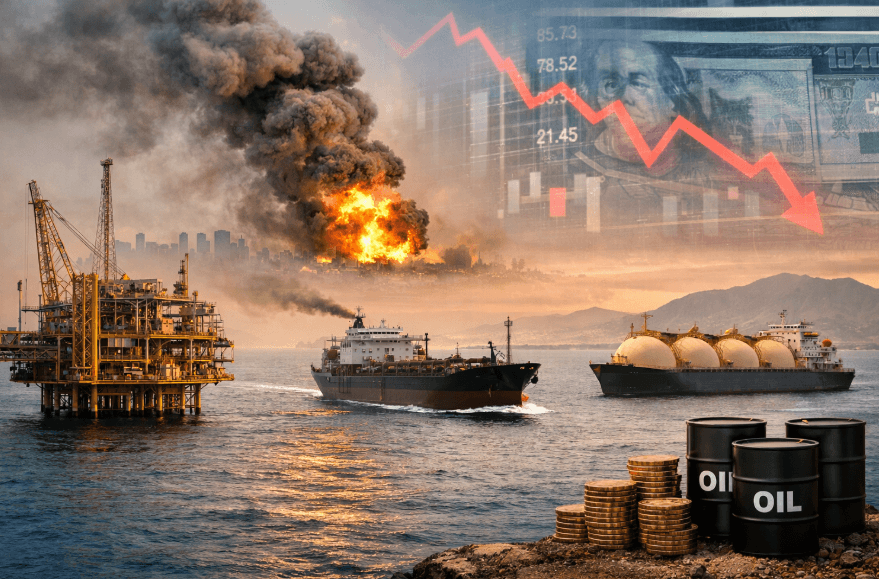
Agency Expands International Response to Worsening Energy Crisis Amid Strait of Hormuz Disruptions
The International Energy Agency (IEA) is intensifying coordination with governments and financial institutions worldwide as the ongoing conflict in the Middle East continues to disrupt global energy markets, prompting what the agency says is an unprecedented threat to energy security.
In a sweeping update on its crisis response, the Paris-based energy watchdog said the war in the region, which began on 28 February, has reduced energy trade flows through the Strait of Hormuz to a fraction of normal levels, sharply constraining oil and gas shipments through one of the world’s most critical energy transit routes.
The disruption has sent oil and gas prices higher globally, with particularly steep increases in jet fuel and diesel markets. In response, IEA member countries last month unanimously approved the largest emergency oil stock release in the agency’s history.
The situation represents “the greatest threat to global energy security in history,” according to IEA Executive Director Fatih Birol.
IEA Engages Leaders in Australia, Japan and G7 Nations
As the crisis deepens, Birol has stepped up direct engagement with global leaders to coordinate policy responses and mitigate pressure on consumers and businesses.
During a recent visit to Canberra, Birol met with Australian Prime Minister Anthony Albanese to discuss energy market pressures affecting the Asia-Pacific region and possible measures to ease the burden on households and industry. He later travelled to Tokyo for talks with Japanese Prime Minister Sanae Takaichi, where discussions focused on the war’s implications for regional and global energy security.
Birol also thanked Japan for supporting the coordinated emergency stock release.
In addition to meetings with the two prime ministers, Birol held bilateral talks with Australia’s Minister for Climate Change and Energy Chris Bowen and Japan’s Minister of Economy, Trade and Industry Ryosei Akazawa, alongside other senior government and industry officials.
The IEA said Birol remains in regular contact with ministers from major energy-producing and energy-consuming economies as governments assess the fallout from the conflict.
Last week, Birol delivered opening remarks at a joint meeting of G7 energy and finance ministers and central bank governors convened by France’s G7 presidency. The meeting focused on the war’s implications for energy markets, the broader global economy and financial stability.
IEA, IMF and World Bank Launch Crisis Coordination Group
In a further sign of escalating international concern, the IEA announced the formation of a new coordination group with the International Monetary Fund and the World Bank aimed at aligning responses to the economic and energy impacts of the conflict.
The initiative was launched jointly by Birol, IMF Managing Director Kristalina Georgieva and World Bank President Ajay Banga.
The three leaders are scheduled to hold the group’s first in-person meeting on 13 April in Washington.
The IEA said the new mechanism is intended to improve policy coordination and maximize institutional support for countries facing mounting energy and economic strain.
Governments Increase Consumer Protection Measures
To track how governments are responding to the crisis, the IEA has launched a new online policy tracker detailing measures introduced globally to conserve energy and shield consumers from surging fuel prices.
According to the agency, an increasing number of governments are adopting policies from its previously published recommendations on protecting households and businesses from oil shocks.
The tracker includes measures such as fuel tax adjustments, consumer subsidies, conservation initiatives and broader demand-management policies.
The IEA has also expanded monitoring of maritime shipping flows through its Maritime Chokepoints Shipping Monitor to provide updated data on oil, gas and cargo movements affected by the conflict.
Supply Chain Risks Add to Long-Term Energy Concerns
Separate from the immediate crisis, the IEA warned that structural vulnerabilities in clean energy technology supply chains pose an additional long-term threat to energy security.
In its newly released Energy Technology Perspectives 2026 report, the agency found that supply chains for technologies including electric vehicles, batteries and renewable energy equipment remain heavily concentrated in a small number of countries.
New ‘N-1’ Analysis Highlights Critical Weak Links
For the first time, the report includes an “N-1” supply chain security analysis, examining what would happen if the largest supplier of a given technology were removed from the market.
The study found that every major supply chain reviewed contains at least one critical stage where less than a quarter of demand could be met without the largest manufacturer.
The IEA said the findings underscore the need for greater diversification and industrial competitiveness in clean energy manufacturing.
IEA Expands Research and Workforce Initiatives
The agency also launched a global employment survey to support development of its forthcoming World Energy Employment 2026 report, seeking input on labour shortages, workforce skills and the impact of digitalization and artificial intelligence on the energy sector.
Additional recent IEA research includes reports on:
AI and Energy in East Asia
A joint report with the Korea Energy Economics Institute examining how AI is reshaping East Asia’s energy systems and increasing electricity demand through data centre growth.
Carbon Capture Financing
New analysis on financing carbon capture, utilization and storage (CCUS) projects at scale and policy measures needed to mobilize private investment.
Desalination Electrification
A commentary on the growing electrification of desalination globally, particularly in the Middle East and North Africa.
Outlook Remains Uncertain
Despite extensive international coordination efforts, the IEA has warned that the current energy crisis may not be resolved quickly, even if hostilities in the Middle East ease in the near term.
With fuel markets tightening, shipping routes constrained and governments scrambling to cushion consumers from rising prices, policymakers face growing pressure to manage both immediate supply disruptions and broader structural weaknesses in global energy systems.
The IEA said it will continue updating its analysis and market monitoring as the crisis unfolds.
Discover more from Wire Service Canada
Subscribe to get the latest posts sent to your email.