

Move aims to improve access and strengthen connections to care
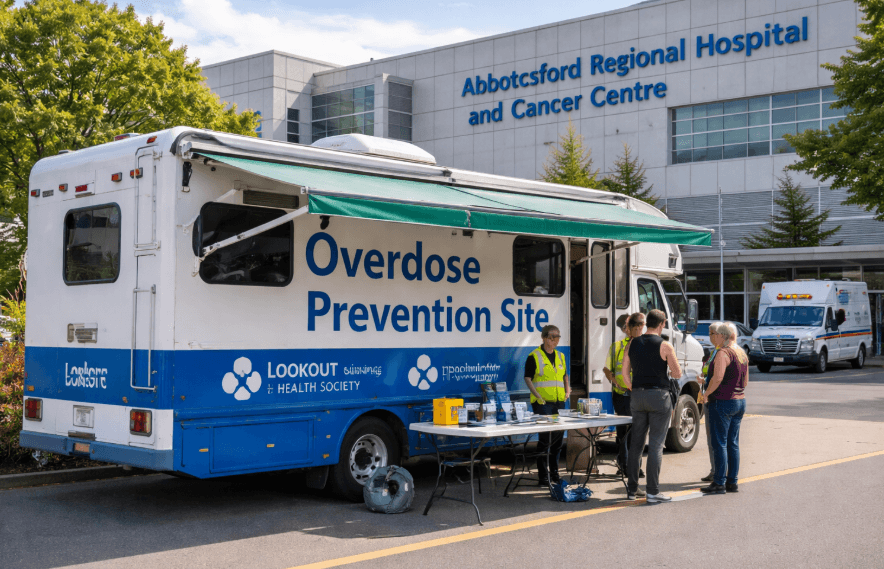
SURREY — A mobile overdose prevention site serving Abbotsford will relocate later this month to the campus of Abbotsford Regional Hospital and Cancer Centre, a move health officials say will improve access to critical harm-reduction services and better connect users with care.
Operated by Fraser Health and staffed by Lookout Housing and Health Society, the site will move from its current location at 1670 Riverside Road to 32900 Marshall Road on Wednesday, April 22. The relocation is intended to place services in a more central, accessible area for people who use substances, including those already seeking care at the hospital.
Continued service with expanded reach
At its new location, the mobile unit will maintain its existing hours of operation—seven days a week from 12:00 p.m. to 6:30 p.m.—and continue to provide supervised consumption services in a monitored, judgment-free environment. Trained staff will remain on hand to respond to overdoses and connect individuals with health and social supports.
“Access to overdose prevention services is vital for people who use substances,” says Dr. Rahul Walia, medical health officer. “We know that this service is an effective way to help people stay safer when using, prevent overdose deaths and provide a direct link to primary care and mental health and substance use supports. Moving the mobile unit to a more central location at Abbotsford Regional Hospital and Cancer Centre ensures we can provide this valuable service to those who need it most.”
The site will be accessible to anyone using the unregulated drug supply, including members of the community, hospital patients, and individuals already admitted for care.
Reducing public risk while improving outcomes
Health officials say the new hospital-based location will also help reduce public substance use in surrounding areas while offering closer proximity to emergency services. The relocation is scheduled to occur following closure on April 21, with services resuming the next day without interruption.
In addition to supervised consumption, the mobile site will continue offering a range of harm-reduction and support services. These include referrals to mental health and substance use programs, distribution of Take Home Naloxone kits along with training on their use, safe sharps disposal, and drug checking services such as fentanyl test strips.
Staffing will remain consistent, with a team comprising two harm reduction workers, one peer support worker, and a coordinator.
Growing demand for harm-reduction services
Usage data underscores the demand for such services in the Abbotsford area. In 2025, the mobile overdose prevention site recorded 3,422 visits. During that period, staff distributed 976 Take Home Naloxone kits and made 252 referrals to Fraser Health services, including mental health and substance use care, treatment for sexually transmitted and blood-borne infections, and other health and social supports.
The relocation reflects a broader effort by Fraser Health to integrate harm-reduction services more closely with acute care settings, improving continuity of care for vulnerable populations.
Indigenous care and regional commitment
Fraser Health acknowledged that its services operate on the traditional, ancestral, and unceded lands of the Coast Salish and Nlaka’pamux Nations, and that it serves 32 First Nations within the Fraser Salish region. The organization states it is committed to delivering culturally appropriate care to First Nations, Métis, and Inuit communities.
With a workforce of more than 50,000 staff, medical professionals, and volunteers, Fraser Health provides hospital and community-based services across the region.
Accessing more information
Additional details about overdose prevention services and a full list of sites in the region are available through Fraser Health’s public resources.
The relocation of the Abbotsford mobile unit signals continued investment in harm-reduction infrastructure as health authorities respond to ongoing challenges associated with toxic drug supply and overdose risk in British Columbia.
Discover more from Wire Service Canada
Subscribe to get the latest posts sent to your email.