

Province targets barrier-free community spaces with renewed EASE funding
The Ontario government has launched a new round of funding aimed at improving accessibility in public spaces, opening applications for $2.25 million in grants designed to support inclusive infrastructure projects across the province.
The funding is being distributed through the Enhancing Access to Spaces for Everyone (EASE) Grant, which offers up to $60,000 per project for small-scale capital improvements. The initiative targets municipalities, non-profits and Indigenous governing bodies seeking to make community spaces more accessible for people with disabilities and older adults.
“Our government is continuing to make critical investments to ensure people of all ages and abilities stay active, engaged and connected to their communities,” said Raymond Cho, Minister for Seniors and Accessibility. “As we open applications for the EASE Grant, I encourage organizations across Ontario to come forward with projects that create accessible, welcoming and inclusive spaces.”
Focus on practical, community-level improvements
The EASE Grant is structured to support tangible upgrades that directly improve usability and safety in public spaces. Eligible projects include retrofits and installations that remove physical barriers and enhance mobility for users.
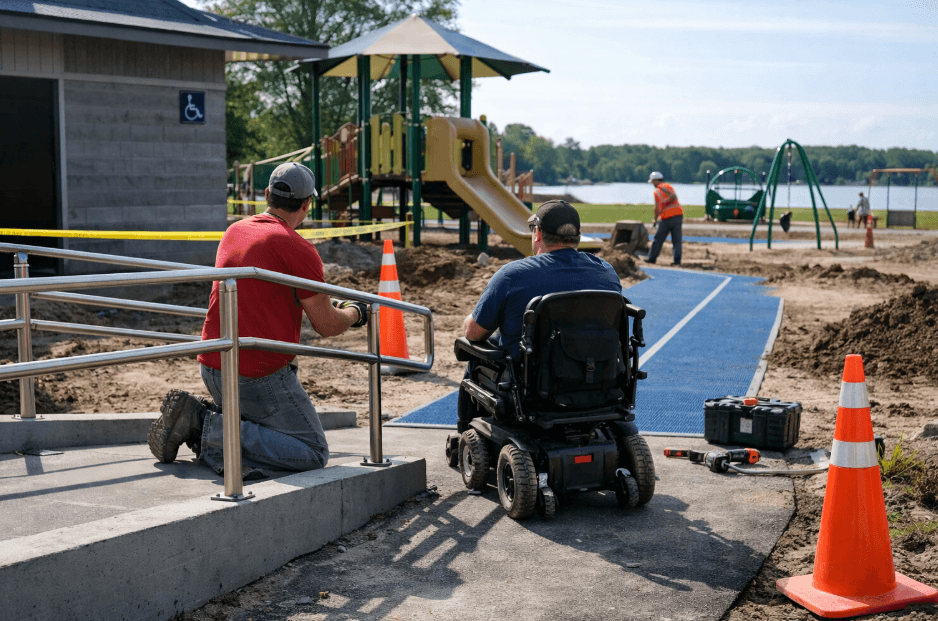
Examples outlined by the province include installing charging stations for mobility devices, adding mobility mats at beaches, and constructing accessible washrooms in parks. These types of improvements are intended to promote active lifestyles while ensuring equitable access to community amenities.
The program reflects a broader provincial strategy to modernize public infrastructure and address longstanding accessibility gaps. By focusing on smaller capital projects, the government aims to deliver faster, community-level impact while enabling a wider range of organizations to participate.
Early projects already underway
The announcement builds on a first round of EASE funding awarded earlier this year, with several projects already in progress across Ontario.
Among the recipients, the Township of Central Frontenac is receiving up to $58,000 to retrofit the Olden Community Hall. Planned upgrades include the installation of a ramp, railings and a new door equipped with a power operator to improve accessibility.
In Collingwood, Environment Network has been awarded up to $42,000 to enhance the local community garden. Improvements include accessible pathways, raised garden beds, seating areas and wayfinding systems designed to support users with varying mobility needs.
Meanwhile, the Lower Thames Valley Conservation Authority is set to receive up to $58,000 to upgrade outdoor recreational spaces. Planned additions include an inclusive playground, an accessible kayak launch and upgraded picnic tables.
The Brock Township Public Library Board is also benefiting from the program, with up to $27,000 allocated to renovate the Beaverton Library. The project includes height-adjustable desks, ergonomic shelving and visual enhancements in service and computer areas.
Application process and deadlines
Applications for the second round of EASE funding are now open through the provincial government’s Transfer Payment Ontario system. Organizations have until May 7, 2026, to submit proposals.
To support applicants, the Ministry for Seniors and Accessibility will host a series of informational webinars throughout the application period. These sessions will provide guidance on eligibility requirements, project planning and the submission process.
Webinars will be offered in both English and French on April 8 and April 23, with separate sessions scheduled for each language.
Program evolution and broader impact
The EASE Grant replaces two previous initiatives—the EnAbling Change Program and the Inclusive Community Grants Program—in an effort to streamline funding and increase impact.
By consolidating resources under a single program, the province aims to better address the needs of aging populations and individuals living with disabilities, while reducing administrative complexity for applicants.
The initiative forms part of Ontario’s ongoing efforts to create more inclusive communities by removing barriers and expanding access to public spaces. As projects funded through the first round begin to take shape, the government is positioning the second round as an opportunity to build on that momentum and extend accessibility improvements to more regions.
With demand expected to remain strong, the success of the program will likely be measured not only by the number of projects funded, but by the long-term usability and inclusivity of the spaces it helps transform.
Discover more from Wire Service Canada
Subscribe to get the latest posts sent to your email.