

Plan aims to ease congestion and improve travel times across provincial highways
Public consultation underway as province targets implementation before end of 2026
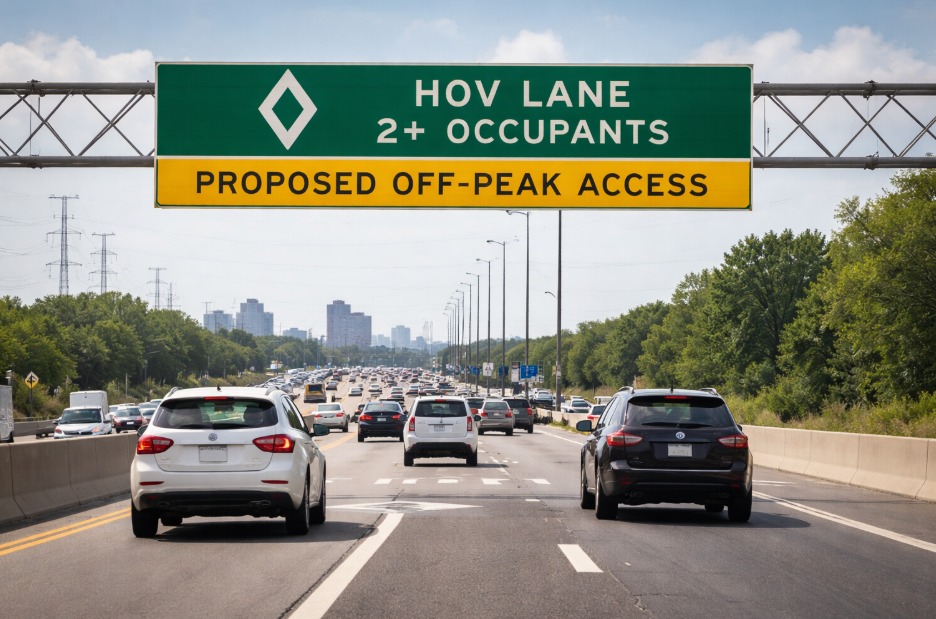
The Ontario government is moving to expand access to High Occupancy Vehicle (HOV) lanes, proposing to allow single-occupant vehicles to use them during off-peak hours in an effort to reduce gridlock and improve traffic flow across the province’s highway network.
Announced Tuesday by the Ministry of Transportation, the proposal would require a regulatory amendment to the Highway Traffic Act. If approved, the change could come into effect before the end of 2026 following a period of public consultation.
The government says modelling conducted by the ministry indicates that opening HOV lanes during less congested periods would improve travel times for all motorists. According to the analysis, average speeds would increase in both HOV and general-purpose lanes across major highways during off-peak hours.
“Gridlock is costing our economy billions of dollars every year and robbing Ontario drivers of valuable time and quality of life,” said Prabmeet Sarkaria, Minister of Transportation. “By allowing single-occupant vehicles to use HOV lanes during off-peak hours, we would help keep drivers moving across the province, so they can spend less time in traffic and more time with their families and friends.”
Expanding access while maintaining peak-hour restrictions
HOV lanes in Ontario are currently reserved for vehicles carrying at least two occupants, along with buses, licensed taxis, green-plate vehicles, airport limousines, motorcycles and emergency vehicles. The proposed changes would extend access to solo drivers, but only during designated off-peak times.
The province emphasized that existing HOV lane restrictions would remain in place during peak commuting periods, particularly weekday mornings and evenings when traffic volumes are highest. Officials say off-peak hours will be determined through analysis of traffic data and stakeholder consultations, with final times to be set in regulation later this year.
“Expanding the use of HOV lanes would give more drivers the freedom to choose which lanes they use outside of rush hour,” said Hardeep Singh Grewal, Parliamentary Assistant to the Minister of Transportation. “By rethinking our approach to HOV lanes, we’re standing up for drivers and ensuring we get the most out of Ontario’s transportation network.”
Growing network and increasing demand
Ontario currently operates approximately 237 kilometres of HOV lanes, with an additional 146 kilometres planned as part of ongoing highway expansion projects. The proposed regulatory change is intended to maximize the efficiency of this growing infrastructure without requiring significant new capital investment.
The move reflects broader transportation trends in the province, where single-occupant vehicles continue to dominate. In 2022, they accounted for 72 per cent of vehicles on Ontario’s provincial highways, according to government data.
By allowing these drivers limited access to underutilized HOV lanes during quieter periods, the province aims to better distribute traffic across available lanes and reduce bottlenecks.
Consultation and next steps
The Ministry of Transportation has launched consultations to gather input from stakeholders, including commuters, municipalities and industry groups. Feedback from these discussions will help shape the final regulatory framework, including the definition of off-peak hours and any operational considerations.
Certain restrictions would remain unchanged under the proposal. Commercial motor vehicles longer than 6.5 metres would continue to be prohibited from using HOV lanes, regardless of the time of day.
Additionally, Ontario will maintain its existing High-Occupancy Toll (HOT) lane system, which allows single-occupant drivers to pay for access to HOV lanes on select corridors, including portions of the Queen Elizabeth Way, Highway 403 and Highway 410.
Balancing flexibility and congestion management
The proposed changes come as Ontario continues to grapple with rising congestion levels, particularly in urban regions such as the Greater Toronto Area. By introducing more flexible lane usage during off-peak hours, the government is seeking to strike a balance between maintaining incentives for carpooling and improving overall traffic efficiency.
If implemented, the policy would mark a significant shift in how HOV lanes are used in the province, transforming them from a strictly restricted resource into a more dynamic component of Ontario’s highway system.
Officials say the ultimate goal is to make better use of existing infrastructure while delivering measurable improvements in travel times for drivers across the province.