

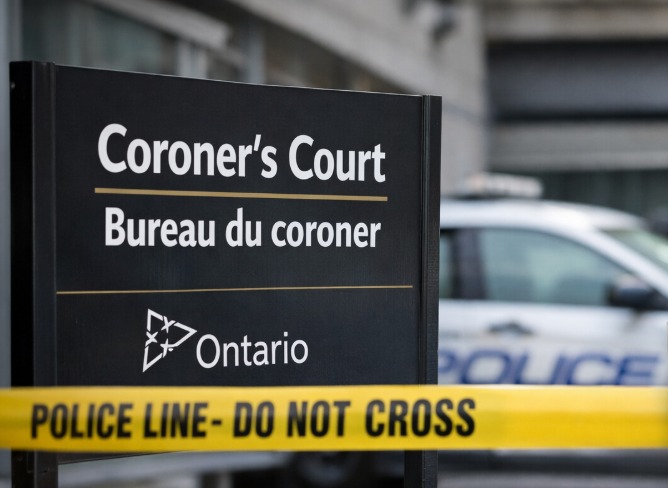
An inquest will be held into the death of 34-year-old Matthew DiGiovanni, who died in 2019 after an interaction with Peel Regional Police, Ontario’s coroner’s office announced Thursday, marking the latest step in a mandatory legal process aimed at examining deaths involving police.
Dr. Richard Wells, Regional Supervising Coroner for the Central Region’s Toronto West Office, announced the decision in a statement issued by Ontario’s Ministry of the Solicitor General on Feb. 27, 2026.
Mr. Matthew DiGiovanni died on Sept. 10, 2019, following an interaction earlier that day with officers from Peel Regional Police, which serves Mississauga, Brampton and surrounding communities west of Toronto.
According to the coroner’s office, an inquest into his death is mandatory under Ontario law. Such proceedings are required in cases involving deaths in custody or those connected to police interactions, and they are intended to provide a public examination of the circumstances surrounding the death.
“The inquest will examine the circumstances surrounding Mr. DiGiovanni’s death,” the ministry said in its release. “The jury may make recommendations aimed at preventing further deaths.”
Coroner’s inquests in Ontario are fact-finding hearings rather than criminal trials or civil proceedings. They do not assign legal responsibility or determine guilt. Instead, a jury hears testimony from witnesses, including medical experts, investigators and others connected to the case, before delivering recommendations designed to improve public safety and prevent similar deaths in the future.
Those recommendations, while not legally binding, can influence policy changes across policing, corrections, health care and other public institutions.
The province did not provide details about the specific circumstances of DiGiovanni’s death in its announcement, nor did it outline the nature of the police interaction involved.
Further details regarding the inquest, including when and where it will take place, are expected to be released at a later date.
Inquests in Ontario are presided over by a coroner and heard by a five-member jury selected from the public. Proceedings are typically open to the public and may last days, weeks or, in complex cases, several months, depending on the number of witnesses and the scope of evidence.
The announcement comes years after DiGiovanni’s death, reflecting the often lengthy timelines associated with scheduling inquests. Delays can occur for several reasons, including the completion of related investigations, legal processes, and logistical considerations.
Inquests form part of Ontario’s death investigation system, which operates under the Office of the Chief Coroner and the Ontario Forensic Pathology Service, both overseen by the Ministry of the Solicitor General. The system is responsible for investigating sudden, unexpected or unnatural deaths across the province.
The findings and recommendations resulting from inquests have historically contributed to reforms in areas such as police procedures, use-of-force policies, mental health response protocols and detention conditions.
While the inquest will revisit the events surrounding DiGiovanni’s death, its primary focus will be on identifying potential lessons that could reduce risks in similar situations.
The ministry encouraged members of the public seeking more information about the process to consult Ontario’s official resources on coroner’s inquests.
For DiGiovanni’s family and community, the inquest represents a formal opportunity to hear evidence presented in a public forum and to receive answers about the circumstances of his death.
The province said additional information about scheduling and participation will be released once arrangements are finalized.