

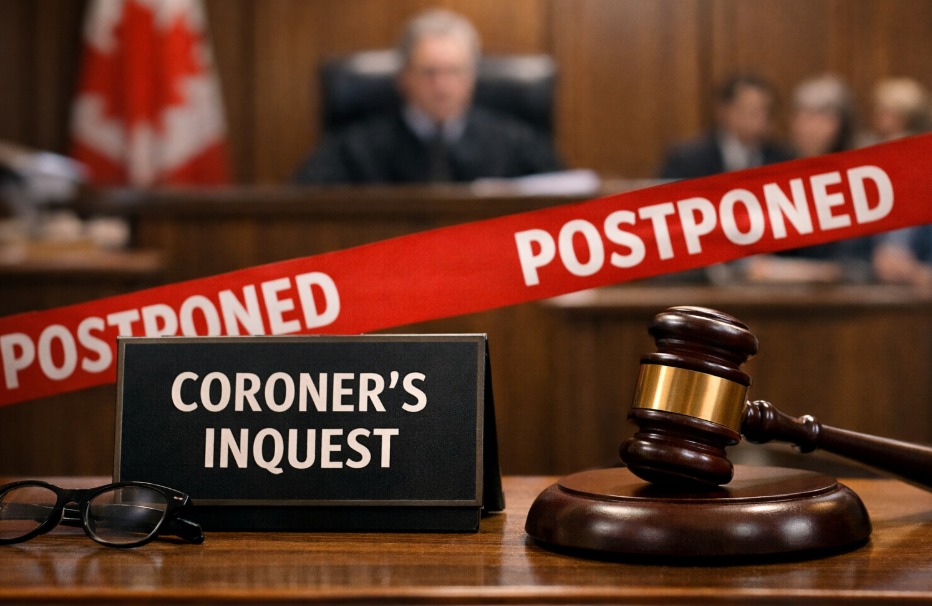
The inquest into the death of Ryan Rawson-Keeley, which had been scheduled to begin early next week, has been postponed at the direction of the presiding officer, the Ontario Ministry of the Solicitor General said Thursday.
In a brief statement released Feb. 27, 2026, the ministry said, “The presiding officer has directed that the inquest into the death of Ryan Rawson-Keeley, scheduled to begin on March 2, 2026, be postponed.” No reason for the postponement was provided.
Officials added that “Further information will follow when it becomes available,” leaving the timeline for rescheduling unclear.
Coroners’ inquests in Ontario are formal proceedings designed to examine the circumstances surrounding a death. Unlike criminal trials, inquests do not assign legal responsibility or determine guilt. Instead, their purpose is to establish the facts of the death and, where possible, make recommendations aimed at preventing similar deaths in the future.
Inquests are typically presided over by a coroner and heard by a jury of five members of the public. After hearing testimony from witnesses, including medical professionals, investigators and other relevant parties, the jury may deliver recommendations directed at government agencies, institutions or organizations.
The postponement means the examination into the circumstances of Rawson-Keeley’s death will not proceed as planned, potentially delaying answers for family members and others with an interest in the case.
Ontario’s Office of the Chief Coroner, which operates under the Ministry of the Solicitor General, oversees inquests across the province. These proceedings are mandatory in certain cases, including deaths that occur in custody or involve specific institutional settings, while others may be called at the discretion of the coroner if it is deemed to be in the public interest.
The ministry did not indicate whether a new date has been set or whether additional procedural steps must be completed before the inquest can proceed.
Postponements can occur for a range of reasons, including scheduling conflicts, availability of key witnesses, legal considerations, or requests from parties involved in the inquest. In some cases, additional time may be required to complete investigations, gather evidence or address procedural matters.
Inquests play an important role in Ontario’s death investigation system, particularly in cases where broader public safety concerns may be identified. Recommendations from past inquests have contributed to changes in policies and practices in areas such as correctional services, health care, workplace safety and policing.
While recommendations from an inquest jury are not legally binding, government ministries and organizations are expected to review them and often respond publicly, outlining whether they will implement the suggested measures.
The ministry’s statement did not include details about the circumstances of Rawson-Keeley’s death, nor did it specify who had requested or supported the delay.
For families and communities affected by such cases, inquests can serve as an important forum for understanding what happened and identifying potential systemic issues.
The Ministry of the Solicitor General said additional information about the Rawson-Keeley inquest will be released when available.
The ministry also directed the public to its website for general information about coroners’ inquests and their role within Ontario’s death investigation framework.
Discover more from Wire Service Canada
Subscribe to get the latest posts sent to your email.