

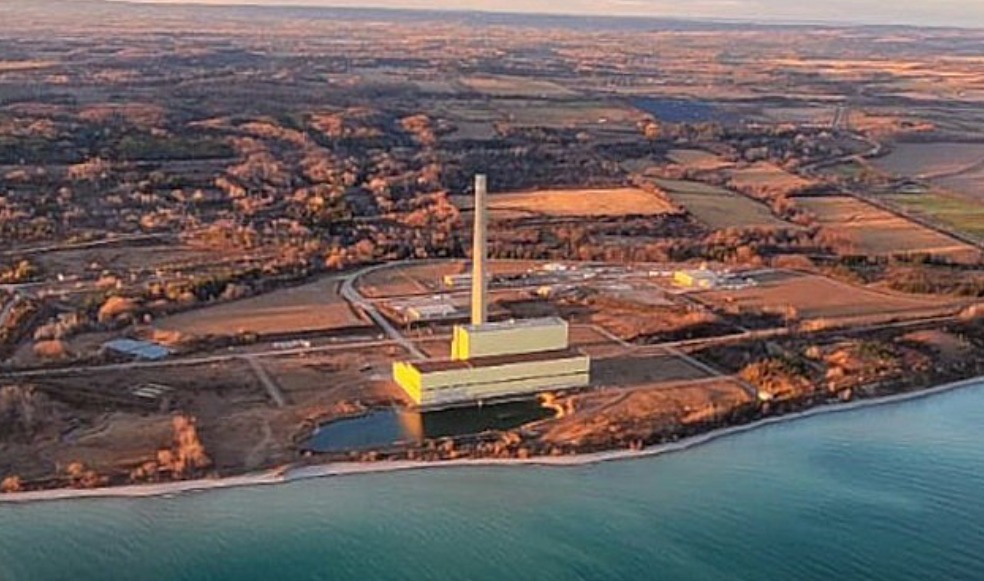
PORT HOPE, Ont. — Ontario has taken a significant step toward what it says will become the world’s largest nuclear generating station, signing a partnership agreement with the Municipality of Port Hope to advance new nuclear development at the Wesleyville site.
The agreement between the province, Ontario Power Generation and the municipality sets the framework for collaboration as the proposed project moves into the federal impact assessment process. The development is expected to support 10,500 jobs across the province, including 1,700 in Port Hope, and contribute an estimated $235 billion to Ontario’s GDP over its lifespan.
The announcement was made Wednesday by Stephen Lecce, Minister of Energy and Mines, who framed the project as both an economic and energy security imperative.
“With more chaos coming from the White House, now is exactly the time to double down on Canada – putting our workers, technology, and supply chain first,” Lecce said. “This agreement is an important step forward as we build the world’s largest nuclear station, creating over 10,000 good-paying jobs and reliable power for up to 10 million homes. We express thanks to Port Hope for the partnership with OPG, as we work together to boost both the local and Canadian economy, with over 90 per cent of nuclear investment stamped with Made in Canada.”
Meeting surging electricity demand
The province projects electricity demand could rise by as much as 90 per cent at the high end in the coming decades, driven by population growth, housing construction and industrial expansion. Without new baseload generation, officials warn Ontario could face supply shortfalls and rising costs.
Early assessments indicate the 1,300-acre Wesleyville site could support up to 10,000 megawatts of new nuclear capacity — enough to power the equivalent of 10 million homes. The property, located along Lake Ontario and already zoned for electricity generation, is near existing transmission lines, highways and rail infrastructure.
On Jan. 12, OPG submitted its Initial Project Description to the Impact Assessment Agency of Canada. The new agreement commits the utility and municipality to collaborate through the federal review, regulatory approvals and licensing processes. OPG will also continue separate engagement with Indigenous communities during planning and assessment.
Nicolle Butcher, President and CEO of OPG, described the memorandum of understanding as a milestone in a long-term process.
“This important milestone, in a potential new nuclear development that is so critical to Ontario, is a testament to the strength of our relationship with this community. Working collaboratively with Port Hope, we can be sure the Municipality is able to engage fully on behalf of its residents in the multi-year process to assess and develop the site.”
Under the agreement, OPG and Port Hope will share technical information required for the federal review, facilitate community engagement, promote environmental stewardship, and support economic development initiatives tied to the project.
Funding and local impact
To support municipal readiness, OPG has committed an additional $4 million to Port Hope, building on an earlier $1 million contribution. A further $500,000 will fund staffing requirements related to the impact assessment and early project work. The funding is seen as a step toward a future Host Municipality Agreement.
David Piccini, MPP for Northumberland–Peterborough South, said the project represents a major economic opportunity for the region.
“This agreement is great news for Port Hope,” Piccini said. “Advancing new nuclear generation at the Wesleyville site will bring good paying local jobs, drive economic growth, and help build a stronger future for our community. This project creates real opportunities for local workers and businesses, while ensuring we have reliable, made in Ontario power for generations to come.”
Mayor Olena Hankivsky said the municipality views the partnership as essential preparation for potential growth.
“The MOU between the Municipality and OPG represents the kind of forward-looking collaboration our community needs to prepare for future growth as we continue to explore the development of clean energy generation in Port Hope,” she said. “By strengthening partnerships, enhancing community engagement, and supporting sustainable development, we are laying the groundwork for long term economic growth and community well being. This agreement ensures we are ready to meet the opportunities ahead. We’re proud to take this step together to build a resilient, prosperous future for our community.”
Industry backing
The proposal has drawn support from labour groups and industry associations, including the Society of United Professionals, the United Association and the International Brotherhood of Boilermakers.
Ivette Vera-Perez, President and CEO of OCNI, said early planning provides certainty for Canada’s nuclear supply chain.
“OCNI welcomes Ontario’s decision to advance early planning at the Wesleyville site as part of building a secure, reliable, and self-reliant electricity system for the province. Early collaboration with the Municipality of Port Hope and Ontario Power Generation helps ensure this work is grounded in community partnership, while giving Canada’s nuclear supply chain the clarity needed to plan, invest, and create long-term opportunities for local workers, businesses, and Ontario’s clean energy economy.”
George Christidis, President and CEO of the Canadian Nuclear Association, emphasized the urgency of expanding baseload capacity.
“Meeting Ontario’s rapidly growing electricity demand requires decisive action, and this MOU reflects the shared understanding that collaboration today is essential to delivering clean and reliable power for future generations. Not only will the Welseyville project deliver the dependable, baseload power our system needs, but it will generate long-term, good-paying jobs both at the site and within our talented Canadian supply chain. The time to act is now.”
Ontario’s nuclear sector currently provides about half of the province’s electricity and supports approximately 80,000 jobs. The Wesleyville project is part of the government’s broader “Energy for Generations” plan, aimed at ensuring long-term energy reliability, affordability and competitiveness as demand accelerates.