

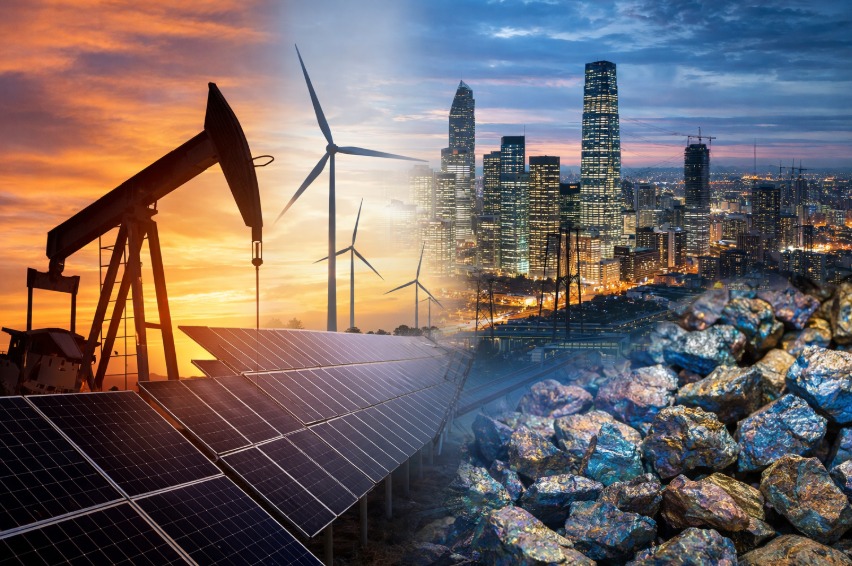
Despite mounting geopolitical tension, volatile commodity prices and uncertainty over the pace of the global energy transition, the International Energy Agency (IEA) says several major trends are now clear enough to serve as guideposts for governments, businesses and investors.
In a new commentary, IEA Executive Director Fatih Birol argues that the energy sector is moving through a period of rapid structural change, even as oil and gas remain central to the global economy. He identifies seven “certainties” shaping today’s energy outlook, from electrification and renewables growth to rising security risks and a bigger role for governments.
The world has entered the “Age of Electricity”
The IEA says electricity is now the fastest-growing part of global energy demand, rising at about twice the pace of overall energy consumption. While oil and gas will still be widely used for many years, the growing role of electricity is becoming the defining trend for investment, industrial strategy and competitiveness.
As more sectors electrify—from transportation and buildings to industry and digital infrastructure—electricity systems are facing growing pressure to expand capacity, strengthen grids and improve reliability.
Renewables will keep expanding despite headwinds
The IEA expects renewable power to continue gaining ground globally, even with supply chain disruptions, permitting delays and shifting policy conditions in some markets.
According to the agency, renewables are meeting a large share of rising electricity demand in many countries, often because wind and solar are among the most cost-competitive options available. This trend is influencing capital allocation decisions for utilities, developers and major corporate energy buyers seeking long-term price stability.
Nuclear power is making a comeback
After setbacks across the 2010s, the IEA says nuclear energy is regaining momentum. In 2025, nuclear power generated more electricity than ever before, reinforcing the technology’s role in energy security and emissions reduction plans.
The agency says the rebound aligns with earlier projections that nuclear would return to growth, as governments look for firm, low-emissions power sources to complement variable renewables.
Energy security risks are multiplying, especially for critical minerals
While oil and gas supply risks remain part of the global energy equation, the IEA says the definition of energy security is expanding.
Traditional hazards affecting fossil fuel flows are now joined by vulnerabilities in electricity security and the supply of critical minerals needed for clean energy technologies. This shift is pushing governments and companies to reassess supply chains, diversify sourcing and invest in resilience across power systems and industrial inputs.
States are taking the reins in energy markets
The IEA notes that energy is increasingly treated as a matter of economic and national security, leading governments to intervene more actively rather than leaving outcomes solely to markets.
This includes industrial policy to strengthen domestic manufacturing, support for clean technology deployment, and measures aimed at shielding consumers and businesses from price shocks. The agency expects state involvement to remain a defining feature of energy markets in the years ahead.
A “buyer’s market” is emerging for fuels and technologies
Birol’s commentary also points to a shift toward a “buyer’s market” for key fuels and energy technologies. Oil prices have already faced downward pressure due to relatively abundant supply, and the IEA expects similar dynamics to develop in natural gas markets.
At the same time, the agency says manufacturing capacity is ample for technologies such as batteries and solar panels, which could influence pricing, investment decisions and trade patterns.
Emerging economies are increasingly driving global energy trends
The IEA says the global centre of gravity in energy markets is shifting, as emerging economies play a growing role in shaping demand and investment trends.
India and Southeast Asia are expected to lead this change, with increasing influence also coming from countries in the Middle East, Latin America and Africa. This shift is likely to affect everything from commodity flows and infrastructure development to technology deployment and financing priorities.
Birol brings “golden rules” for energy security to Davos
The IEA says Birol emphasized growing energy security risks during meetings at the World Economic Forum in Davos, Switzerland, highlighting three “golden rules” for energy security: diversification, predictability and cooperation.
During the forum, Birol met with leaders from across the public and private sectors, including United States Secretary of Energy Chris Wright, Germany’s Minister for Economic Affairs and Energy Katherina Reiche, India’s Minister of New and Renewable Energy Pralhad Joshi, South Africa’s Minister of Electricity and Energy Kgosientsho Ramokgopa, Norway’s Finance Minister Jens Stoltenberg and European Commissioner for International Partnerships Jozef Síkela. He also spoke with Prime Minister Mark Carney of Canada, IAEA Director General Rafael Grossi, TotalEnergies CEO Patrick Pouyanné and Hitachi Energy CEO Andreas Schierenbeck.
IEA to host Mission Innovation Secretariat in Paris
The IEA also announced it will host the Secretariat of Mission Innovation at its Paris headquarters, a move aimed at strengthening global cooperation on advanced energy technologies.
Mission Innovation was launched in 2015 to help accelerate research, development and demonstration of clean energy solutions. It includes 24 members, including Canada, the United States, the United Kingdom, Japan, Germany, France and the European Commission.
Oil and gas market signals point to major 2026 shifts
In its latest Oil Market Report, the IEA said global oil supply is entering 2026 with a large surplus, providing a buffer even as geopolitical uncertainty raises questions about exports from Iran and Venezuela.
The agency said Saudi Arabia has led growth in OPEC+ supply as production cuts were unwound, while non-OPEC+ supply increases have been dominated by the United States, Canada, Brazil, Guyana and Argentina.
In natural gas, the IEA’s latest Gas Market Report projects stronger demand growth in 2026, supported by expanding LNG supply. Global LNG supply rose by nearly 7% in 2025 and is expected to grow by more than 7% again in 2026, marking the fastest pace since 2019.
Investment in next-generation geothermal is accelerating
The IEA also flagged rising momentum in next-generation geothermal, citing nearly $2.2 billion in financing in 2025—an 80% year-over-year increase.
The agency said the sector is benefiting from technology transfer from oil and gas, increasing interest from data centres seeking firm power, and the potential to co-produce lithium, a key critical mineral. However, it emphasized that policy support will remain essential for geothermal to scale beyond pilot projects.
