

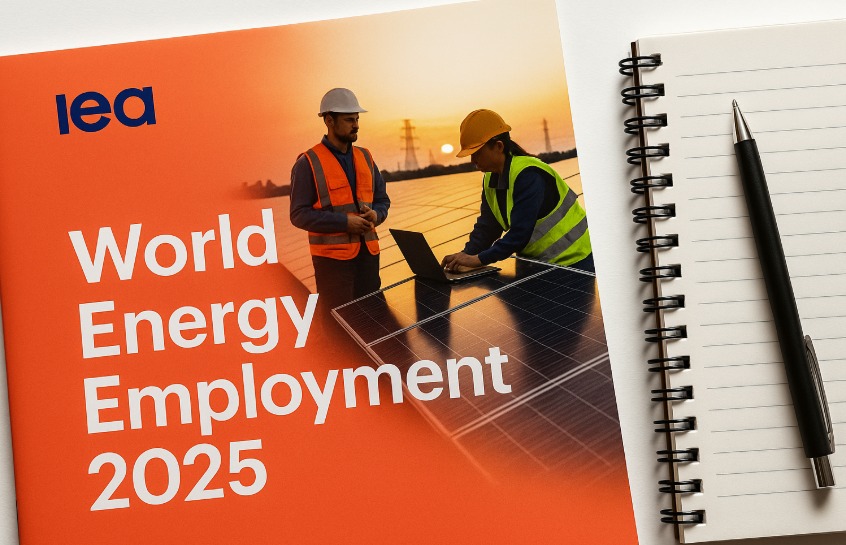
The International Energy Agency (IEA) is preparing to release fresh analysis on the state of the global energy workforce amid mounting concerns that labour and skills shortages could slow the world’s transition to cleaner energy systems. The agency will debut the fourth edition of its World Energy Employment report during a livestreamed webinar on Friday, Dec. 5, at 11 a.m. Paris time.
IEA Executive Director Fatih Birol will open the event with introductory remarks, setting the stage for an assessment that has become a key annual reference for governments, companies and educators navigating rapid changes in the energy labour market. Presentations of the report’s findings will follow from Laura Cozzi, Director of Sustainability, Technology and Outlooks, and Brian Motherway, Head of the Office of Energy Efficiency and Inclusive Transitions.
The webinar is open to journalists, with the full report available under embargo for those who register. According to the IEA, all materials will remain under embargo until 7 a.m. Paris time on Dec. 5.
The World Energy Employment series offers one of the most comprehensive global assessments of the energy workforce, quantifying its size and regional distribution while also tracking how employment trends shift across sectors and technologies. This year’s edition, World Energy Employment 2025, introduces a significant new layer of detail: occupation-level estimates that shed light on the specific skills, trades and educational pathways shaping the future of work in the energy sector.
These new insights arrive as countries accelerate large-scale investments in clean electricity, critical minerals, hydrogen, energy efficiency and grid modernization. At the same time, companies across the energy spectrum—from fossil fuel producers to renewable power developers—report rising difficulty in hiring workers with the required technical and digital expertise.
The IEA says the new report provides an outlook on how labour needs could evolve through 2035 under all its major modelling scenarios. That long-term view is intended to help policymakers and industry leaders identify where workforce bottlenecks may emerge, and which training and recruitment strategies could help prevent project delays.
For this edition, the agency drew extensively on three dedicated surveys that tapped more than 700 energy companies, trade unions and educational institutions worldwide. Responses captured current hiring challenges, anticipated staffing needs, and the emerging competencies considered most in demand.
According to the IEA, the findings point to a widening mismatch between the pace of planned energy infrastructure expansion and the availability of trained workers. The agency notes that “growing labour and skills shortages are becoming a major constraint for the rapid expansion of energy infrastructure globally.” This constraint is particularly acute in specialized technical fields such as electrical engineering, advanced manufacturing, and construction trades essential for renewable energy and grid build-out.
While the press release does not provide additional detail ahead of the embargo, the IEA’s previous editions have documented a steady rise in clean energy jobs worldwide—driven primarily by solar, wind and electric vehicle supply chains—alongside gradual declines in traditional oil and gas employment. Analysts expect this year’s report to update those trends with more granular information on job functions and education requirements.
Media outlets interested in receiving the embargoed report can request access via [email protected]. The livestreamed launch event will provide an overview of the new data and methodological improvements, offering reporters and industry observers an early look at how global energy labour markets are adapting—or struggling to adapt—to accelerating energy transitions.
With workforce constraints repeatedly cited by governments as a potential barrier to meeting climate and infrastructure goals, the 2025 edition of World Energy Employment is likely to serve as a closely watched benchmark for Canada’s energy sector as well. The country faces its own challenges in recruiting skilled tradespeople and scaling up clean-energy industries, making the IEA’s global perspective a timely resource for policymakers and businesses planning for the decade ahead.
