

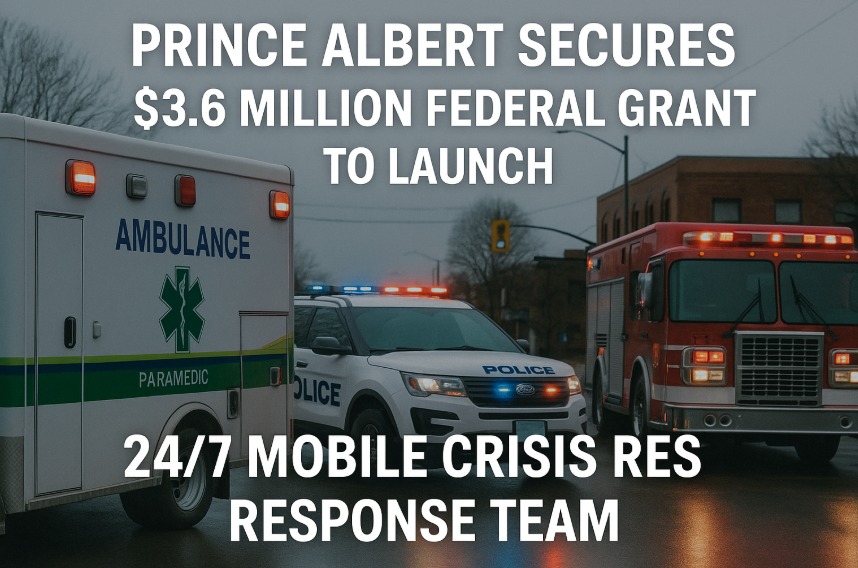
The City of Prince Albert, Saskatchewan, has received a $3.6 million grant from Health Canada’s Emergency Treatment Fund to help combat the community’s growing number of overdose-related emergencies. The funding will support the establishment of a new Mobile Complex Needs Team — a collaborative, round-the-clock response unit designed to assist individuals in crisis and reduce the burden on local emergency services.
The initiative, expected to begin full-time operations in early 2026, brings together staff from three key community organizations: the Prince Albert Police Service, Parkland Ambulance, and the Prince Albert Mobile Crisis Unit. Together, they will operate as a multi-disciplinary team capable of responding to a wide range of mental health and substance use crises.
A Collaborative Approach to Crisis Intervention
Operating 24 hours a day, seven days a week, the Mobile Complex Needs Team will provide rapid, on-the-ground support to individuals experiencing acute distress. Its core objectives include de-escalating crises, diverting non-emergency cases away from hospital emergency departments, and connecting vulnerable individuals to the most appropriate health and social services.
“This team will meet a real and urgent need in Prince Albert,” said Mayor Powalinsky. “Our overdose death rate is comparable to much larger centres like Saskatoon. By proactively engaging with individuals in the community, this initiative aims to reduce overdose risks before they become fatal. It contributes to our vision of being an innovative, welcoming, diverse, and healthy city of opportunity.”
Prince Albert has seen a steady rise in overdose incidents in recent years, reflecting a national trend that continues to strain healthcare and emergency systems across Canada. The city’s latest initiative aligns with federal and provincial strategies focused on harm reduction, early intervention, and integrated care models that address the social and health determinants of addiction.
Supporting Broader Community Safety Goals
While the Mobile Complex Needs Team will operate independently from the city’s existing Complex Needs Emergency Shelter, officials say the two initiatives will complement each other by providing different layers of support for at-risk populations. The new program is also expected to create 12 full-time jobs within the city, strengthening Prince Albert’s capacity to address complex community health challenges through collaboration.
“This is the result of the collaborative efforts of the City’s Community Safety and Well-Being initiative, which helps us to continue to fulfill our vision of a healthy and innovative City,” added Mayor Powalinsky. “It enables us to work with partners across the community, identify gaps in service provision, and leverage funding opportunities from multiple levels of government. We are excited to support the evaluation of this project to measure its impact on reducing pressure on emergency services and lowering overdose rates in our community.”
The program’s evaluation component will track measurable outcomes, such as reduced emergency room visits, fewer hospital admissions, and improvements in connecting individuals to addiction treatment and recovery supports. The goal is to ensure the initiative not only responds to immediate crises but also helps residents access long-term pathways to stability and health.
A Model for Other Communities
Prince Albert’s Mobile Complex Needs Team represents a growing trend among Canadian municipalities toward integrated crisis response models that combine policing, health care, and social services. Such approaches have gained national attention for their potential to save lives, reduce emergency costs, and improve outcomes for individuals facing mental health and addiction challenges.
The city’s leadership sees the initiative as a key step in building a safer, more resilient community through prevention and partnership. With implementation now underway, the Mobile Complex Needs Team is poised to become a cornerstone of Prince Albert’s broader strategy to promote well-being and address the complex realities of substance use and mental health in modern urban settings.
