

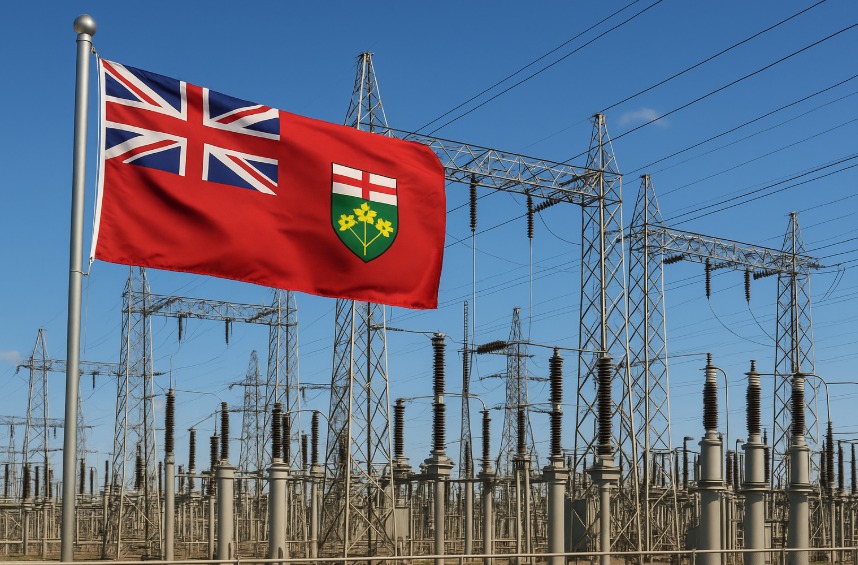
The Ontario government has launched a new advisory panel to overhaul and strengthen the province’s local electricity distribution network, aiming to ensure reliable, affordable, and future-ready power for homes and businesses.
Energy and Mines Minister Stephen Lecce announced the creation of the Panel for Utility Leadership and Service Excellence (PULSE) on Monday, describing it as a strategic move to modernize Ontario’s power infrastructure and support the province’s economic growth. The panel will advise on investment frameworks, operational reforms, and regulatory measures needed to prepare Ontario’s electricity grid for a new era of electrification and industrial expansion.
“This panel of industry experts and municipal representatives will support Energy for Generations, the government’s long-term plan to deliver reliable energy that is affordable for families, supports job-creating investment and power Ontario’s future,” Lecce said.
Addressing an Aging System
Ontario’s electricity distribution system — the network of utilities that delivers power from the grid to communities — is facing mounting pressure from aging infrastructure and soaring demand. The Electricity Distributors Association (EDA) estimates the province will need between $103 billion and $120 billion in investment over the next two decades just to maintain and upgrade existing assets.
“If the backbone of Ontario’s electricity grid — Ontario’s utilities that bring power to homes, businesses and factories — cannot keep up, Ontario risks falling behind,” said Lecce. “Our path to self reliance rests on our ability to challenge the status quo and demand better for every ratepayer in Ontario. The world has changed, which is why we need to future-proof Ontario’s grid as we invest in the next generation of electricity infrastructure. Through this review, we will transform all utilities into more reliable, resilient and future-ready systems that are focused on keeping energy rates affordable for families.”
The government says the review comes at a pivotal time. Ontario’s economy is undergoing major transformation, driven by the electrification of transportation and industry, supply chain reorganization, and global geopolitical pressures. Despite these shifts, the province’s local electricity distribution sector has not undergone a comprehensive review since 2012.
Mandate and Priorities of PULSE
PULSE will deliver recommendations aimed at building a stronger, more cohesive electricity network across Ontario. Its mandate includes:
-
Improving operational efficiency and customer service standards, including faster response times after extreme weather events.
-
Addressing financing gaps that threaten the ability of utilities to fund infrastructure renewal.
-
Identifying barriers to investment in municipally owned Local Distribution Companies (LDCs).
-
Reviewing ownership and governance models that balance municipal control, system efficiency, and financial stability.
-
Encouraging collaboration and shared services to reduce costs for ratepayers.
The panel’s work will also respond to longstanding concerns about disparities among utilities in service quality, connection timelines, and financial health. Many of Ontario’s roughly 60 LDCs face the risk of credit downgrades, which could lead to higher borrowing costs — ultimately passed on to consumers.
Expert Leadership and Industry Guidance
Minister Lecce appointed Anthony Haines, Paula Conboy, Alexander Nuttall, and David MacNaughton to the panel, citing their collective experience in energy governance and public policy. The panel will also be supported by Stephen Poloz, former Governor of the Bank of Canada, who will serve as an expert advisor.
By early 2026, PULSE is expected to submit a final report to the Minister of Energy and Mines with recommendations that will guide the modernization of Ontario’s electricity distribution sector.
Building on Past Calls for Reform
The new initiative builds upon previous reviews that called for sweeping change in the province’s utility sector. In 2018, the Ontario Energy Board (OEB) urged utilities to modernize, adopt new technologies, and pursue partnerships to improve efficiency and value for money. Similarly, a 2012 Ontario Distribution Sector Review panel warned that “maintaining the status quo would not serve the interests of customers,” emphasizing the need for distributors that are efficient, innovative, and financially sustainable.
“Ontario’s communities are growing, and we need to ensure we have the energy infrastructure in place to power that growth,” said Rob Flack, Minister of Municipal Affairs and Housing. “Through PULSE’s recommendations, we will ensure that every community has access to power that is safe, affordable, and resilient — both today and for generations to come.”
Toward a Modern, Competitive Grid
The government’s broader energy strategy, Energy for Generations, emphasizes both reliability and affordability — ensuring Ontario’s grid can support population growth, industrial development, and large-scale clean energy projects. Lecce said the PULSE initiative reflects a commitment to fiscal prudence while equipping utilities to manage new demand from electric vehicles, battery storage, and advanced manufacturing.
By advising on financing models, governance reform, and infrastructure priorities, the panel is expected to help Ontario’s electricity sector meet the dual challenge of maintaining affordability for families and powering economic expansion.
With its final recommendations due in 2026, PULSE’s work will likely shape how Ontario funds, operates, and governs its local electricity network for decades to come — a key step in ensuring the province remains competitive and energy-secure in the global marketplace.
