

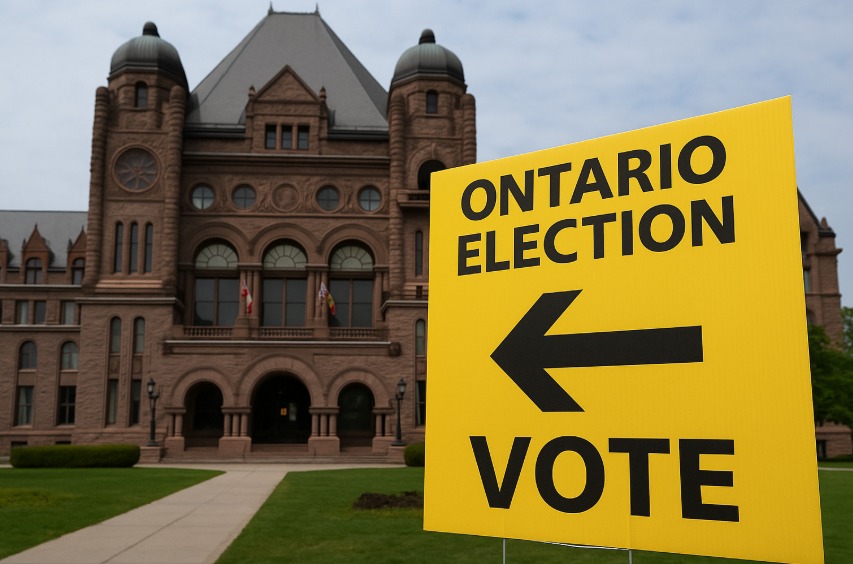
Ontario’s government is proposing a significant overhaul of the province’s electoral system, with changes aimed at restoring flexibility to election timing, tightening campaign finance oversight, and reinforcing public trust in how elections are conducted.
The proposed reforms, announced Monday by the Ministry of the Attorney General, would repeal the province’s fixed election date system — which has been in place for nearly two decades — and return to Ontario’s traditional process of calling elections at the discretion of the Lieutenant Governor on the advice of the Premier.
“The proposed reforms will return Ontario to an electoral process that served our province well for nearly a century and a half, prior to the imposition of American-style fixed election dates,” said Attorney General Doug Downey. “With these reforms, governments will be better positioned to respond to changing circumstances and external threats, including by seeking a fresh mandate from the people of Ontario when it’s needed.”
Under the proposed legislation, Ontario would continue to adhere to the five-year maximum term between elections mandated by the Canadian Constitution. The move, according to the government, is designed to restore flexibility to the electoral process while maintaining democratic safeguards.
Strengthening Election Finance Oversight
Alongside the structural change to election timing, the province is also proposing a series of amendments to the Election Finances Act that would tighten rules on campaign spending, contributions, and political advertising.
The Ministry said the reforms would “strengthen the rules around campaign finances and electoral spending, as well as reflect the removal of fixed election dates.” Among the key measures:
-
Tougher penalties for violations: The government plans to introduce new financial penalties for individuals or organizations that fail to comply with the Election Finances Act, such as not providing required information to the Chief Electoral Officer or breaching political advertising regulations. Existing fines for failing to register, exceeding spending limits, or overspending on campaign expenses would also increase.
-
Expanded oversight powers: Responding to recommendations from Ontario’s Chief Electoral Officer, the reforms would grant the elections watchdog new investigative tools. These include the power to request information from third parties, whether registered or not, to ensure compliance with advertising rules.
-
Verification of third-party advertisers: Broadcasters and publishers would be required to verify that any third-party advertiser placing political ads during an election period is properly registered. The government said the measure would help ensure “third parties that advertise during this period are following election laws.”
-
Permanent per-vote subsidy: The quarterly per-vote subsidy that political parties receive — currently set to expire at the end of 2026 — would become a permanent feature of Ontario’s political financing system. The move implements a recommendation from the Chief Electoral Officer following the 2022 provincial election to “ensure a balance of public and private spending in elections.”
-
Changes to contribution limits: The annual donation limit to political parties would rise from $3,400 to $5,000 starting in 2026. Future increases would be indexed to inflation. The province noted that the new cap aligns with or remains below limits in other provinces such as Manitoba, Alberta, and Nova Scotia.
-
Elimination of pre-writ spending limits: The government also intends to eliminate pre-election spending limits for third parties and political parties, which were originally introduced to curb increased spending ahead of fixed election dates.
New Rules on Government Property Advertising
Ontario is also weighing additional measures to restrict political advertising on government property, including on buildings, billboards, and in transit stations. If adopted, the rules would establish a “coordinated approach across government and its agencies” to ensure consistent enforcement.
Broader Context and Reaction
The latest proposed changes come as part of a broader review of electoral regulations aimed at bolstering transparency and ensuring Ontario’s system reflects both constitutional principles and modern realities.
The government argues that the fixed election date model — introduced to provide predictability — has instead encouraged prolonged campaign-style spending and undermined flexibility in responding to evolving political and economic conditions.
Supporters of the reforms say restoring discretion to the timing of elections will allow governments to better manage external challenges, while critics may question whether the changes could hand excessive control to sitting premiers.
In 2024, the most recent extension of the per-vote subsidy received all-party support, signaling at least some cross-partisan consensus on maintaining public funding for political activity.
According to current rules, any third party spending $500 or more on political advertising during an election period must register with the Chief Electoral Officer. A third party is defined as any person or organization that is not a registered candidate, political party, or constituency association.
With the proposed legislative package now under consideration, Ontario’s government says it aims to modernize the province’s election laws while preserving the public confidence that underpins democratic participation.
