

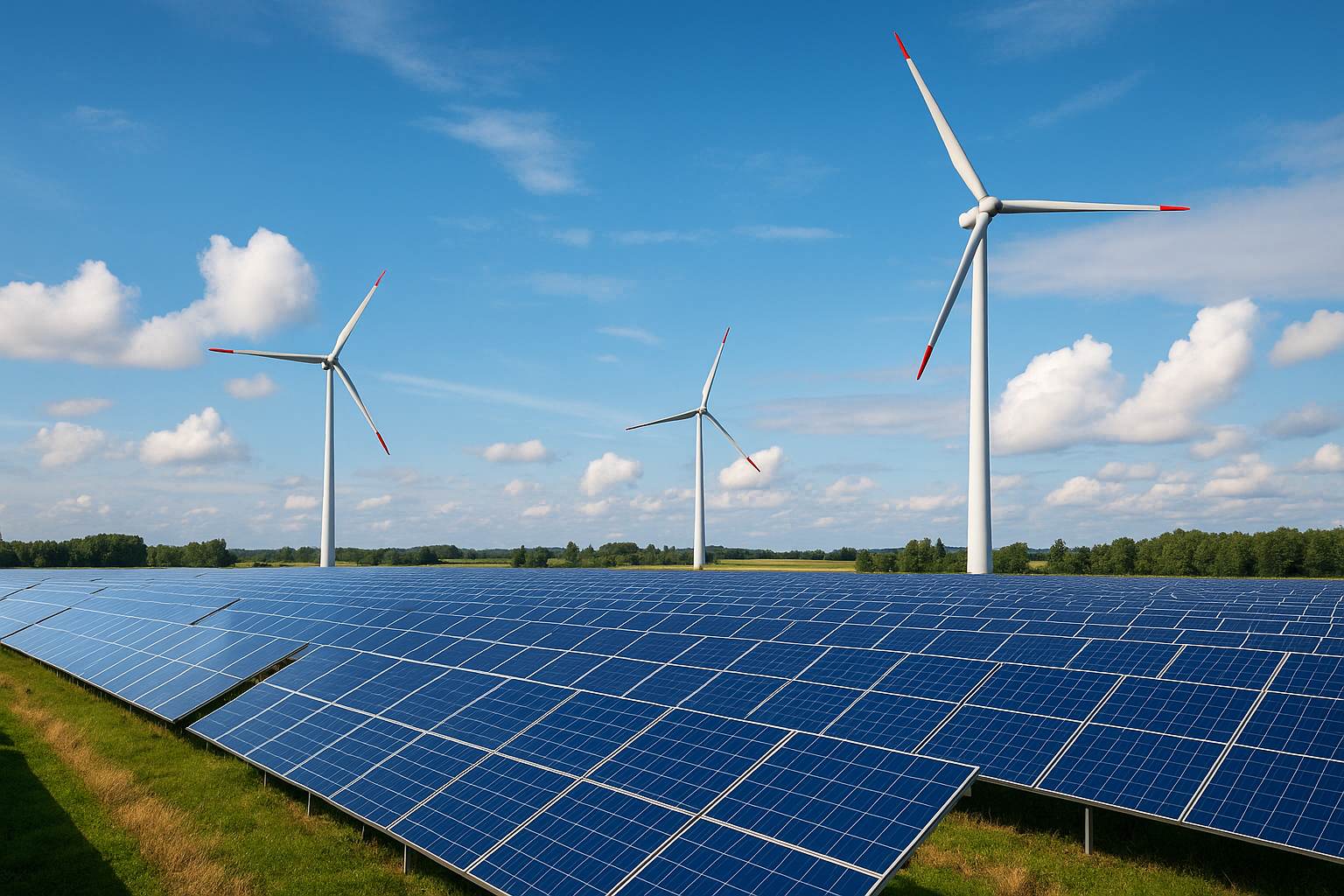
Global renewable energy capacity is on track to more than double by 2030, according to a new forecast from the International Energy Agency (IEA), which projects that solar photovoltaic (PV) power will dominate the sector’s expansion despite ongoing challenges in supply chains, grid integration, and financing.
The IEA’s Renewables 2025 report, released Tuesday, forecasts that renewable power capacity worldwide will increase by 4,600 gigawatts (GW) by 2030 — equivalent to adding the total power generation capacity of China, the European Union, and Japan combined. This growth underscores the accelerating global transition toward cleaner energy sources, even as developers navigate complex policy shifts and infrastructure constraints.
Solar PV Takes the Lead
The report highlights solar PV as the main driver of renewable growth, expected to account for roughly 80 per cent of the total increase in global renewable capacity over the next five years. Low installation costs and faster permitting are supporting a rapid scale-up of solar across both developed and emerging markets.
“The growth in global renewable capacity in the coming years will be dominated by solar PV – but with wind, hydropower, bioenergy and geothermal all contributing, too,” said IEA Executive Director Fatih Birol. “Solar PV is on course to account for some 80% of the increase in the world’s renewable capacity over the next five years. In addition to growth in established markets, solar is set to surge in economies such as Saudi Arabia, Pakistan and several Southeast Asian countries. As renewables’ role in electricity systems rises in many countries, policymakers need to play close attention to supply chain security and grid integration challenges.”
While solar continues its dominance, other technologies are gaining momentum. Wind, hydropower, and bioenergy remain integral components of the transition, and geothermal installations are projected to reach historic highs in the United States, Japan, Indonesia, and several emerging markets. Growing grid reliability issues are also renewing interest in pumped-storage hydropower, which is forecast to expand nearly 80 per cent faster over the next five years than in the previous five.
Regional Shifts and Emerging Markets
Much of the new renewable capacity is expected to come from emerging economies in Asia, the Middle East, and Africa, where declining costs and stronger policy support are driving rapid expansion. India, in particular, is set to become the world’s second-largest growth market for renewables after China and is on track to meet its ambitious 2030 targets.
The IEA notes that corporate power purchase agreements, utility contracts, and merchant plants are together expected to account for about 30 per cent of new renewable capacity worldwide by 2030 — double their contribution in last year’s forecast.
However, not all markets are expanding at the same pace. The report revises global growth projections slightly downward from last year due to policy changes in the United States and China. In the U.S., the early phase-out of federal tax incentives and new regulatory hurdles have reduced growth expectations by nearly 50 per cent compared to previous forecasts. Meanwhile, China’s shift from fixed tariffs to competitive auctions has altered project economics, leading to lower expected capacity additions.
These slowdowns are being offset by stronger momentum in other regions, including India, Europe, and several developing economies, where policy reforms, accelerated permitting, and expanded solar auctions are boosting investor confidence.
Industry Resilience Amid Headwinds
Despite ongoing macroeconomic pressures, industry sentiment remains resilient. Most major renewable energy developers have maintained or even raised their 2030 deployment targets, reflecting continued optimism about the sector’s long-term profitability and stability. Offshore wind remains an exception, with growth projections now roughly 25 per cent lower than last year’s due to rising costs and bottlenecks in key markets.
Still, the IEA underscores that renewables remain the most cost-effective option for new electricity generation in most countries. Solar PV, in particular, continues to outpace fossil fuel alternatives on both price and deployment speed.
Supply Chain and Integration Challenges
One of the report’s major concerns is the high concentration of clean energy manufacturing in China. The IEA warns that China will continue to dominate global solar PV and wind turbine component supply chains through 2030, maintaining more than 90 per cent market share in key segments. While new manufacturing capacity is being developed globally, diversification remains limited.
The rapid growth of variable renewables such as solar and wind is also putting pressure on electricity grids worldwide. Curtailment events and negative pricing — when excess renewable power leads to market imbalances — are becoming more frequent, highlighting the urgent need for grid modernization and investment in storage technologies.
Several countries have begun to address these issues through new capacity and storage auctions, though the IEA cautions that further efforts will be necessary to ensure a stable and efficient energy transition.
Modest Gains in Transport and Heating
Beyond electricity generation, renewables are making gradual inroads in transport and heating. Their share of energy use in the transport sector is forecast to rise from 4 per cent today to 6 per cent by 2030, led by renewable electricity powering electric vehicles in China and Europe, and biofuel growth in Brazil, Indonesia, and India. In heating, renewables’ share is expected to increase from 14 per cent to 18 per cent, supported by industrial electrification and expanded use of renewable heat sources in buildings.
The Road Ahead
As nations strive to meet climate commitments and secure energy independence, the IEA’s findings underscore the central role renewables will play in reshaping the global energy landscape. The challenge now lies in ensuring that infrastructure, supply chains, and policy frameworks can keep pace with unprecedented growth.
