

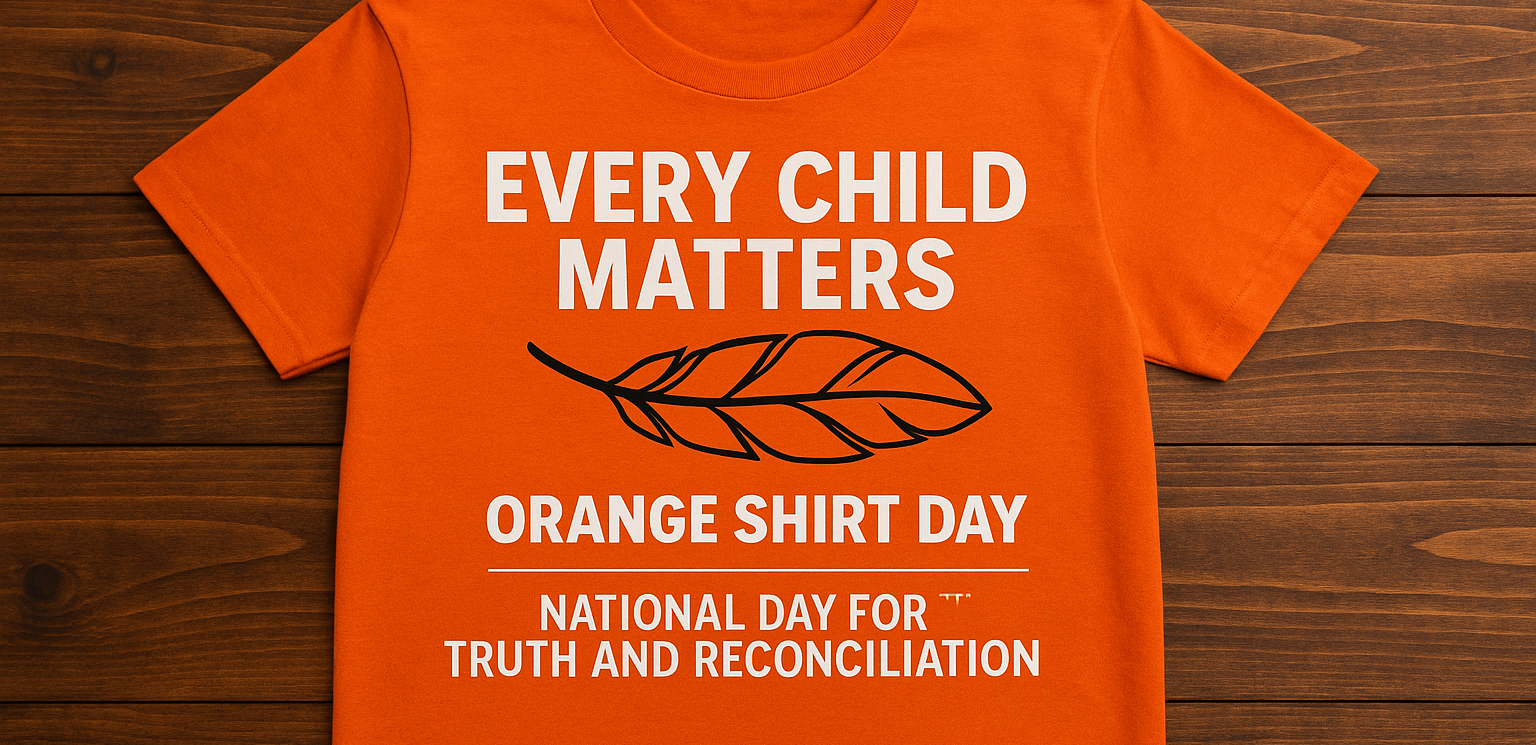
Prince Albert is preparing to join communities across Canada in marking the National Day for Truth and Reconciliation on September 30, an occasion that also coincides with Orange Shirt Day. The day honours the children who survived residential schools, remembers those who did not, and encourages reflection on the ongoing impacts of the residential school system.
The City of Prince Albert is encouraging residents to wear orange shirts as a visible sign of solidarity. “September 30 is also an opportunity to come together in the spirit of truth and reconciliation and hope for generations of children to come,” the City said in its announcement. Orange shirts serve as a reminder of the harm caused to children’s self-esteem, families, and communities, and an affirmation that every child matters.
Community Efforts and Fundraising
This year, orange shirts are available for purchase at the Prince Albert Indian & Métis Friendship Centre, featuring a design by Ailah Carpenter. In addition, buttons are being sold at Lake Country Co-op, which has pledged to match the proceeds from sales. The funds will be directed to the Kikinahk Friendship Centre, the Prince Albert Indian Métis Friendship Centre, and the Nipawin Oasis Community Centre Co-operative Ltd.
These initiatives build on a growing tradition of community partnerships that not only raise awareness but also provide tangible support to Indigenous-led organizations working to strengthen culture, healing, and social programs.
Events Across the City
Several events are scheduled throughout the city on September 30 to mark the day. The Prince Albert Historical Museum will offer free admission from 9 a.m. to 4 p.m., giving residents an opportunity to learn more about local history and the broader legacy of Indigenous communities in the region.
The Prince Albert Grand Council will host a National Day for Truth and Reconciliation event from 10 a.m. to 5 p.m. at the PAGC Cultural Centre on 9th Avenue West. The gathering will honour Indigenous children’s lives, voices, and futures, offering space for remembrance and reflection.
Additionally, organizations and businesses are invited to participate in an Orange Shirt Day Stencil initiative. Groups can borrow stencils to decorate windows or sidewalks with orange shirt imagery by contacting the Margo Fournier Arts Centre.
Complete event details are available through the city’s events portal at paevents.ca.
The Origins of Orange Shirt Day
Orange Shirt Day traces its origins to Williams Lake, British Columbia, in 2013. It began as part of a commemoration of the St. Joseph Mission Residential School and was inspired by Phyllis (Jack) Webstad’s story. On her first day at the Mission, Webstad wore a new orange shirt that was taken from her, a moment that symbolized the stripping away of identity and dignity endured by many children in the residential school system.
Since then, the orange shirt has become a national symbol of remembrance and commitment to reconciliation. The choice of September 30 reflects both the start of the school year and an opportunity to embed anti-racism and anti-bullying education into classrooms.
National Recognition and Local Commitment
The National Day for Truth and Reconciliation was established in 2021, following unanimous approval in the Senate and fulfilling the 80th call to action from the Truth and Reconciliation Commission of Canada. The federal statutory holiday underscores the importance of reflecting on the legacy of residential schools and advancing reconciliation efforts nationwide.
In Prince Albert, the day has been formally recognized since 2021 as a paid holiday for city employees. City Hall will be closed on September 30, and other municipal facilities may operate with restricted hours.
Looking Forward
While the day is solemn, it also provides a platform for hope. By honouring survivors, educating younger generations, and supporting Indigenous-led organizations, Prince Albert is contributing to a broader national movement toward reconciliation.
As the City’s statement noted, the wearing of orange shirts is more than symbolic. It is “an affirmation of a commitment to ensure that everyone matters.” For residents, September 30 is an opportunity to reflect, learn, and stand in solidarity with Indigenous peoples, reinforcing the shared responsibility of building a future where the mistakes of the past are neither forgotten nor repeated.
Discover more from Wire Service Canada
Subscribe to get the latest posts sent to your email.
