

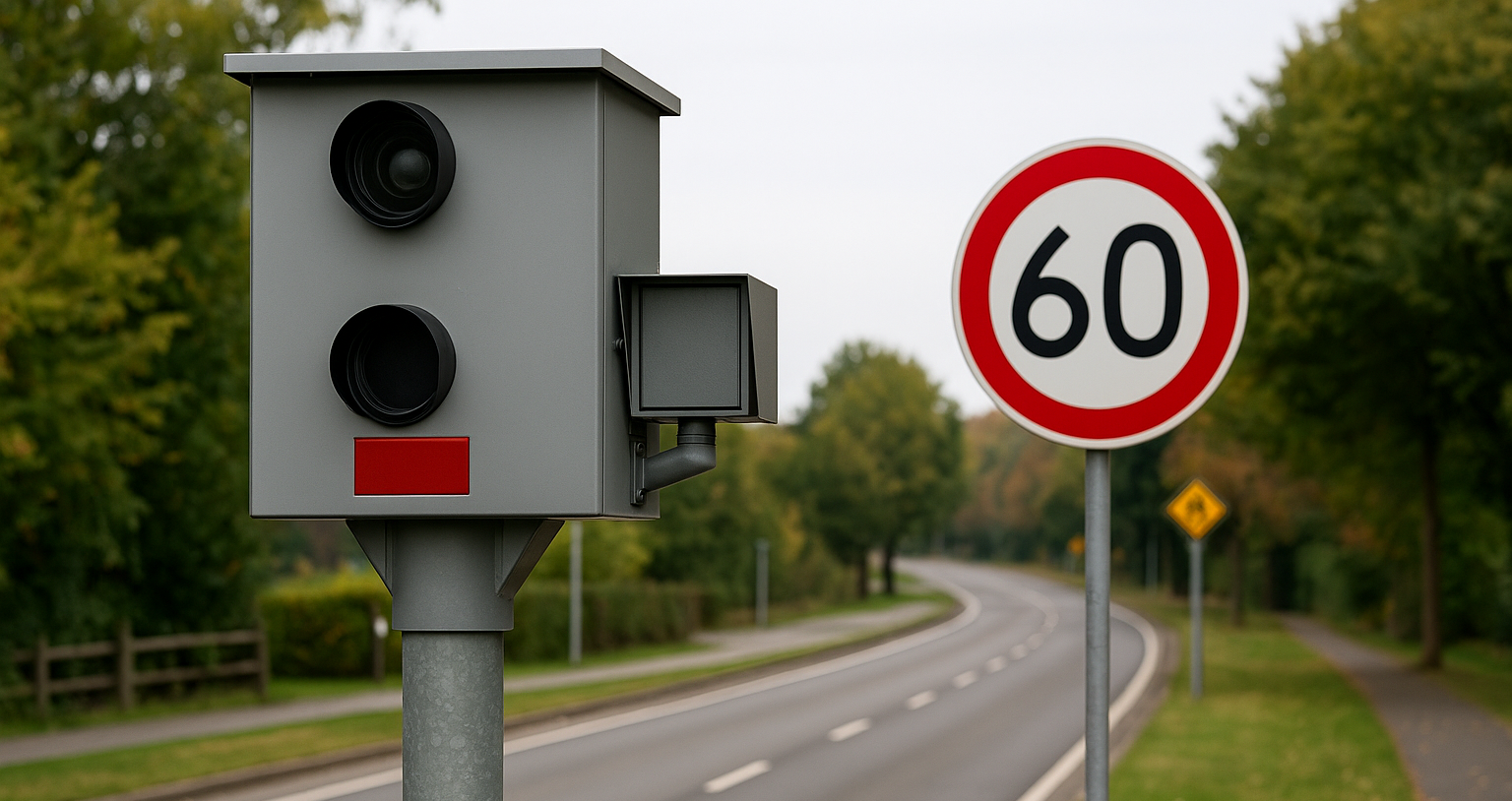
VAUGHAN, Ont. — The Ontario government is preparing to introduce legislation that would ban municipal automated speed enforcement cameras, replacing them with a provincial fund to support alternative traffic-calming measures.
Premier Doug Ford announced Thursday that the bill, expected next month, will immediately end the use of municipal speed cameras across the province if passed, with the aim of eliminating what the government calls a “cash grab” approach to road safety.
“At a time when governments at all levels should be doing everything they can to lower costs and make life more affordable, too many municipalities are using speed cameras as a cash grab,” Ford said. “Enough is enough. Instead of making life more expensive by sending speeding tickets to drivers weeks after the fact, we’re supporting road-safety measures that will prevent speeding in the first place, keep costs down and keep our streets safe.”
Replacing Enforcement with Infrastructure
The proposed ban would affect more than 700 cameras installed in 40 municipalities since 2019, with additional units scheduled to be deployed in the coming months. Instead, Ontario plans to establish a new provincial fund to help municipalities implement safety initiatives such as speed bumps, raised crosswalks, curb extensions, roundabouts, improved signage, and public education campaigns.
“Municipal speed cameras have become nothing more than a tool for raising revenue,” said Prabmeet Sarkaria, Minister of Transportation. “Our government is focused on measures that truly protect the safety of all Ontarians and we will continue working with municipalities to ensure Ontario maintains its position as one of the safest jurisdictions in North America.”
The legislation, if passed, would prohibit the use of municipal speed cameras immediately upon receiving Royal Assent. Municipalities with existing school-zone cameras will be required to install new large warning signs by mid-November 2025, with permanent flashing-light signage to follow by September 2026.
Municipal and Industry Reaction
The announcement has drawn mixed reactions from municipal leaders. Vaughan Mayor Steven Del Duca, who previously oversaw the city’s short-lived camera program, welcomed the clarity.
“I thank Premier Doug Ford for providing clarity on the speed camera program and for his commitment to provide financial support for municipal traffic-calming measures,” Del Duca said. “Road safety will always be a priority and, in Vaughan, we will do everything possible to protect vulnerable road users. But we will also focus our attention on fighting real crime and going after real criminals.”
Other mayors also endorsed the province’s approach.
“Today’s provincial investments announced for road safety will help cities like ours continue to make streets safer for everyone,” said Kitchener Mayor Berry Vrbanovic. “Kitchener’s Vision Zero strategy, focused on traffic calming through smarter road design and education, is seeing real results and can go even further thanks to investments like these.”
Barrie Mayor Alex Nuttall praised the new funding opportunities, adding: “We look forward to continuing to work with the province to create community-safety measures that reduce speeding, improve safety and respect taxpayers.”
Support from Stakeholders
The Police Association of Ontario has long called for a review of automated enforcement. President Mark Baxter welcomed the shift toward infrastructure and education. “We are encouraged by the Ontario government’s commitment to the increased funding for alternative traffic calming measures, as well as the ongoing public education regarding the dangers of speeding. Together with proactive policing, these initiatives are fundamental to maintaining the safety of the communities we serve.”
The construction industry also voiced support. Ian Cunningham, President of the Council of Ontario Construction Associations, said removing speed cameras would reduce administrative burdens for commercial operators. “As a secondary benefit, the removal of automated speed enforcement cameras avoids tickets being sent to plate owners instead of the driver; those tickets can be recorded on a company’s Commercial Vehicle Operator’s Registrations (CVOR) and may threaten its ability to operate.”
Advocacy groups echoed similar sentiments. “Speed cameras can be deployed by municipalities as an easy method to squeeze extra revenue from struggling taxpayers, all under the pretext of safety,” said Noah Jarvis, Ontario Director of the Canadian Taxpayers Federation. “Getting rid of automatic speed cameras is a common sense way to save taxpayers’ money from municipalities looking to use them as a cash grab.”
Quick Facts and Context
-
Ontario has consistently ranked among the top five jurisdictions in North America for road safety over the past 25 years, with one of the lowest fatality rates per 10,000 licensed drivers.
-
In Vaughan, a pilot program saw more than 30,000 tickets issued in just three weeks, prompting city council to cancel the initiative.
-
A single Toronto camera issued over 65,000 tickets before 2025, generating nearly $7 million in revenue.
-
Waterloo Region recorded nearly 55,000 tickets in the first six months of its program.
MPP Stephen Lecce, representing King—Vaughan, summarized the government’s message: “We are committed to keeping families safe while on the road, including investing in community-based traffic calming solutions that work. Local governments should be focused on making life affordable, not imposing new revenue tools that set back families and seniors across Ontario.”
As the legislation moves toward introduction, Ontario’s debate over how best to balance affordability and road safety is set to intensify.
