

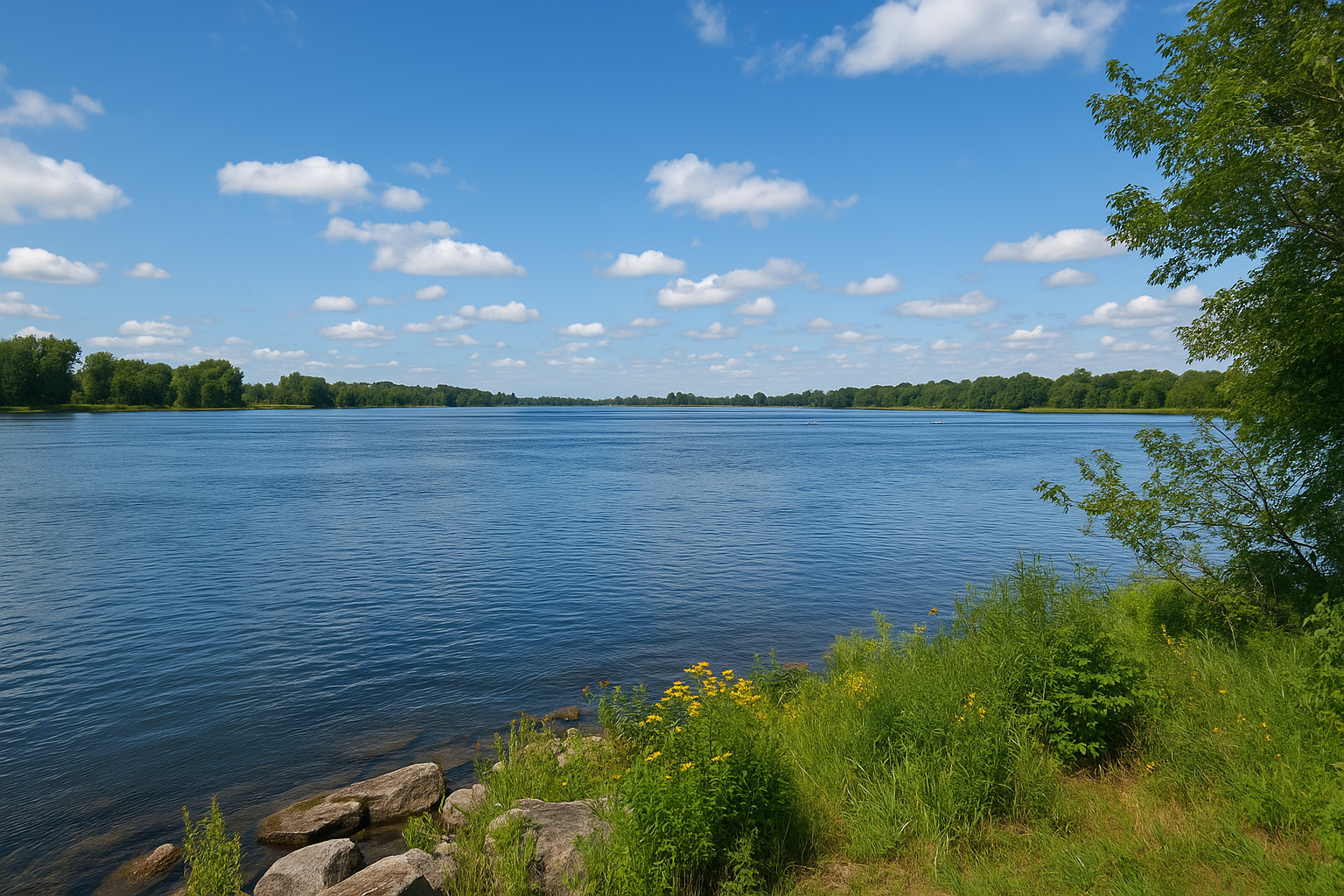
CORNWALL — The Ontario government is committing $435,829 to a community-led initiative aimed at restoring areas of the St. Lawrence River near Cornwall and Akwesasne. The funding is part of a wider provincial effort to safeguard the Great Lakes and their connecting waters, with $7.3 million being directed to 63 projects across Ontario.
The local project is led by the St. Lawrence River Institute of Environmental Sciences and is designed to protect water quality, restore habitats, and strengthen ecosystems in one of the province’s most significant waterways. Officials say the work will enhance fisheries, increase biodiversity, and bolster both community health and the local economy.
“Home to 20 per cent of the world’s surface freshwater, the Great Lakes also support one of the largest economies, providing drinking water to our communities and driving tourism and growth across the province,” said Todd McCarthy, Minister of the Environment, Conservation and Parks. “We are making strategic investments with partners like the St. Lawrence River Institute of Environmental Sciences in initiatives that will conserve this vital resource for future generations.”
Local Actions and Partnerships
The River Institute will use the provincial support through Ontario’s Great Lakes Program to fund a range of projects combining research, monitoring, and community education.
Among the initiatives are:
-
Evaluating fish and wildlife consumption restrictions to monitor improvements over time and inform residents about safe dietary choices.
-
Conducting water sampling and monitoring in partnership with the Mohawk Council of Akwesasne to assess the effects of harmful algae blooms on water quality and resilience.
-
Developing a digital mapping tool to compile and share the latest environmental data, helping track pollution across river zones.
-
Educating local communities on how climate change is affecting water quality and ecosystem health.
“These collaborative environmental research and community engagement projects will not only advance the remediation and restoration of the St. Lawrence Area of Concern (Cornwall/Akwesasne) but also help build resilience along the Upper St. Lawrence River to face any future challenges,” said Jeff Ridal, Executive Director, St. Lawrence River Institute of Environmental Sciences. “Funding from the Government of Ontario’s Great Lakes Program is instrumental in supporting local organizations to build partnerships and lead initiatives to restore and protect the health of these critical waterways.”
Community and Political Support
The funding announcement has drawn praise from local leaders who view the St. Lawrence River as both a cultural cornerstone and an economic asset.
“The St. Lawrence River is the lifeforce of our community, and it is imperative that we take care of it. Through this investment, our government is ensuring that the St. Lawrence River is protected so future generations across Cornwall and Akwesasne can continue to have access to clean drinking water and make memories along the river,” said Nolan Quinn, MPP for Stormont-Dundas-South Glengarry.
Cornwall’s mayor echoed the sentiment, highlighting the river’s wide-ranging role. “The St. Lawrence River plays an important role in the daily lives of our communities. Historically, we have harnessed these waters for trade, for industrial applications, for the generation of electricity, for sports and leisure activities, and most importantly, for our drinking water. We appreciate this investment by the Ontario government to protect the St. Lawrence today, and for future generations,” said Justin Towndale, Mayor of Cornwall.
Broader Great Lakes Strategy
The St. Lawrence funding forms part of Ontario’s broader Great Lakes Strategy, which is focused on protecting water resources that underpin the province’s tourism and agriculture sectors. The government says the work is also vital for building more resilient communities in the face of climate change.
Of the $7.3 million being invested in Great Lakes restoration, $5.5 million is drawn from the 2024/25 Great Lakes Program, while nearly $1.8 million comes through the Great Lakes Local Action Fund.
The province notes that nearly 83 per cent of Ontario’s power generation and 95 per cent of agricultural land depend on the Great Lakes–St. Lawrence basin. Other key initiatives under the government’s plan include:
-
Restoring 14 Areas of Concern around the Great Lakes.
-
Enhancing more than 9,900 acres of wetlands through 590 projects with $31 million from the Wetlands Conservation Partner Program.
-
Expanding the Great Lakes Waterfront Trail to more than 3,600 kilometres, linking 170 communities, villages, and First Nations.
Looking Ahead
Officials describe the St. Lawrence initiative as an example of government, science, and community working together to preserve critical natural resources. The River Institute’s combination of data-driven research and local engagement is expected to serve as a model for other Great Lakes projects.
The province says it will continue to work with local partners to ensure that water resources remain sustainable, ecosystems are protected, and communities can thrive along one of North America’s most important waterways.
Discover more from Wire Service Canada
Subscribe to get the latest posts sent to your email.
