

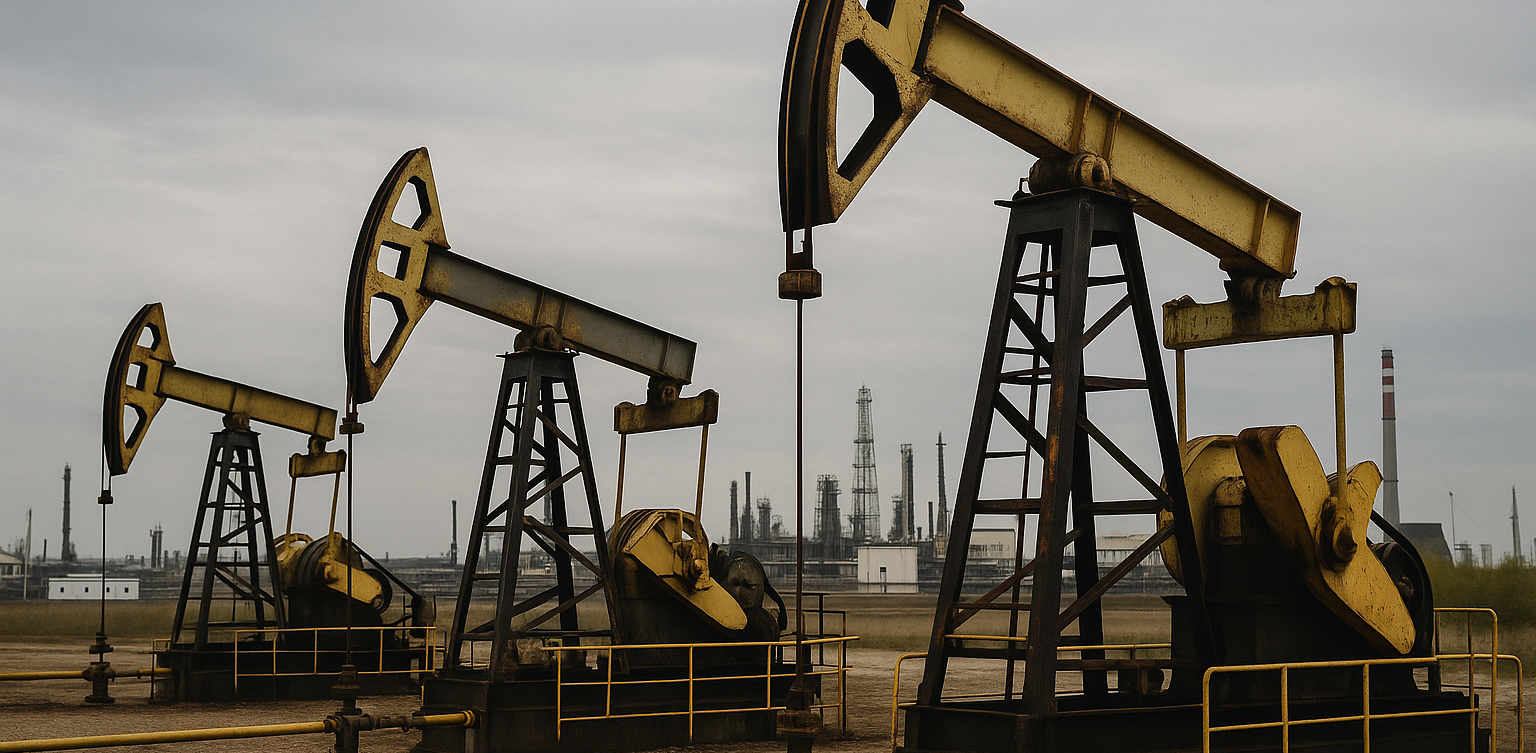
The International Energy Agency (IEA) is sounding the alarm over a sharp acceleration in the rate of decline at existing oil and gas fields, warning that without sustained investment, the world could lose the equivalent of Brazil and Norway’s combined annual production each year.
In a report released Tuesday, the Paris-based organization said companies face an increasingly steep challenge to maintain production as reliance on shale and deep offshore resources grows. The findings underscore the significant investment required just to prevent global output from sliding backward—a dynamic with wide-reaching implications for energy markets, security and emissions.
The IEA’s study, The Implications of Oil and Gas Field Decline Rates, is based on production data from roughly 15,000 fields worldwide. While much of the global energy debate has centred on demand for oil and gas in a decarbonizing economy, the agency argues that the supply side of the equation has received less scrutiny.
“Only a small portion of upstream oil and gas investment is used to meet increases in demand while nearly 90% of upstream investment annually is dedicated to offsetting losses of supply at existing fields,” said IEA Executive Director Fatih Birol. “Decline rates are the elephant in the room for any discussion of investment needs in oil and gas, and our new analysis shows that they have accelerated in recent years. In the case of oil, an absence of upstream investment would remove the equivalent of Brazil and Norway’s combined production each year from the global market balance. The situation means that the industry has to run much faster just to stand still. And careful attention needs to be paid to the potential consequences for market balances, energy security and emissions.”
Steeper declines in newer resources
Decline rates vary dramatically by geography and resource type. Onshore supergiant fields in the Middle East see declines of less than 2% annually, according to the report. Smaller offshore fields in Europe, by contrast, lose more than 15% of output each year. Tight oil and shale gas, which have grown to represent a larger share of production, are even more vulnerable: without continuous investment, output falls by more than 35% in the first year alone, and by another 15% in the second.
This shift toward more short-lived resources has changed the dynamics of global supply. In 2010, halting investment in existing oil fields would have reduced production by about four million barrels per day (mb/d) annually. Today, the comparable figure is 5.5 mb/d. Natural gas fields have experienced a similar trend, with decline rates rising from 180 billion cubic metres (bcm) each year to 270 bcm.
Long timelines for new production
The report stresses that stabilizing production requires not only continuous reinvestment in existing fields but also development of new ones. To keep output steady through mid-century, more than 45 mb/d of new oil production and nearly 2,000 bcm of new gas from conventional fields would need to be added by 2050. The IEA equates this to the combined current production of the world’s three largest producers.
The scale of the challenge is compounded by long project lead times. On average, it has taken nearly two decades from the issuance of an exploration licence to the first production from a new oil or gas field, the report notes. Roughly half of that time is consumed by discovery, with the remainder taken up by appraisal, approvals and construction.
Implications for Canada and beyond
The findings land at a critical moment for global energy markets. While oil prices have stabilized in recent months, demand forecasts remain uncertain as countries push to meet climate targets. Canada, as a major oil and gas exporter, faces a complex balancing act: ensuring adequate investment in upstream projects while navigating international pressure to reduce fossil fuel dependence.
Industry analysts say the IEA’s warning highlights the twin challenges of energy security and decarbonization. Maintaining supply to meet current demand requires capital-intensive investment in aging fields, even as governments and investors weigh the risks of long-term carbon commitments.
Birol’s message underscores the urgency of those choices. “The situation means that the industry has to run much faster just to stand still,” he said.
For policymakers and producers alike, the report is a reminder that even in a world striving to transition away from fossil fuels, the supply dynamics of oil and gas will continue to shape global markets for decades to come.
