

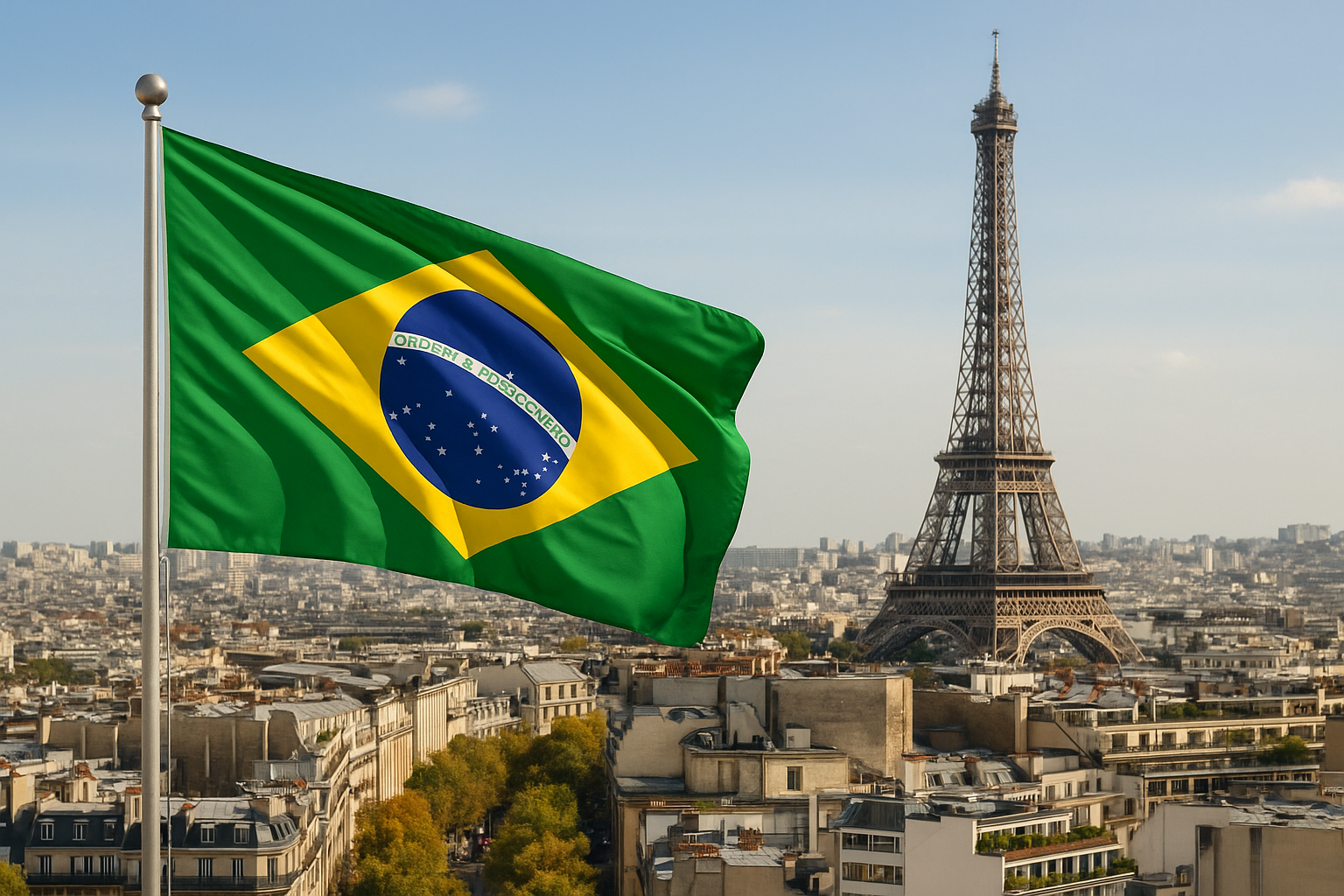
PARIS — Brazil has formally requested to become a full member of the International Energy Agency (IEA), marking a potential milestone in global energy governance at a time when markets are under strain from shifting supply, climate concerns, and geopolitical tensions.
At IEA headquarters in Paris this month, Ambassador Sarquis J.B. Sarquis presented Executive Director Fatih Birol with a letter from Brazil’s Minister of Foreign Affairs Mauro Vieira and Minister of Mines and Energy Alexandre Silveira officially requesting that Brazil begin the accession process.
Brazil, Latin America’s largest country with an economy of more than 210 million people, has long maintained a working relationship with the Paris-based agency on issues ranging from energy security to policy analysis. In their letter, the ministers emphasized the benefits of the partnership to date and highlighted Brazil’s role as “a net oil exporter” with a “diversified energy mix and its increasing leading role in the use of clean and renewable sources [that] will further contribute to IEA’s work and international cooperation in the energy sector.”
Dr. Birol welcomed the move. “I am very happy to have received the formal request from Ministers Vieira and Silveira for Brazil to become a full IEA Member, a major development for international governance that builds on many years of deepening cooperation across a wide range of energy issues,” he said. “Brazil is a cornerstone of the global energy system today and its importance is only set to increase in the years ahead. We look forward to discussing next steps with Brazil and our Member governments.”
Critical Minerals and a ‘1973 Moment’
The membership request comes as the IEA sharpens its warnings about critical minerals. In a recent TIME opinion article, Dr. Birol drew parallels with the 1973 oil shock, which led to the agency’s creation. At that time, governments pooled emergency oil reserves to shield themselves from geopolitical supply risks.
Dr. Birol argues that a similar approach is now necessary for critical minerals, which underpin industries from power grids to aerospace. He noted that the IEA has invested heavily in data and analysis on mineral supply and launched a new Critical Minerals Security Programme “to promote coordinated action in the face of supply disruptions.”
Oil Market Tensions
Meanwhile, the IEA’s September Oil Market Report painted a picture of volatility in global crude markets. OPEC+ has begun unwinding supply cuts introduced in April 2023, while producers outside the alliance — including the United States, Brazil, Canada, Guyana and Argentina — continue to pump at record levels.
The agency forecast global oil stocks to rise by 2.5 million barrels per day on average in the second half of this year, warning of “untenable” oversupply even as demand growth remains steady at about 700,000 barrels per day for 2025 and 2026. The report also cautioned that “geopolitical tensions, trade policies and additional sanctions on Russia and Iran” could shift balances again.
Hydrogen Struggles to Scale
The IEA’s Global Hydrogen Review 2025 noted that despite a surge of project announcements earlier this decade, low-emissions hydrogen has not expanded as quickly as expected. Worldwide hydrogen demand rose 2% in 2024 to nearly 100 million tonnes, but most of it was produced from fossil fuels without emissions capture.
While the report projects strong growth in low-emissions hydrogen through 2030, it also points to high costs, regulatory uncertainty, and infrastructure gaps that continue to restrain progress. An online tracker launched alongside the report will allow governments and businesses to monitor global project pipelines and policy developments.
Global Energy Diplomacy
Beyond reports and forecasts, the IEA is maintaining a visible presence on the diplomatic stage. In Milan, Dr. Birol led a ministerial roundtable at the Gastech natural gas conference, where discussions focused on energy access and LNG supply growth. Bilateral meetings were also held with ministers and senior officials from Egypt, Italy, the United States, and the European Commission, as well as executives from major energy companies.
In Addis Ababa, Deputy Executive Director Mary Burce Warlick led the agency’s delegation to the Africa Climate Summit. She co-chaired a high-level dialogue with Brazil’s COP30 Presidency, highlighting the urgent need to expand access to clean cooking solutions across the continent. “Urgent, coordinated action” from governments and partners is required to deliver universal access, she said.
Expanding Engagement
The IEA also announced a new WhatsApp channel to distribute analysis and insights directly to subscribers. In a separate development, Dr. Birol met with Mexico’s Energy Secretary Luz Elena González to discuss expanding cooperation in areas such as oil and gas, electricity, and efficiency.
The agency’s latest report on energy management emphasized that more systematic approaches to efficiency could help governments and industries secure long-term competitiveness while strengthening energy security.
With Brazil now moving toward full membership, the IEA appears set to broaden its influence even further. The decision underscores how global energy politics are shifting at a moment when markets face overlapping pressures from climate transition, supply disruptions, and the urgent need for international cooperation.
