

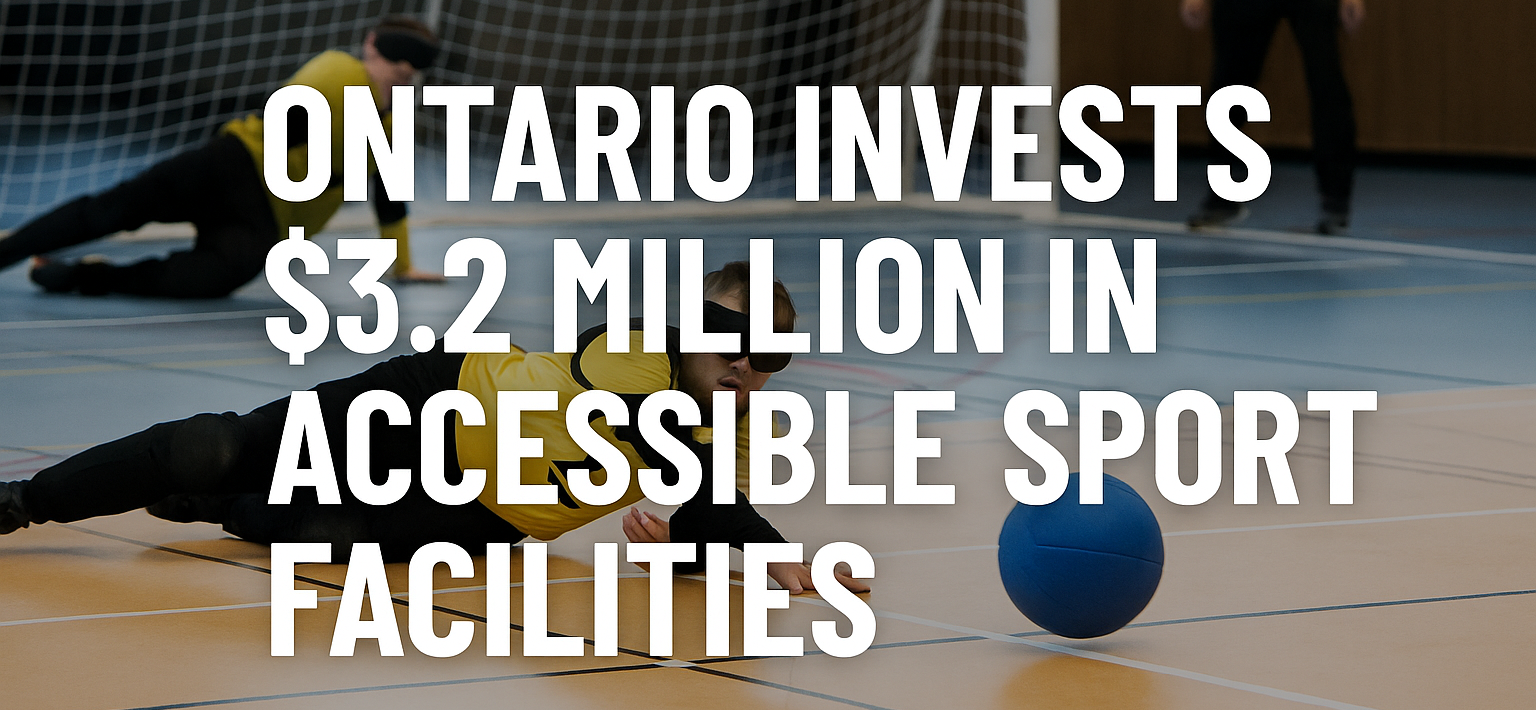
Mactier, Ont. — The Ontario government is committing $3.2 million to two major community projects aimed at expanding access to sport and recreation, including the construction of Canada’s first purpose-built goalball court. The funding, part of the province’s $200 million Community Sport and Recreation Infrastructure Fund (CSRIF), will also support upgrades to the Métis Nation of Ontario’s Children and Youth Camp in Burk’s Falls.
The investment, announced Thursday by the Ministry of Sport, is intended to boost local economies, protect jobs and promote healthy, active living. Officials emphasized the projects’ significance not only for infrastructure but also for inclusion and community development.
“Our government is proud to support organizations that are breaking down barriers for those who are blind or have low vision, empowering people and strengthening communities across our province,” said Neil Lumsden, Minister of Sport. “These investments in the CNIB and the Métis Nation of Ontario will create more opportunities for youth, families and seniors to participate in sport and recreation, give athletes the chance to train and compete closer to home — all while protecting local jobs and building a more resilient economy.”
Building Canada’s First Goalball Court
At the heart of the announcement is a multi-purpose facility at the Canadian National Institute for the Blind’s (CNIB) Lake Joseph Centre in Muskoka. The facility will feature a goalball court equipped with specialized flooring and acoustic panels designed specifically for athletes who are blind or have low vision. It will also include an accessible fitness centre and a teaching kitchen, broadening the range of adaptive programs offered at the centre.
The new court will provide a permanent training and competition space for local, regional and national goalball teams. Once completed, the centre will host both recreational and competitive activities, serving as a hub for adaptive sport in Ontario and across Canada.
“With a new purpose-built facility, CNIB Lake Joe is opening the door to accessible sport and recreation in ways that have long been missing for our community,” said Angela Bonfanti, President & CEO of CNIB. “We are grateful to the Government of Ontario and the Ministry of Sport for this important investment. By supporting CNIB Lake Joe, they are committing to a path forward for accessible sport and ensuring that children, youth, adults, and families who are blind, Deafblind, or have low vision can take part in the joy of recreation, sport, and community in a truly inclusive environment. Accessible sport changes lives. It builds confidence, fosters independence, and creates a sense of belonging. This investment will help CNIB Lake Joe expand its seasons and programs and create a lasting legacy of inclusion for generations to come.”
Expanding Opportunities for Métis Youth
In addition to the CNIB investment, the province is providing more than $230,000 to the Métis Nation of Ontario to support upgrades to its Children and Youth Camp in Burk’s Falls. The project will expand amenities and improve accessibility, transforming the facility into a community hub for sport, cultural events and heritage programs.
“Being on the land and water is at the heart of Métis culture. It’s where teachings are passed down and connections are made,” said Sharon Cadeau, Interim Chair of the Métis Nation of Ontario. “Through Ontario’s Community Sport and Recreation Infrastructure Fund, we’re creating an accessible waterfront at our ELCC Culture and Language Camp in Burk’s Falls, so that more Métis children, families, and Elders can gather in safety, in dignity, and with a true sense of belonging.”
Community and Athlete Reactions
The announcement has drawn praise from local leaders and sport organizations who see the projects as transformative.
“Providing sport and recreational opportunities for everyone is very important to the health of our communities and the future of our youth,” said Graydon Smith, MPP for Parry-Sound Muskoka. “I’m proud to see our government investing in infrastructure in Parry Sound-Muskoka that will allow children to participate in sports and activities that they might not otherwise be able to. It’s also exciting to have Canada’s first dedicated goalball court right here in Parry Sound-Muskoka.”
Others highlighted the importance of adaptive sport development.
“Sport has a powerful ability to help all Ontarians be involved in our communities. Our government is honoured to partner with CNIB in the development of Canada’s first dedicated goalball court,” said Raymond Cho, Minister for Seniors and Accessibility.
“Goalball is such a unique sport for blind and visually impaired athletes and it can be tremendously hard to find a spot to train and play,” added Amy Burk, Captain of the Canadian Women’s Goalball Team. “I wish I had access to something as significant as this when I first became involved in this sport.”
Advocates also underscored the long-term benefits. James Murphy, Executive Director of Parasport Ontario, called the funding “a huge win,” while Randa Gohary of the Ontario Blind Sports Association noted that the new facility would eliminate the need to repeatedly assemble temporary courts, making programs more accessible and efficient.
Economic and Social Impact
Sport contributes more than $7.5 billion annually to Ontario’s economy, generating tens of thousands of jobs across the province. The CSRIF program, launched as part of the government’s broader infrastructure strategy, is designed to expand and modernize facilities that serve both recreational and competitive athletes.
Each year, Ontario invests $32 million in community recreation programs, including the Ontario Amateur Sport Fund and the Inclusive Grassroots Recreation program. The latest announcement adds to that commitment by funding infrastructure projects that prioritize accessibility and inclusivity.
As the province rolls out its $200 billion infrastructure plan — which also includes highways, hospitals, transit and schools — officials say the CSRIF initiative reflects a broader effort to strengthen Ontario’s social fabric while supporting economic growth.
