

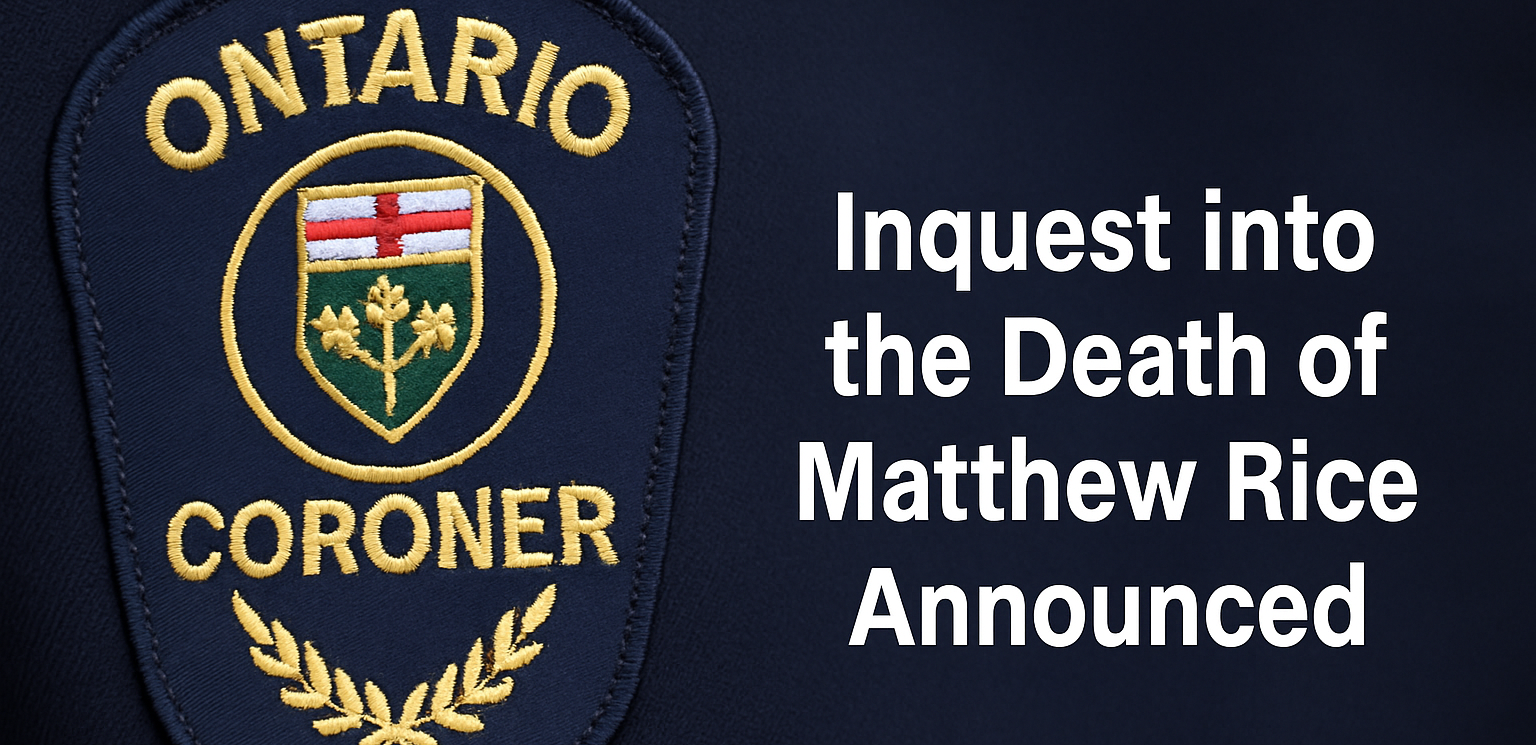
Toronto — The Office of the Chief Coroner has confirmed that an inquest will be held into the 2020 death of Matthew Rice, a 29-year-old man who died in hospital following an encounter with Ontario Provincial Police officers. The announcement was made Thursday by Dr. Kenneth Peckham, Regional Supervising Coroner for the Central Region, Central West Office.
Under Ontario’s Coroners Act, an inquest is mandatory in cases involving deaths that occur in police custody or during police interactions. The upcoming proceedings will examine the events leading to Rice’s death and consider whether systemic changes could prevent similar tragedies in the future.
Circumstances of the Case
Matthew Rice died on September 9, 2020, shortly after being taken to hospital following his interaction with police officers. While details of the encounter have not been publicly released, the mandatory inquest will review the circumstances and evidence related to his final hours.
The inquest will be presided over by a coroner and heard before a jury of citizens. Although an inquest does not assign legal blame or civil liability, its purpose is to investigate deaths in the public interest. The jury will hear testimony from witnesses, review evidence, and ultimately issue recommendations.
Dr. Peckham emphasized the legal and public significance of the proceedings. “Dr. Kenneth Peckham, Regional Supervising Coroner, Central Region, Central West Office, has announced that an inquest will be held into the death of Matthew Rice,” the statement read.
Purpose of the Inquest
The central role of an inquest is to serve as a fact-finding process rather than a fault-finding one. By reviewing medical, police, and other evidence, the jury may recommend measures to address policy, training, or systemic shortcomings identified during testimony.
“The inquest will examine the circumstances surrounding Mr. Rice’s death. The jury may make recommendations aimed at preventing further deaths,” the Ministry of the Solicitor General said in Thursday’s announcement.
Such recommendations are not legally binding but often carry significant weight, influencing future government policy, policing standards, and health protocols.
Next Steps
While the announcement confirms that the inquest will take place, no date or location has yet been scheduled. “Further details regarding the inquest, including the date and venue, will be provided at a later date,” the release noted.
Typically, once a date is set, the inquest will be conducted in public, with media and community members able to attend. The presiding coroner will oversee proceedings, ensure fair process, and guide the jury as it considers its recommendations.
Broader Context
Mandatory inquests into deaths involving police interactions reflect Ontario’s legal framework to ensure transparency and accountability. Over the past decade, several high-profile inquests have led to sweeping recommendations on police training, mental health crisis response, and community safety initiatives.
Cases involving in-custody or police-related deaths have been a focal point of public debate, particularly regarding use of force, medical care, and systemic responses to vulnerable individuals. The Rice inquest is expected to draw attention from both advocacy groups and the broader community, given the sensitivity of deaths that follow police interactions.
Public Interest
The announcement underscores the government’s ongoing commitment to public transparency in cases where state institutions play a direct role in an individual’s death. Inquests such as this one are designed to enhance accountability while balancing the legal principles that distinguish fact-finding from criminal or civil litigation.
Though the recommendations issued by juries are not enforceable by law, they often serve as catalysts for reform. Previous inquests have led to changes in policing practices, expanded training for officers dealing with mental health crises, and greater emphasis on inter-agency collaboration between health and justice systems.
Conclusion
With the inquest into Matthew Rice’s death now formally announced, attention will turn to the scheduling and conduct of the proceedings. For Rice’s family, the inquiry will mark a public examination of the events leading to his death. For Ontario residents more broadly, it represents another opportunity to evaluate and potentially improve the systems designed to safeguard individuals during encounters with law enforcement.
As Dr. Peckham noted, the mandatory inquest will not only revisit the circumstances of September 9, 2020, but also seek constructive lessons for the future. “The jury may make recommendations aimed at preventing further deaths,” the Ministry reiterated.
The inquest is one of several expected to be held across Ontario in the coming months as the province continues its work to strengthen oversight, transparency, and trust in public institutions.
