

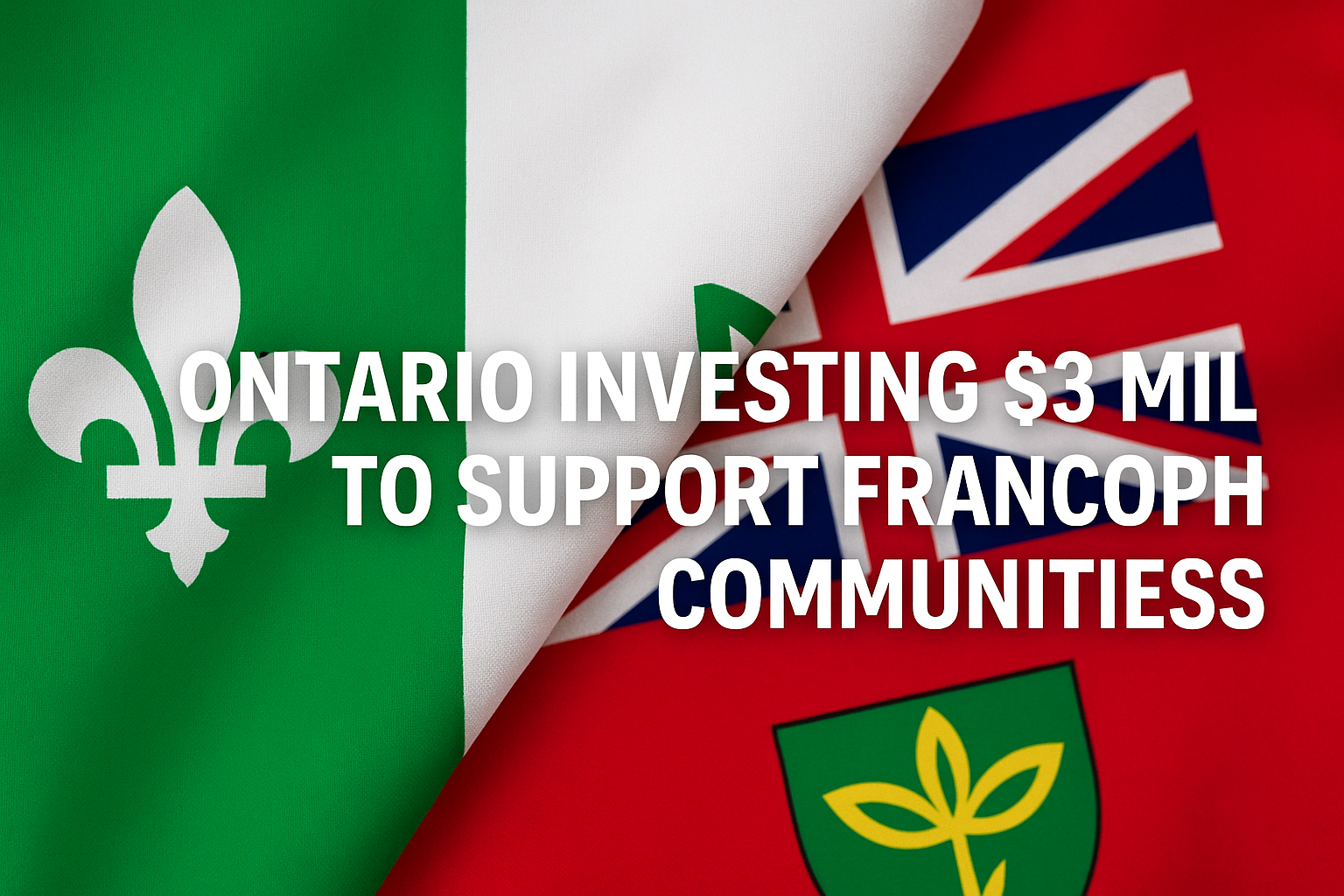
TORONTO — The Ontario government is committing $3 million through the 2025–26 Francophone Community Grants Program (FCGP), supporting 71 organizations and businesses across the province in a bid to bolster Francophone culture, expand services, and stimulate economic growth.
The initiative, unveiled on Wednesday, is part of a broader provincial plan to reinforce Ontario’s Francophone identity while ensuring Franco-Ontarians continue to play a central role in the economy.
Strengthening Ontario’s Francophone future
“Our government has a plan to make Ontario the most resilient and competitive economy in the G7, and we need a strong and vibrant Francophone community to achieve that,” said Caroline Mulroney, Minister of Francophone Affairs. “Under the leadership of Premier Ford, we will continue to invest in the Francophone Community Grants Program so we can celebrate Francophone culture and grow the economy for everyone.”
Funding from the program will be directed toward projects that expand French-language services, enhance training opportunities, increase outreach, and improve hiring strategies for bilingual employees.
This year, 62 projects are being supported under the Community and Culture stream, while nine are receiving backing through the Economic Development stream.
A diverse slate of recipients
Among the 71 recipients are organizations that reflect the variety of Franco-Ontarian contributions to both culture and the economy.
-
The Centre de santé communautaire Hamilton/Niagara will receive $50,000 to support the integration of French-speaking newcomers in southwestern Ontario. The project will promote skilled trades and other careers as viable pathways through French-language career fairs and professional events.
-
Société d’appui direct au développement économique et communautaire (SADDEC) is being awarded $49,000 to deliver practical training in artificial intelligence (AI). Targeting professionals, entrepreneurs, newcomers and rural residents, the training is intended to boost digital literacy and competitiveness in Francophone communities.
-
Triangle Magique, based in Northern Ontario, will receive $49,000 to address the region’s shortage of early childhood educators. Its project will focus on developing bilingual support programs, recruitment and retention strategies, and a sustainable economic model for the sector.
According to provincial officials, these examples highlight how the FCGP fosters innovation while preserving Ontario’s cultural heritage.
Strong demand for support
Interest in the program continues to grow. The province reported a record-breaking 179 project submissions for the 2025–26 intake, underscoring what it described as the program’s importance in addressing “real needs on the ground.”
The FCGP also benefits from federal collaboration. The Government of Canada is contributing $1 million through the Canada–Ontario Agreement on Minority-Language Services, a joint initiative aimed at supporting minority-language communities across the province.
“Francophone communities across the country must be strong for Canada to be strong,” said Steven Guilbeault, Minister of Canadian Identity and Culture and Minister responsible for Official Languages. “Through the Canada–Ontario Agreement, we are working with our provincial partners to build a future where French thrives—in Ontario and across Canada—and where the Francophonie is a driver of growth and a source of opportunity.”
Economic and cultural alignment
The Ontario government frames the Francophone Community Grants Program as a key element of its broader “plan to protect Ontario,” which emphasizes reinforcing cultural identity alongside economic development.
By channeling funds into training programs, career development opportunities, and cultural events, the initiative is designed to strengthen Franco-Ontarians’ role in the labour market while promoting French-language services across the province.
Officials say the funding is particularly significant at a time when Ontario’s economy is facing both global competition and local workforce challenges. The emphasis on bilingual training, AI skills, and early childhood education reflects areas where Francophone communities can make outsized contributions to Ontario’s long-term growth.
Looking ahead
Applications for the next round of funding, covering 2026–27, are expected to open in early 2026. With rising demand for support, the government says it anticipates another robust response from community organizations, cultural groups, and businesses eager to strengthen their ties to Franco-Ontarian identity and economic opportunity.
For now, the 2025–26 program stands as both an investment in community resilience and an acknowledgment of the Francophone population’s importance to Ontario’s future.
