


The check engine light appears alongside acceleration shudders and unexpected electrical issues which signal financial trouble to numerous Toronto drivers. Several vehicle models from the 2005 to 2018 era demonstrate mechanical and electrical breakdown characteristics that pose serious financial risks. The smartest financial choice now leads many owners away from the repair shop and toward a new kind of exit strategy. It’s a market shift that has given rise to specialized services like the SoldCar car buying service, which provides a crucial lifeline by purchasing these problematic vehicles in any condition for cash, effectively rescuing owners from the brink of four-figure repair expenses.
The financial logic is stark. The worst models among them lose as much as 70% of their worth during a five to seven year span according to research findings. The repair costs for major issues such as transmission replacements or engine problems often exceed the remaining worth of the vehicle. The situation represents a classic bad investment trap, which savvy GTA car owners are increasingly recognizing by selling their vehicles—often for immediate cash—before they become completely worthless assets.
The “Most Unwanted” List: Top 5 Models Fleeing Toronto Garages
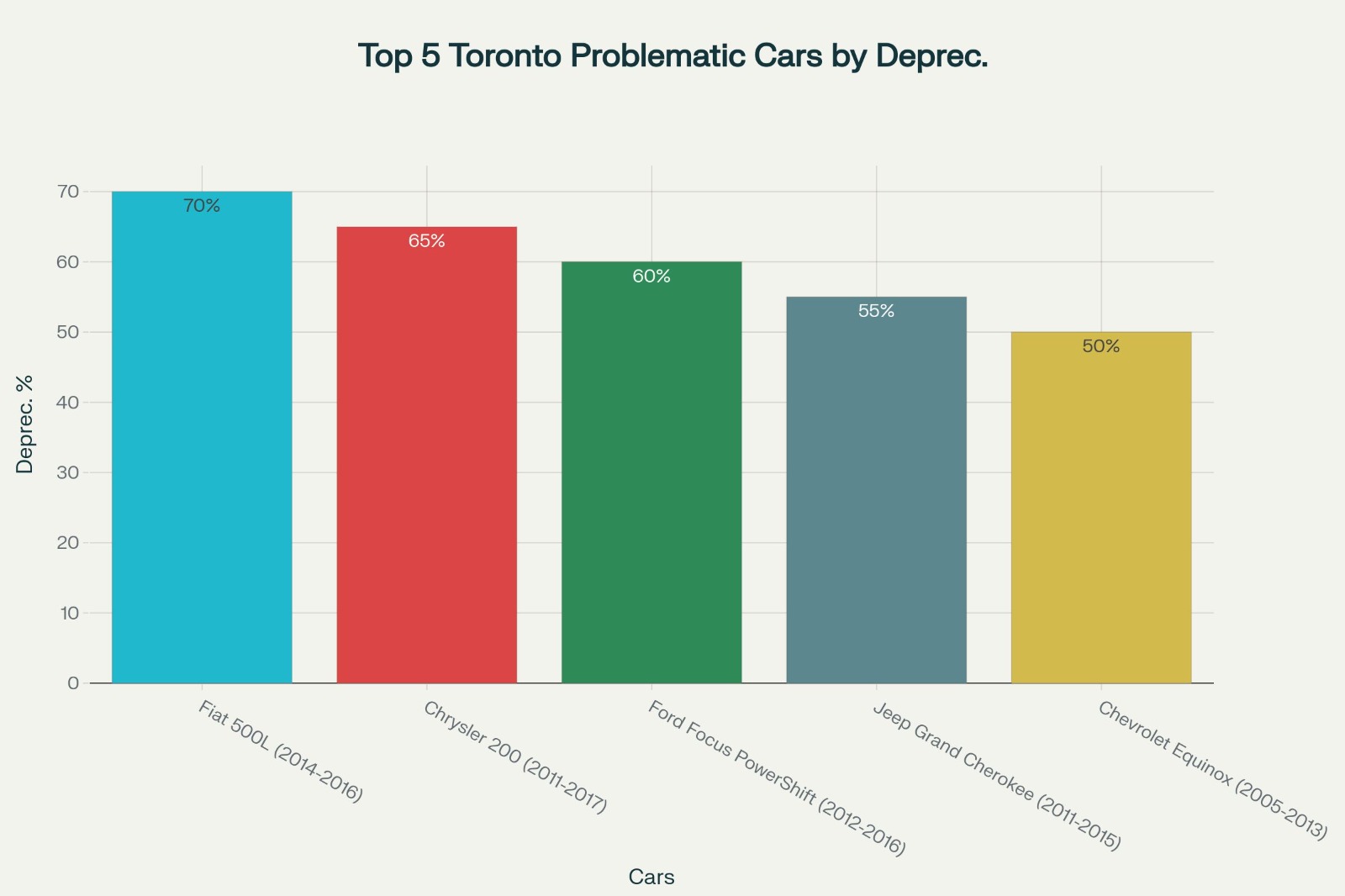
Vehicle data shows owners want to get rid of particular models. These models show a perfect storm of unreliable operation with expensive maintenance needs and severe devaluation.
- Fiat 500L (2014-2016): These models experience frequent transmission breakdowns and faulty electronic features including navigation and rearview camera systems. Owners experience a 70%+ depreciation in value during the first five years of ownership.
- Chrysler 200 (2011-2017): The infamous 9-speed ZF transmission and oil consumption issues with the 2.4L Tigershark engine make this a liability. The five-year depreciation period results in a 65% loss of value for this vehicle.
- Ford Focus (2012-2016): The dual-clutch transmission in these models earned a reputation for producing shuddering and jerking motions and complete failure which resulted in class-action suits and caused a 60% value reduction.
- Jeep Grand Cherokee (2011-2015): A Totally Integrated Power Module (TIPM) failure occurs frequently in these vehicles leading to complete electrical shutdown without warning. The combined problems with transmission systems and electrical components lead to a 55% decline in market value.
- Chevrolet Equinox (2005-2013): This model suffered from two major issues: its 3.4L V6 engine was prone to blown head gaskets, and timing chains on other engines caused owners constant worry, which resulted in a 50% reduction in market value.
Anatomy of a Failure: Transmissions and Electrical Nightmares
Two categories of problems cause the most financial pain. “Transmission Killers,” including the Ford PowerShift, Chrysler 9-speed, and Nissan CVTs from 2007 to 2018, have prompted large-scale legal actions which resulted in hundreds of millions of dollars in settlements. A single Chrysler 200 transmission wiring harness fix can cost owners up to $3,500 CAD.
The problems known as “Electrical Nightmares” create expenses similar to those of the Transmission Killers. The TIPM module failure in Jeep vehicles led to more than 755 official complaints in 2011, often making the vehicle unusable. European premium brands also experience such problems. The premature failure of timing chains in BMW’s N20 and N47 engines, found in many 2008-2018 models, can require a costly $22,000-$26,000 CAD repair during a decade of ownership.
The Toronto Factor: Salt, Costs, and Complexity
The GTA’s special environment intensifies a previously negative situation.
The extensive winter salt application leads to increased corrosion of sensitive electric systems, particularly in brands like Volkswagen. Freezing and thawing cycles destroy plastic components which frequently appear in BMW and Mini vehicles.
Furthermore, with premium service centers in the GTA charging upwards of $150 CAD per hour, repair costs rapidly increase. Many independent shops have even stopped taking on notoriously complex jobs, like BMW N20 timing chain repairs, because of the high risk and specialized tools needed. This leaves owners with limited, expensive, and often frustrating repair options; for many, the only rational path forward is to bypass this system entirely.
The Final Calculation: Sell Now or Pay Later
The choice becomes obvious when dealing with a Ford Focus that has experienced more than a 60% value decrease while facing a potential transmission fix costing above $3,000. The financial advantage of selling becomes undeniable when adding diagnostic expenses exceeding $200 plus towing and rental car fees for extensive repairs. For Toronto owners of these problematic cars, each passing month causes their worth to decrease by another 2-3%. These depreciating liabilities no longer make financial sense to repair, so the smart money choice is to cash out and start anew. For a growing number of Toronto drivers, services that provide instant cash offers are not just a convenience; they are the definitive financial resolution to a relentless problem.