

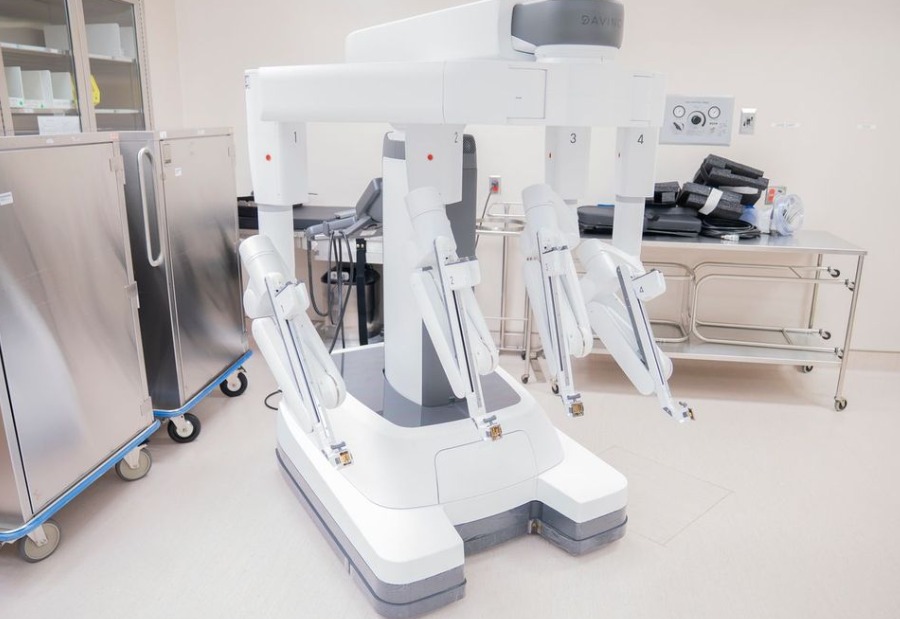
Surrey Memorial Hospital has taken delivery of a da Vinci Xi robotic surgical system, marking the second major expansion of Fraser Health’s regional robotic surgery program and positioning the hospital to offer more advanced minimally invasive procedures closer to home for patients in Surrey and surrounding communities.
The system arrived on Jan. 6, 2026, following the installation of the region’s first da Vinci robotic surgical system at Royal Columbian Hospital last fall. Fraser Health says the additional technology will help broaden access to specialized surgical care, reduce the need to refer patients outside the health authority, and support the growing demand for complex procedures in the fast-growing South Fraser region.
Surrey Memorial Hospital’s da Vinci Xi system has been unpacked and calibrated and will remain in a temporary location while renovations are completed on its permanent operating room. Once the dedicated space is ready, the hospital expects to incorporate the system into regular surgical operations, beginning with priority cases that can benefit most from robotic-assisted approaches.
“With the aid of the da Vinci Xi system we can expand minimally invasive thoracic and foregut surgery, and we can do operations with greater precision and accuracy,” says Dr Ahmad Ashrafi, regional division head and chief of thoracic surgery for Fraser Health. “Patients may experience quicker recovery times and we can carry out more complex procedures right here in Surrey, using minimally invasive techniques. This advanced technology will also help us attract and retain top surgical talent at Surrey Memorial Hospital.”
The da Vinci Xi platform is designed to support laparoscopic surgery by enabling surgeons to operate from a console that controls remote robotic arms. Fraser Health notes that the system’s 3D high-definition visualization provides surgeons with ultra-clear views of patient anatomy, supporting detailed surgical work in areas that can be difficult to access through conventional methods.
Robotic-assisted surgery has become an increasingly prominent feature of hospital modernization strategies across Canada, particularly in high-volume centres managing cancer and complex thoracic cases. While robotic systems require significant investment and specialized training, health systems often cite improved surgical precision, smaller incisions, and shorter recovery periods as key benefits for eligible patients.
At Surrey Memorial Hospital, the first clinical areas expected to benefit will include ear, nose and throat (ENT) procedures and thoracic surgeries involving the lungs, chest, esophagus, and stomach. Fraser Health says the system will help retain patients within the region who previously may have been referred elsewhere for advanced surgical treatment.
That shift could have meaningful operational implications for the hospital and for regional care delivery, as keeping more cases within Fraser Health can reduce wait times created by inter-facility transfers and ease pressure on referral centres. It also aligns with broader health system priorities focused on improving access and capacity closer to where patients live.
Surgeons at Surrey Memorial Hospital say the technology can be especially valuable for cancer care, where precision and access can influence outcomes and recovery. “Access to robotic surgery will help us remove tumours and treat cancers more effectively,” says Dr. Oleksandr (Alex) Butskiy, surgeon, Surrey Memorial Hospital. “For example, for hard-to-reach throat cancers we often have to cut a patient’s jaw to remove the tumour. With da Vinci, we can do the surgery in a more minimally invasive way with the smallest incisions possible, leading to better recovery and fewer visible signs of surgery.”
For patients, the hospital’s expanded surgical capability may mean fewer trips outside the region, reduced time away from work and family, and improved continuity of care. For Fraser Health, the move reflects a continuing effort to strengthen specialized services across multiple sites rather than relying on a single flagship facility.
Fraser Health also emphasized the role of community support in bringing the robotic system to Surrey. “This advancement in surgical care for Surrey is possible thanks to generous gifts to the Surrey Hospitals Foundation” says Cindy Laukkanen, executive director, Surgery and Anesthesia Networks. “I would like to thank the Foundation and donors in our community who have brought this wonderful technology to Surrey.”
Hospital foundations across B.C. have increasingly played a central role in funding high-cost medical equipment, including diagnostic imaging tools, surgical upgrades, and digital health infrastructure. In Surrey, the investment in robotic-assisted surgery is expected to support both patient outcomes and the hospital’s ability to recruit and retain specialized staff in a competitive labour market.
With the da Vinci Xi system now on site, Surrey Memorial Hospital will move through the final steps required before full clinical deployment, including completion of operating room renovations and integration into surgical workflows. Fraser Health says the additional system represents a major step forward for regional access to minimally invasive surgery, allowing more patients to receive complex care in Surrey while strengthening the health authority’s overall surgical capacity.
