

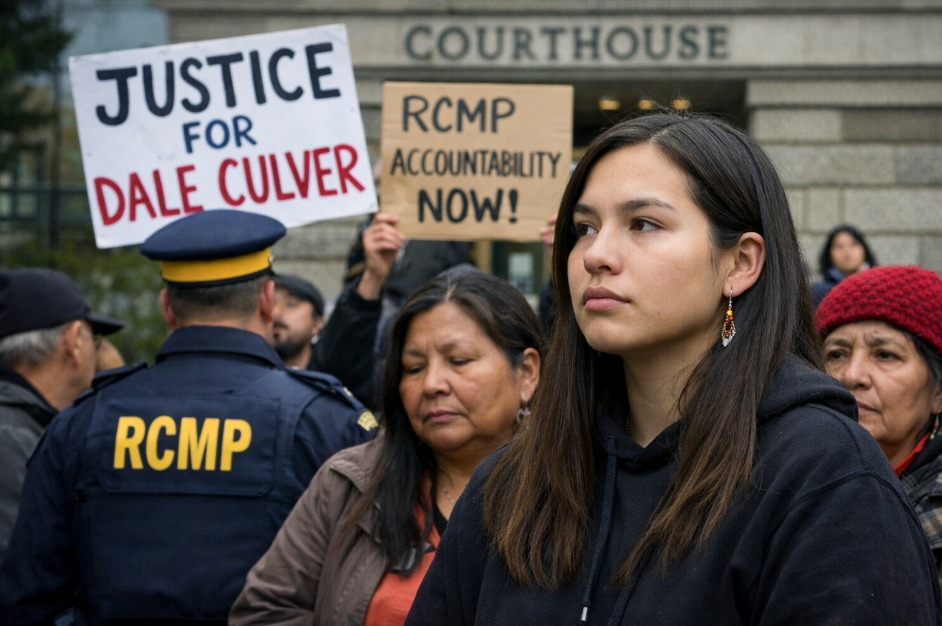
PRINCE GEORGE, B.C. — A Prince George RCMP officer convicted of obstructing justice in connection with the 2017 death of Dale Culver has been sentenced to 18 months’ probation, marking the only criminal conviction stemming from the high-profile case.
Judge Fortino handed down the sentence to Const. Arthur Dalman on unceded Lheidli T’enneh Territory, ordering that he serve probation, report to a probation officer and complete 150 hours of community work service. The conviction will also result in a criminal record.
The ruling closes one chapter in a case that has spanned nearly nine years and drawn scrutiny to police conduct in northern British Columbia.
On July 18, 2017, Dale Culver, a 35-year-old Wet’suwet’en and Gitxsan man, died after an encounter with Prince George RCMP officers. According to court proceedings, multiple officers pepper-sprayed, punched, kicked and kneed Culver during the arrest. He died approximately 30 minutes later after complaining of difficulty breathing.
Five RCMP officers were initially charged in relation to the incident. Const. Paul Ste. Marie and Const. Jean Francois Monette faced manslaughter charges, while Sgt. John Eusebio Cruz, Const. Arthur Dalman and Const. Clarence MacDonald were charged with obstruction of justice. Prosecutors later stayed charges against Ste. Marie, Monette and MacDonald. Dalman is the only officer convicted of a criminal offence.
The obstruction conviction centred on Dalman’s attempt to have a civilian witness delete video footage recorded the night Culver died.
For Culver’s family, the sentencing brings mixed emotions.
Lily Speed-Namox, Culver’s daughter, reflected on the nearly decade-long legal process in a statement following the decision.
“I was 14 years old when the police killed my dad. I spent nine years of my life going to court, speaking out, and seeking justice for my dad. I know that Dalman did not physically cause my father’s death. However, he attempted to cover up what happened that night. Dalman could have stood up, but instead, he was part of the RCMP’s rotten culture of protecting their own. Dalman received 18 months’ probation and a criminal record for his crime, but it doesn’t bring my dad back.”
Her remarks underscore the emotional toll the case has taken on the family, who have attended hearings and spoken publicly about the incident since 2017.
Debbie Pierre, Culver’s cousin, said the impact of the obstruction extended beyond the courtroom.
“For nine years, our family has carried the unbearable weight of Dale’s death. Obstruction of justice is not a victimless crime. In this case, it prolonged our suffering, delayed justice, and deepened the trauma of losing Dale in a violent and preventable way. Our family bore the emotional, financial, and spiritual cost of seeking justice. Today, the judge delivered one step towards accountability, but for us, the journey does not end here. We will continue to fight for systemic change.”
Legal observers note that obstruction of justice carries a range of possible penalties, including incarceration. In this case, the court opted for probation and community service, emphasizing accountability while stopping short of a custodial sentence.
Civil liberties advocates say the case highlights broader concerns about police oversight and trust in the justice system, particularly among Indigenous communities.
Latoya Farrell, Policy Staff Counsel with the BC Civil Liberties Association, criticized Dalman’s actions and their wider implications.
“Arthur Dalman knew it was wrong to demand that a witness delete video evidence during a criminal investigation. Police officers have a duty to uphold the law—they occupy a position of privilege and authority. When a police officer obstructs justice, his actions strike at the heart and integrity of the justice system, fundamentally undermining the public’s trust. Dalman’s actions as a police officer must be considered in the broader context of policing’s longstanding history of discrimination and harm to Indigenous communities. Because of this, for Indigenous communities, this breach of trust is felt even more deeply.”
The case has fuelled ongoing calls for reforms to policing practices and accountability mechanisms in British Columbia. While the criminal proceedings against Dalman have concluded, Culver’s family and advocacy groups say broader systemic issues remain unresolved.
For the Culver family, the sentence represents a measure of legal recognition but not closure.
As Pierre stated, the decision is “one step towards accountability,” yet the push for change continues beyond the courtroom.