

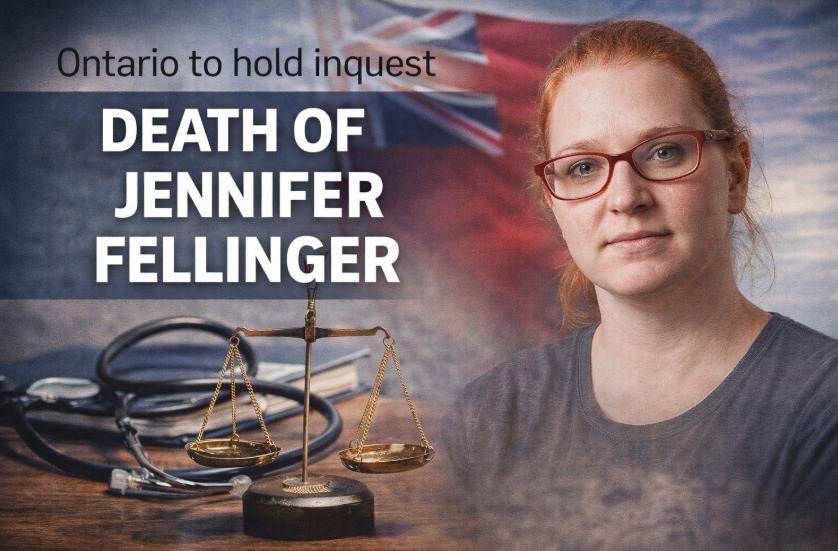
Ontario’s Office of the Chief Coroner will convene an inquest into the death of Jennifer Fellinger, a 31-year-old woman who died in hospital in 2019 after being transferred from the Vanier Centre for Women in Milton, the Ministry of the Solicitor General said Monday.
Dr. Karen Schiff, the Regional Supervising Coroner for the West Region at the Hamilton Office, announced the inquest on Jan. 12. The proceeding is mandatory under Ontario’s Coroners Act, which requires an inquest in certain circumstances, including deaths involving individuals in custody.
Ms. Fellinger “died in hospital on February 12, 2019, after being transferred from the Vanier Centre for Women in Milton,” according to the ministry’s statement.
The inquest will examine the circumstances surrounding Ms. Fellinger’s death, and a jury may issue recommendations aimed at preventing similar deaths in the future. Under Ontario’s inquest system, those recommendations are not legally binding, but they can influence operational policies and practices across correctional services, health care, and other public institutions.
The province did not provide further information on the timeline for the inquest, including when it will begin or where it will be held.
“Further details regarding the inquest, including the date and venue, will be provided at a later date,” the ministry said.
Inquests in Ontario are public proceedings conducted by a coroner and a jury. They are designed to determine who the deceased was and how, when, where and by what means the person died. The scope of an inquest is fact-finding, rather than assigning criminal or civil liability.
The announcement comes amid continued scrutiny of correctional health care and inmate transfers, as provincial agencies face pressure to improve medical response protocols and ensure timely access to treatment for people in custody.
The Vanier Centre for Women is a provincial correctional institution in Milton that houses women serving short sentences or awaiting trial. When serious medical concerns arise, inmates may be transported to hospital for assessment and treatment.
The ministry’s statement did not specify the circumstances of Ms. Fellinger’s transfer, the nature of her medical condition, or the hospital where she died.
The inquest jury, once convened, may hear evidence from witnesses and review documents related to Ms. Fellinger’s detention, medical care, and transfer process. Jurors can then deliver a verdict and, where appropriate, issue recommendations aimed at preventing future deaths in similar circumstances.
While the ministry did not confirm whether any agencies will be required to participate, inquests often involve testimony from correctional staff, health care professionals, and oversight bodies, depending on the facts of the case.
The Office of the Chief Coroner and the Ontario Forensic Pathology Service fall under the Ministry of the Solicitor General. The province said additional information will be released once scheduling and logistical arrangements are finalized.
For more information about Ontario’s inquest process, the ministry directed the public to its online resource on coroners’ inquests.
Ontario’s Office of the Chief Coroner will convene an inquest into the death of Jennifer Fellinger, a 31-year-old woman who died in hospital in 2019 after being transferred from the Vanier Centre for Women in Milton, the Ministry of the Solicitor General said Monday.
Dr. Karen Schiff, the Regional Supervising Coroner for the West Region at the Hamilton Office, announced the inquest on Jan. 12. The proceeding is mandatory under Ontario’s Coroners Act, which requires an inquest in certain circumstances, including deaths involving individuals in custody.
Ms. Fellinger “died in hospital on February 12, 2019, after being transferred from the Vanier Centre for Women in Milton,” according to the ministry’s statement.
The inquest will examine the circumstances surrounding Ms. Fellinger’s death, and a jury may issue recommendations aimed at preventing similar deaths in the future. Under Ontario’s inquest system, those recommendations are not legally binding, but they can influence operational policies and practices across correctional services, health care, and other public institutions.
The province did not provide further information on the timeline for the inquest, including when it will begin or where it will be held.
“Further details regarding the inquest, including the date and venue, will be provided at a later date,” the ministry said.
Inquests in Ontario are public proceedings conducted by a coroner and a jury. They are designed to determine who the deceased was and how, when, where and by what means the person died. The scope of an inquest is fact-finding, rather than assigning criminal or civil liability.
The announcement comes amid continued scrutiny of correctional health care and inmate transfers, as provincial agencies face pressure to improve medical response protocols and ensure timely access to treatment for people in custody.
The Vanier Centre for Women is a provincial correctional institution in Milton that houses women serving short sentences or awaiting trial. When serious medical concerns arise, inmates may be transported to hospital for assessment and treatment.
The ministry’s statement did not specify the circumstances of Ms. Fellinger’s transfer, the nature of her medical condition, or the hospital where she died.
The inquest jury, once convened, may hear evidence from witnesses and review documents related to Ms. Fellinger’s detention, medical care, and transfer process. Jurors can then deliver a verdict and, where appropriate, issue recommendations aimed at preventing future deaths in similar circumstances.
While the ministry did not confirm whether any agencies will be required to participate, inquests often involve testimony from correctional staff, health care professionals, and oversight bodies, depending on the facts of the case.
The Office of the Chief Coroner and the Ontario Forensic Pathology Service fall under the Ministry of the Solicitor General. The province said additional information will be released once scheduling and logistical arrangements are finalized.
For more information about Ontario’s inquest process, the ministry directed the public to its online resource on coroners’ inquests.