

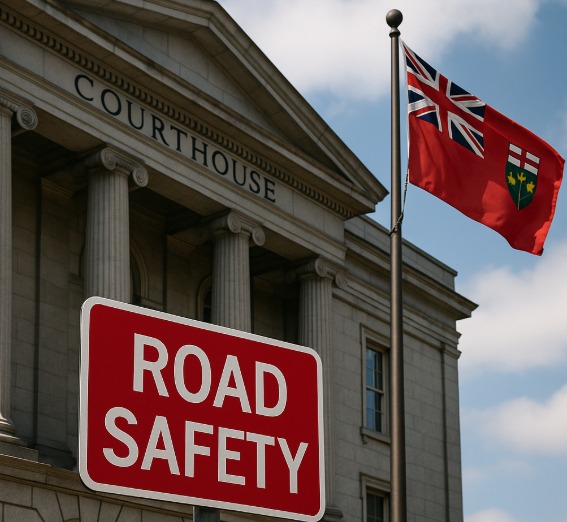
The Ontario government is preparing legislation that could require impaired drivers convicted of killing a parent or guardian to provide ongoing child-support payments to surviving children — a move officials say is aimed at strengthening accountability and easing the financial strain families face after tragic road collisions.
The proposal, still in development, is expected to form part of a broader legislative package focused on victims’ rights and criminal accountability. It would expand on measures adopted in the Safer Roads and Communities Act, 2024, which introduced tougher penalties for impaired driving, including lifetime licence suspensions for those convicted of impaired driving causing death under the Criminal Code.
In announcing the initiative Tuesday, Attorney General Doug Downey said the province is seeking practical ways to address the long-term effects impaired driving has on children who suddenly lose a parent.
“No child should have to bear the weight of losing a parent to impaired driving,” said Attorney General Doug Downey. “The devastating impact reaches far beyond the immediate loss—it can leave children struggling emotionally and financially. That’s why our government is looking at practical solutions that can ease their burden in the wake of such tragedies and provide financial stability for children who are left behind.”
The Ministry of the Attorney General said the proposed requirement would function alongside existing legal avenues, such as civil lawsuits brought by victims’ families. Officials say the intent is not to replace those remedies, but to ensure that children receive direct, ongoing financial support from those responsible for the loss.
Transportation Minister Prabmeet Sarkaria said the measure would reinforce the province’s existing penalties for impaired and reckless driving, which he described as among the strictest in North America.
“When a drunk driver takes an innocent life, it imposes a life sentence on the family left behind, especially the children who are suddenly without a parent,” said Prabmeet Sarkaria, Minister of Transportation. “Ontario already has some of the toughest penalties in North America for impaired and reckless driving. Under the leadership of Premier Ford, we are taking another step to strengthen support for victims and their families.”
Impaired driving remains one of the most serious public-safety challenges on Ontario roads. The government noted that in 2021, 182 deaths were attributed to impaired driving — 96 related to alcohol and 86 to drugs. Law-enforcement agencies and safety advocates say those numbers underscore the continued need for tougher deterrents and improved support for grieving families.
As part of its review, Ontario is examining approaches taken in other jurisdictions. In 2023, Texas enacted a law requiring individuals convicted of “intoxication manslaughter” to pay child support to victims’ children until they turn 18 or finish high school. Provincial officials say the Texas model is among several being considered as Ontario evaluates how best to structure its own version of the policy.
Advocacy groups working with families affected by impaired driving expressed support for the government’s direction.
**”MADD Canada works with those impacted by impaired driving every day, and we know the harsh reality families face because of someone else’s harmful choices. We applaud the Ontario government for looking into additional measures that would hold offenders accountable and support victims—particularly minors—impacted by the loss of a guardian that was killed by a drunk driver.”
-
Steve Sullivan
CEO, MADD Canada**
The province has not yet released details on how child-support amounts would be calculated, how long payments would last, or what mechanisms would be used to enforce compliance. Those issues are expected to be addressed as the legislative package is finalized.
Government officials say the proposal aligns with a wider effort to strengthen support for crime victims and ensure offenders face meaningful consequences. The forthcoming legislation, they added, will include a range of measures focused on accountability and public safety.
Impaired driving in Ontario is defined as operating a vehicle while one’s ability is compromised by alcohol or drugs to any degree. Despite long-standing public-awareness campaigns and strict penalties, police and advocacy groups report that impaired driving continues to cause preventable deaths and life-altering injuries each year.
As the province moves to consult stakeholders and refine the proposed child-support requirement, officials say the goal remains clear: to address the financial impacts borne by children after fatal impaired-driving incidents and to reinforce the principle that those responsible for such tragedies should contribute directly to the care and well-being of the young lives affected.