

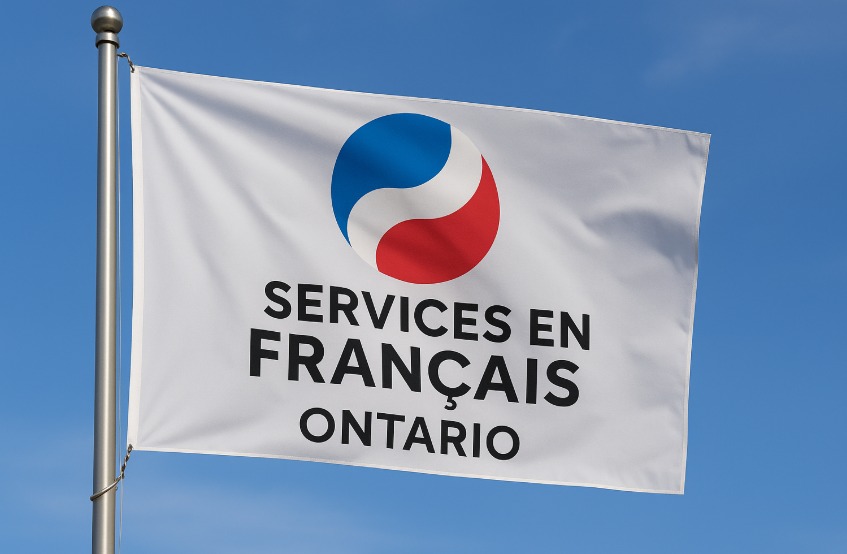
Ontario is widening access to French-language government services, adding six newly expanded designated areas under the French Language Services Act (FLSA) in a move the province says will strengthen support for more Francophone residents.
The Ministry of Francophone Affairs announced Tuesday that the updated designations will require provincial agencies and partner organizations in the affected communities to offer services in French once implementation is complete. The expansion covers roughly 6,300 additional square kilometres and aligns designated zones with current municipal boundaries.
“The expansion of government services in French in six communities across Ontario will help thousands more Francophone residents access the services they need, in their language of choice,” said Caroline Mulroney, Minister of Francophone Affairs. “Marking the anniversary of the modernization of the French Language Services Act with this new milestone reflects the progress we have achieved to strengthen our Francophone communities now and into the future.”
The affected regions include the United Counties of Stormont, Dundas and Glengarry; the County of Essex; the City of Hamilton; the Municipality of Chatham-Kent; the County of Renfrew; and the District of Thunder Bay. After a transition period, residents in these areas will gain access to provincial services in French, including segments of the justice system, social programs and business resources.
The expansion marks the latest step in Ontario’s gradual modernization of the FLSA, which mandates French-language services in designated regions where most of the province’s Francophone population resides. The Act, first introduced in 1986, underwent major legislative updates in 2021—its first in over three decades. Tuesday’s announcement coincides with the fourth anniversary of those amendments.
Francophone advocacy groups praised the changes, noting that expanded service areas represent long-standing efforts to improve language rights across Ontario.
“For more than three decades, Francophone communities have worked to strengthen the French Language Services Act, and today we are seeing the concrete results of this modernization, particularly with the expansion of designated areas and the continued progress of its implementation,” said Fabien Hébert, President of the Assemblée de la francophonie de l’Ontario. “The AFO welcomes this new milestone with appreciation and recognizes the ongoing collaboration of the Ontario government. Together, we have built on the progress made in recent years, and together we will continue to bring the spirit of the Act to life in the daily lives of Francophone Ontarians.”
The government says ministries, agencies and third-party service providers are currently preparing for full implementation, working to ensure French-language services match the quality of those offered in English. Last year, the Ministry of Francophone Affairs sought public input on the proposal to expand the six designated areas. Feedback from that process informed the final regulatory changes.
In addition to expanding geographic designations, Ontario is updating the official names of several existing regions to reflect current municipal structures. Beginning January 1, 2026, the former Counties of Prescott and Russell will be formally recognized as the United Counties of Prescott and Russell, following their amalgamation. On the same date, the City of Sarnia’s designation will be distinguished from the County of Lambton to clarify service coverage.
A further administrative update removes redundant references to the City of Greater Sudbury and the District of Sudbury, as the city is located within the district. The change also takes effect January 1, 2026. A similar modernization of naming for Stormont, Dundas and Glengarry—already merged into a unified county structure—will be applied under the FLSA in January 2029.
The government says these updates are intended to ensure consistency between language-service requirements and Ontario’s municipal boundaries, reducing ambiguity for both residents and service providers.
The expansion builds on the province’s broader efforts to enhance services for Francophone residents, following the addition of Sarnia as a designated area on November 1, 2024. With approximately 630,000 Francophones, Ontario is home to Canada’s largest French-speaking population outside Quebec, and demand for equitable service access continues to grow.
More information on French-language government services, including regulatory documents associated with the newly designated areas, is available through the Ministry of Francophone Affairs.
