

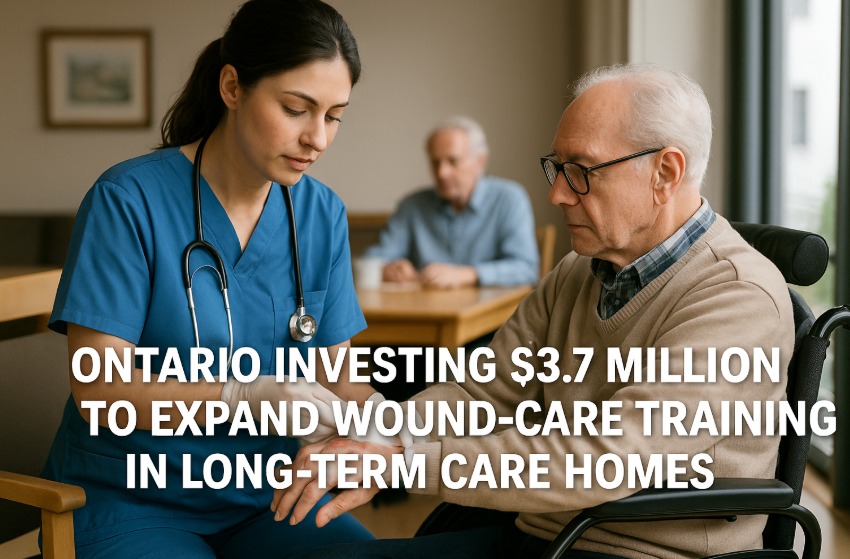
The Ontario government is expanding clinical training for long-term care workers with a new $3.74-million investment aimed at improving the detection and treatment of skin and wound issues among seniors — a leading cause of preventable hospital visits in the sector. The funding will support training for 1,100 staff across the province and is intended to reduce pressure on hospitals while improving residents’ quality of life.
Announced Tuesday in Markham, the initiative adds a fourth training stream to a previously launched education program delivered by Nurses Specialized in Wound, Ostomy and Continence Canada (NSWOCC) and Wounds Canada. The new funding comes after the province committed $1 million earlier this year to train up to 400 long-term care staff in specialized wound-care practices. With the expanded support, Ontario expects to train nearly 1,500 workers in total.
Long-term care homes will be able to choose from four streams of training beginning this winter. They include the Skin Wellness Associate Nurse (SWAN) program for 150 registered nurses and practical nurses; a Skin Health course for 600 personal support workers (PSWs); an Accredited Wound Care Champion program for 150 regulated health professionals; and a Skin Health Program for 200 personal care providers.
Minister of Long-Term Care Natalia Kusendova-Bashta said the investment is part of a broader strategy to enhance frontline skills and ensure residents receive high-quality clinical care without relying on hospital visits.
“Our government is improving the care that long-term care residents receive with strategic investments to train and upskill our long-term care workforce,” said Natalia Kusendova-Bashta, Minister of Long-Term Care. “Having more staff trained in skin and wound care will support a better quality of life for residents and protect our health-care system by reducing unnecessary hospital visits.”
Skin and wound issues, including pressure injuries, are common among seniors due to age, chronic illness and reduced mobility. Ontario officials say prompt, skilled intervention can prevent minor injuries from developing into serious conditions that require hospitalization. The government notes that long-term care residents currently receive an average of four hours and five minutes of PSW and nursing care each day, a benchmark that continues to increase as part of the province’s long-term care reform plan.
Markham—Unionville MPP Billy Pang called the investment an important step in strengthening care standards.
**”This investment in skin and wound care training will help staff provide faster, more effective support for long-term care residents, enhancing comfort and reducing unnecessary hospital visits. It’s an important step by our government to ensure all residents receive the high-quality care they deserve.”
-
Billy Pang
MPP for Markham—Unionville**
Advocacy and professional organizations welcomed the expanded training, noting the impact it can have on both care outcomes and workforce readiness.
**”We applaud the Ontario government for this investment in enhancing the skin and wound care knowledge of registered practical nurses and personal support workers, which demonstrates their commitment to quality improvement and sustainability. Through this action, the government is demonstrating their respect for the health and dignity of seniors living in Ontario.”
-
Catherine Harley
CEO, Nurses Specialized in Wound, Ostomy and Continence Canada (NSWOCC)**
**”Wounds Canada thanks the Ontario government for recognizing the vital role of competency-based education in strengthening skin health and wound care across Ontario’s long-term care sector. This investment equips care providers with the knowledge, skills and change management needed to improve resident outcomes. Funded, accredited evidence-based education is a crucial first step toward reducing preventable wounds and delivering timely, effective wound care for long-term care residents province-wide.”
-
Mariam Botros
CEO, Wounds Canada**
The provincial government has framed the investment as part of its broader four-pillar plan to “fix long-term care,” which focuses on staffing and care improvements, stronger quality and enforcement measures, modernizing long-term care homes, and connecting seniors to faster and more convenient services. That plan also includes building 58,000 new and upgraded long-term care beds and offering incentives of up to $35,400 to encourage PSWs to work in the sector.
Ontario officials said long-term care homes can begin applying directly to NSWOCC and Wounds Canada to enrol their staff in the new training streams. The programs will roll out over the coming months in hopes of supporting residents throughout the winter and reducing preventable emergency department visits during the busiest period of the year for hospitals.
With seniors now the fastest-growing demographic in Ontario, the province says investments in frontline training are essential to ensuring long-term care homes can meet increasingly complex needs. The latest funding, officials said, reflects ongoing efforts to keep residents healthier, safer and more comfortable — and to keep care close to home.