

DESERONTO, Ont. — The Ontario government is significantly increasing funding for Indigenous-led energy projects, committing an additional $10 million annually to the Indigenous Energy Support Program (IESP). The investment, announced Tuesday, represents a 66 per cent increase over last year and brings the program’s total annual budget to $25 million.
The move is part of Ontario’s broader strategy to ensure affordable, reliable, and clean energy supply while advancing economic reconciliation with Indigenous communities. Officials say the funding will not only support the province’s long-term energy security but also strengthen Indigenous leadership in planning, building, and managing local energy infrastructure.
“Advancing economic reconciliation is essential to Ontario’s energy future and our government is backing it with action, investment and results,” said Stephen Lecce, Minister of Energy and Mines. “As we build the energy infrastructure our growing province needs, Indigenous communities are not just rights-holders — they are partners and leaders. From equity in transmission projects to cutting-edge technologies like battery storage, we are creating real opportunities and building prosperity that will last for generations.”
Expanded Program and New Funding Stream
This year’s IESP introduces a new funding stream of up to $500,000 for diesel-reliant Indigenous communities. The targeted funding is aimed at helping communities transition away from diesel-powered generators through the construction of transmission and generation infrastructure. In addition, expanded eligibility criteria will allow Indigenous groups to participate in emerging technologies, including battery storage.
“This expanded investment ensures Indigenous communities remain key partners in driving Ontario’s energy future — from planning and innovation to equity partnerships in major projects,” said Greg Rickford, Minister of Indigenous Affairs and First Nations Economic Reconciliation and Minister Responsible for Ring of Fire Economic and Community Partnerships. “We are working in lockstep with communities, advancing economic reconciliation and unlocking generational opportunities.”
Long-Term Energy Planning
The government’s Integrated Energy Plan outlines energy development priorities over the next 25 years, with a focus on building new supply and transmission lines to meet projected demand. Electricity use in Ontario is expected to rise by 75 per cent by 2050, driven by population growth, industrial expansion, and electrification of transportation.
The Independent Electricity System Operator (IESO), which administers the IESP, says Indigenous participation is already reshaping Ontario’s energy sector. Communities are taking equity positions in major projects, including five new transmission lines. Since 2022, the province has supported the development of eight transmission lines eligible for 50/50 equity partnerships with Indigenous groups.
“The Indigenous Energy Support Program continues to be a powerful tool for advancing reconciliation and ensuring Indigenous communities have the support they need to be leaders in the electricity sector,” said Lesley Gallinger, President and CEO of the IESO.
Local Success Stories
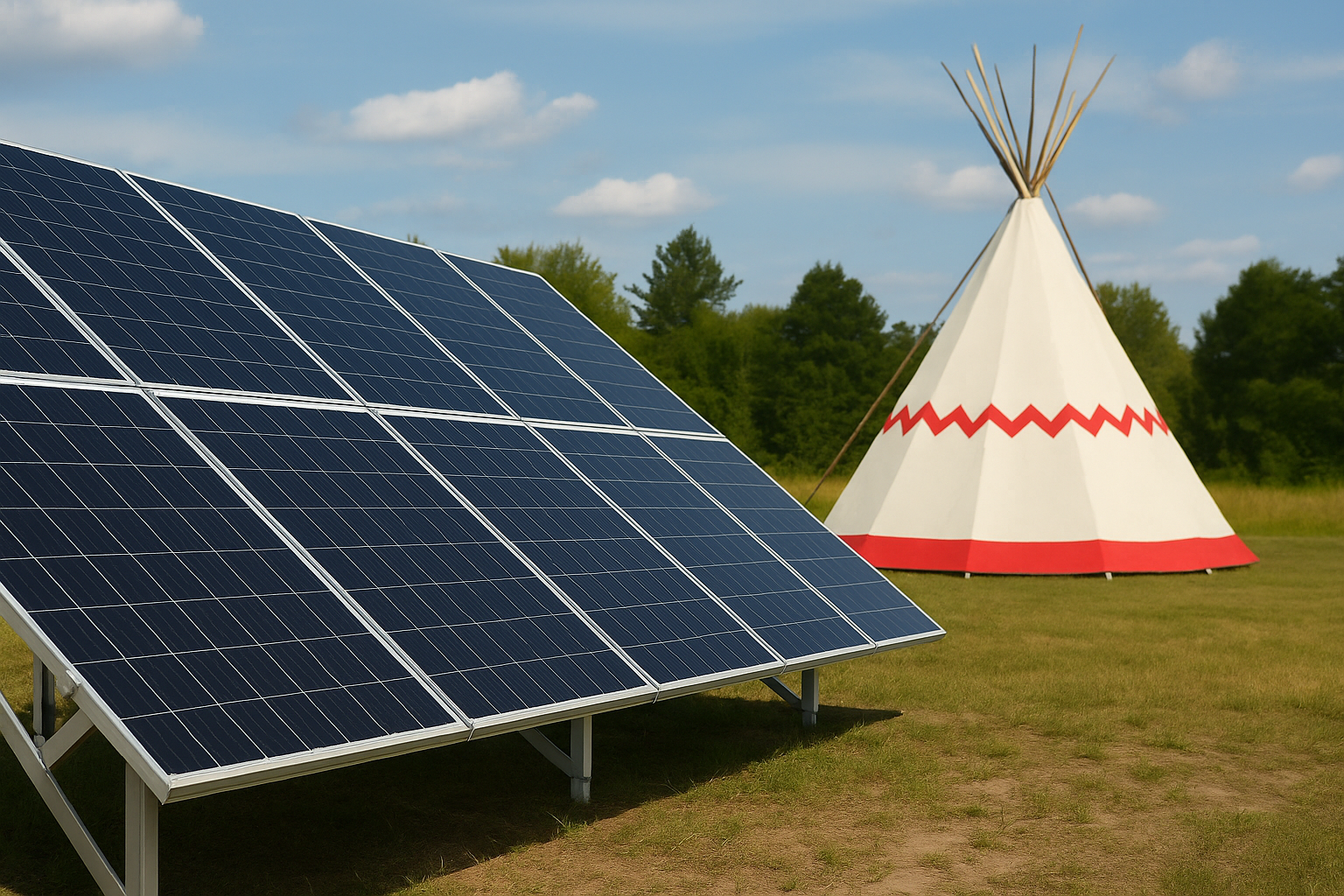
Communities have already seen tangible benefits from the IESP. The Mohawks of the Bay of Quinte used program funding to advance a solar-powered microgrid system in a newly developed subdivision.
“With the support of the IESP, MBQ was able to engage professional services that will allow us to make informed decisions on future energy projects,” said Chief R. Donald Maracle of the Mohawks of the Bay of Quinte. “Also, MBQ has been able to hire a full-time Community Energy Champion to update and lead our Community Energy Plan and provide education and training to our community members in clean energy solutions.”
Industry stakeholders also welcomed the expanded funding.
“Energy Storage Canada welcomes today’s announcement from the government of Ontario, increasing the funding for the province’s Indigenous Energy Support Program (IESP) by $10 million, and expanding the program’s eligibility to include emerging technologies such as battery energy storage systems (BESS),” said Justin W. Rangooni, President and CEO of Energy Storage Canada.
Broader Impact and Economic Growth
Officials say the expanded IESP will help create good-paying jobs, attract investment, and strengthen Ontario’s reputation as a leader in clean energy development. The program also plays a role in the province’s “off-diesel” strategy, reducing greenhouse gas emissions and improving environmental outcomes in remote and rural communities.
“In today’s economy, two of the most critical resources for any community are access to reliable energy — and the people with the skills to manage it,” said Ric Bresee, MPP for Hastings-Lennox and Addington. “It’s encouraging to see our government taking real steps to ensure First Nations communities are not only connected to Ontario’s energy future but are empowered to lead it — through local generation, transmission, and long-term capacity building.”
The IESP is a key component of Energy for Generations, Ontario’s long-term plan to build a resilient power system. By expanding Indigenous partnerships, the government says it is positioning Ontario as a “clean energy superpower” while ensuring communities share in the economic benefits.
“Investing in reliable, clean energy and partnering with Indigenous communities is key to getting things built in Ontario,” a government statement noted. “Building energy projects and technologies here at home, in collaboration with Indigenous partners, will create a more affordable, reliable and resilient power system, bringing Ontario closer to its goal of becoming a clean energy superpower.”
