

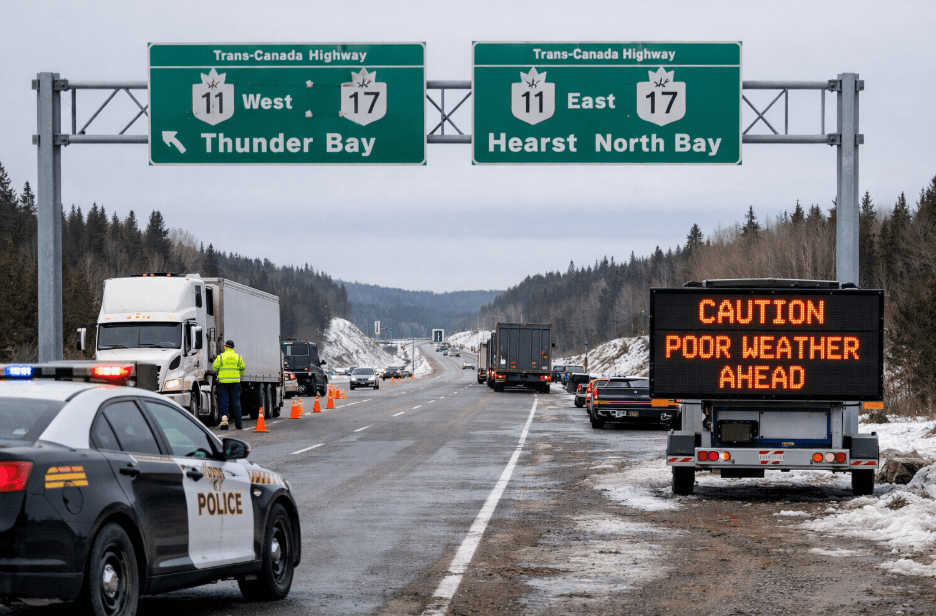
Province targets safety, supply chain reliability and economic growth in Northern Ontario
NORTHERN ONTARIO — The Ontario government is stepping up enforcement and accelerating infrastructure upgrades along the Highway 11/17 corridor, a critical transportation link in the national highway network, as part of a broader effort to improve safety and strengthen supply chains across Northern Ontario.
The twin highways form a key հատված of the Trans-Canada network, supporting the movement of goods, access to services and regional economic activity. Provincial officials say the latest measures are designed to reduce risk on the corridor while ensuring more reliable transportation for businesses and communities that depend on it.
“Our government is keenly aware how important safe roads, bridges and highways are to the residents, visitors and businesses in the North who rely on them daily,” said George Pirie, Minister of Northern Economic Development and Growth. “That is why we are taking action to improve safety, increase enforcement and make targeted investments that will keep people safe and goods moving, while strengthening connections between northern and remote communities.”
Expanded enforcement and inspection capacity
Focus on commercial vehicle compliance and road safety
A central component of the plan is a significant increase in enforcement activity, particularly targeting commercial vehicles. The province will expand the number of Transportation Enforcement Officers operating in Northern Ontario and conduct additional inspection blitzes between truck inspection stations along the Highway 11/17 corridor.
To further strengthen oversight, two mobile inspection support units will be deployed in spring 2026, allowing enforcement teams to operate more flexibly across remote sections of the highway.
The province is also moving ahead with procurement to rebuild the Hearst truck inspection station and replace its weigh scale, a move aimed at improving the efficiency and accuracy of truck inspections.
Infrastructure upgrades and driver information systems
Improving visibility, communication and winter resilience
Alongside enforcement measures, Ontario is investing in upgrades to highway infrastructure designed to improve driver awareness and safety conditions. These include enhanced highway signage and the installation of portable variable messaging signs to provide real-time information on weather conditions, closures and hazards.
The government is also advancing preliminary design work to expand sections of Highway 11/17 between Thunder Bay and Shabaqua, with a public consultation scheduled for spring 2026.
Truck parking capacity remains a key concern for logistics operators in the region. The province plans to upgrade the rest area network across Northern Ontario to provide more year-round parking. This includes collaboration with municipal and private-sector partners, as well as the development of a new service hub in Matheson to accommodate trucks during severe winter conditions.
Economic implications and program funding
$583 million investment targets congestion, safety and growth
The initiative is part of Ontario’s broader Northern Highways Program, which will see nearly $583 million invested in 2025–26. Of that total, approximately $481 million is allocated to rehabilitation projects, while nearly $102 million will fund expansion work.
The province says these investments are intended to reduce congestion, improve safety outcomes and support economic development across Northern Ontario, where long-distance transportation remains essential for industries such as mining, forestry and manufacturing.
“Highways 11 and 17 are lifelines for Northern Ontario, and we’re making them safer and more reliable by cracking down on dangerous driving, strengthening enforcement and investing in new safety measures that keep people and goods moving,” said Prabmeet Sarkaria, Minister of Transportation. “Under the leadership of Premier Ford, our government is working to protect Ontario drivers, fuel our economy and ensure northern communities stay connected year-round.”
Broader transportation strategy and regional impact
Supporting long-term connectivity and infrastructure resilience
Ontario officials emphasized that the Highway 11/17 upgrades are part of a longer-term strategy to enhance transportation resilience across the North. The province will continue working with stakeholders, including municipal associations and industry groups, to identify further areas for improvement.
The Northern Ontario highway network spans approximately 10,775 kilometres, representing about 60 per cent of the province’s total highway system. Maintaining and upgrading this network is considered critical to ensuring consistent access to goods, services and employment opportunities in remote communities.
In parallel, the province is also advancing rail infrastructure projects tied to the return of the Northlander passenger service. Recent milestones include rail acquisitions, new trainsets and more than $100 million in infrastructure upgrades. Once operational, the service is expected to run 740 kilometres between Timmins and Toronto, with a connection to Cochrane and a total of 16 stops.
Ontario has also introduced stricter winter maintenance standards on Highways 11 and 17, requiring contractors to clear roads to bare pavement within 12 hours following a storm — four hours faster than previous requirements.
Together, these measures underscore the province’s focus on improving transportation reliability and safety while supporting economic activity across Northern Ontario’s vast and often challenging geography.