

Province expands staffing and funding as fire season begins April 1
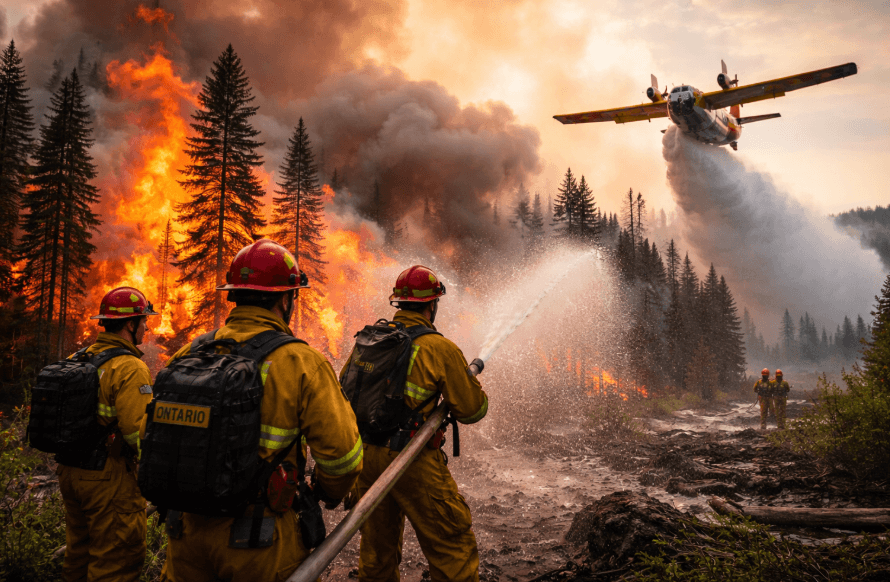
TORONTO — The Ontario government says it is prepared for the 2026 wildland fire season, announcing new investments in staffing, equipment and community resilience as the annual fire period begins April 1.
The Ministry of Natural Resources confirmed the season will run through Oct. 31 and highlighted measures aimed at strengthening frontline response capacity and reducing fire risks across the province.
To support operations, Ontario has added 68 new permanent positions and increased compensation for key personnel, including wildland firefighters, pilots and aircraft maintenance engineers. The move builds on recent hiring efforts that saw 100 permanent roles filled across 2024 and 2025.
“We are ready to protect communities from wildland fires, with all the necessary resources in place,” said Mike Harris, Minister of Natural Resources. “Our government stands behind the wildland firefighters, pilots and support staff that make up our frontline response and we will ensure they have everything they need for the upcoming fire season.”
Increased investment targets equipment, training and prevention
The province is also investing heavily in firefighting infrastructure and modernization. Among the largest expenditures is more than $500 million allocated to procure six new Canadian-built De Havilland DHC-515 waterbombers, aimed at enhancing aerial firefighting capabilities.
Additional funding includes a $64-million joint investment with the federal government in 2024 to upgrade equipment, improve suppression tools and support ongoing training programs.
Ontario has also introduced new and amended regulations under the Wildland Fire Management Act, effective April 1, 2026. The updated rules are intended to modernize fire management practices, strengthen compliance measures and address the growing risks associated with wildland fires.
At the federal level, collaboration continues through the Wildfire Resilient Futures Initiative, which supports training, public education and research projects focused on fire prevention and mitigation.
“Keeping Ontarians safe is a shared responsibility, and by working together, the Governments of Canada and Ontario can reduce the risks and impacts of wildfires for families and communities. Through the Wildfire Resilient Futures Initiative, the federal government is proud to support projects that strengthen local capacity, advance research, and help communities take action to prevent wildfires before they start,” said Corey Hogan, Parliamentary Secretary to the Minister of Energy and Natural Resources Canada.
Human activity remains a leading cause of fires
Provincial officials emphasized that prevention remains a critical component of wildfire management, noting that approximately half of all wildland fires are caused by human activity.
Residents are being urged to take precautions, including checking Ontario’s fire hazard map before lighting outdoor fires, keeping campfires controlled and ensuring they are fully extinguished before leaving a site.
The province also continues to promote FireSmart practices to help communities and property owners reduce wildfire risks.
Expanding capacity to manage growing fire risks
Ontario’s wildland fire program is one of the largest in North America, with extensive infrastructure and personnel deployed across the province. The system includes 28 specialized aircraft and hundreds of trained staff operating out of multiple fire management headquarters, attack bases and emergency centres.
These resources support the protection of approximately 90 million hectares of public land.
The province has significantly increased its financial commitment in recent years. Since 2018, annual base funding for emergency firefighting has risen by 93 per cent, reaching more than $65 million. Total seasonal spending is reported annually in Ontario’s public accounts.
Despite these investments, wildfire activity remains volatile. In 2025, Ontario recorded 643 wildland fires that burned nearly 598,000 hectares — an area larger than Prince Edward Island. Over the past decade, the province has averaged about 712 fires annually.
Government stresses collaboration and readiness
Officials say coordination across jurisdictions remains essential, with Ontario maintaining agreements with provincial, territorial, federal and international partners to share personnel, aircraft and equipment during periods of heightened fire activity.
“Our government is equipping communities with the resources and tools they need to prepare for and respond decisively to natural disasters and emergencies, including wildland fires. We will continue to work closely with municipalities, First Nation communities, and emergency management partners to ensure people across Ontario are safe, practiced and prepared this wildland fire season,” said Jill Dunlop, Minister of Emergency Preparedness and Response.
As the 2026 fire season gets underway, Ontario officials say a combination of increased funding, expanded staffing and public awareness will be key to managing risks and protecting communities across the province.