

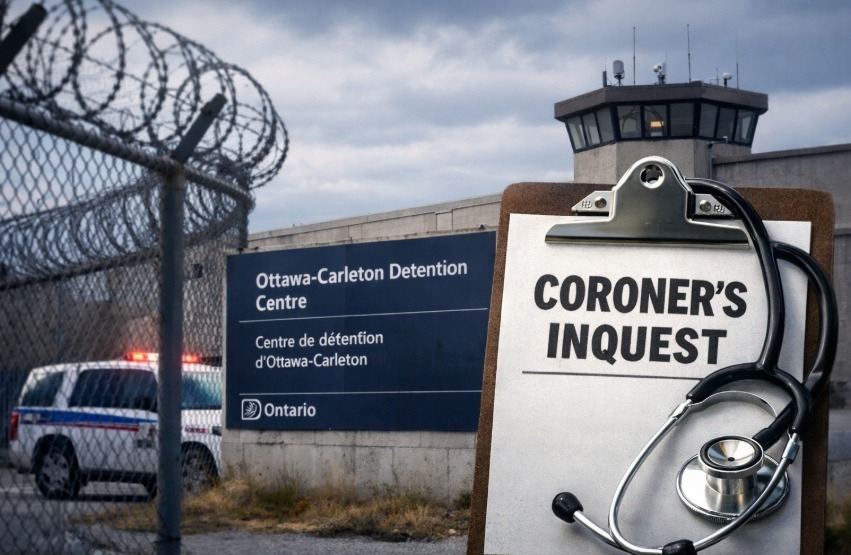
The Ontario government has announced that a mandatory coroner’s inquest will be held into the death of Ryan Rawson-Keeley, who died while in custody at the Ottawa-Carleton Detention Centre nearly five years ago, reopening scrutiny of custodial care and oversight within the province’s correctional system.
Dr. Louise McNaughton-Filion, Regional Supervising Coroner for the East Region in the Ottawa Office, confirmed on Feb. 5 that the inquest will proceed under the requirements of the Coroners Act. Mr. Rawson-Keeley was 38 years old when he died on March 2, 2021, while being held at the provincial correctional facility.
Under Ontario law, inquests are mandatory in cases involving deaths that occur in custody. The process is intended not to assign criminal or civil liability, but to publicly examine the circumstances surrounding a death and, where appropriate, to identify systemic issues that could help prevent similar fatalities in the future.
According to the Ministry of the Solicitor General, the inquest will focus on the events, conditions, and care leading up to Mr. Rawson-Keeley’s death. A jury will hear evidence from witnesses, including medical professionals, correctional staff, and other relevant parties. At the conclusion of the proceedings, the jury may make non-binding recommendations aimed at preventing further deaths in similar circumstances.
While the ministry has not yet disclosed a timeline, officials said additional details, including the date and venue of the inquest, will be provided at a later time. Inquests are typically held in the community where the death occurred and can span several days or weeks, depending on the complexity of the case and the number of witnesses involved.
Deaths in custody continue to draw attention from legal experts, advocacy organizations, and policymakers, particularly as provinces face increasing pressure to address mental health care, overcrowding, and medical response capabilities within correctional facilities. In Ontario, the Office of the Chief Coroner oversees investigations into deaths that are sudden, unexpected, or occur under specific circumstances, including those involving individuals under state supervision.
The Ottawa-Carleton Detention Centre, commonly known as the Ottawa jail, is a provincially operated facility that houses individuals awaiting trial, sentencing, or transfer, as well as those serving shorter sentences. Like many detention centres across Canada, it has faced longstanding challenges related to inmate health care, staffing levels, and infrastructure.
Although the ministry’s announcement did not provide details about the cause of Mr. Rawson-Keeley’s death, such information is typically examined in depth during the inquest process. Evidence may include medical records, institutional policies, surveillance footage, and expert testimony, all of which are reviewed in a public forum.
Inquests in Ontario are overseen by a coroner and a jury, usually composed of five members of the public. The jury’s recommendations, while not legally binding, are often closely watched by government ministries, correctional services, and health authorities, as they can influence policy changes, operational reforms, and training standards.
The announcement comes amid broader discussions across Canada about accountability and transparency in custodial deaths. Families of individuals who die in custody often view inquests as a critical mechanism for obtaining answers and ensuring public oversight of institutions with significant power over the lives of those in their care.
For the business and public sector, the outcomes of such inquests can also carry operational and financial implications. Recommendations may lead to increased investment in correctional health services, changes to staffing models, or updates to infrastructure and technology, all of which can affect provincial budgets and procurement priorities.
The Ministry of the Solicitor General said it will release further information once logistical arrangements for the inquest are finalized. Members of the public will be able to attend the proceedings, consistent with the open and transparent nature of the inquest system.
Additional information about the inquest process and the role of coroners in Ontario is available through the provincial government’s website.
